
Kiki’s Delivery Service Review — Why This Film Still Feels Like More Than a Comfort Watch, 37 Years Later
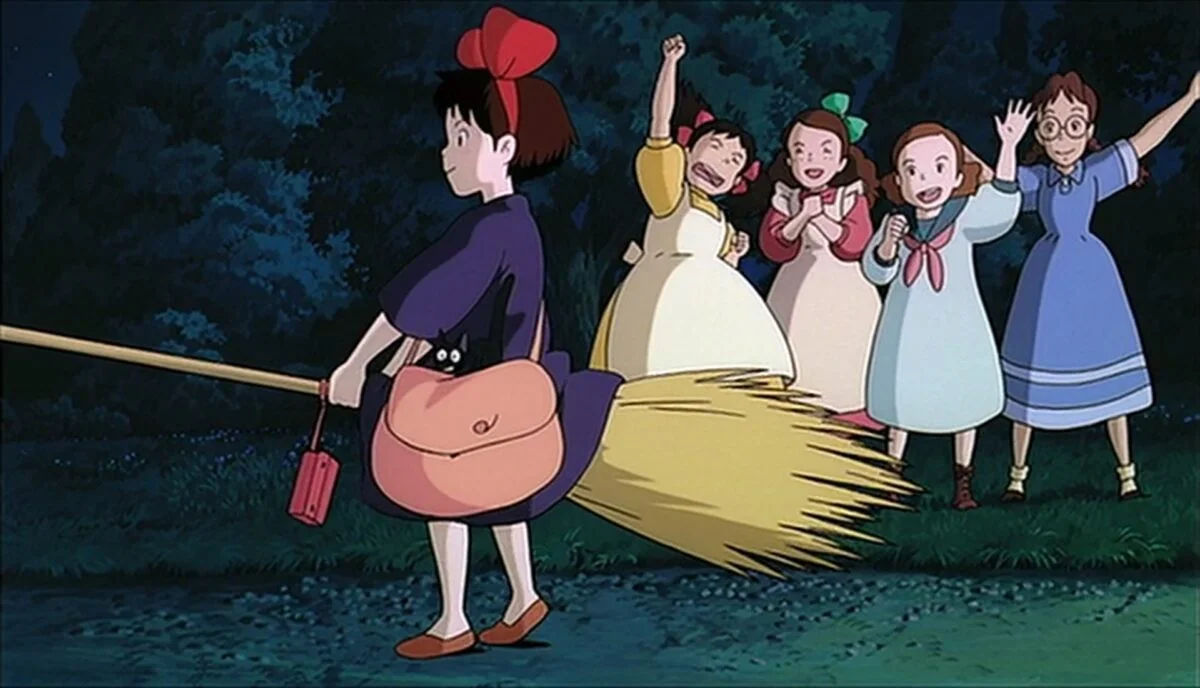
In April this year, Studio Ghibli’s 1989 film Kiki’s Delivery Service returned to South Korean cinemas in a newly remastered 4K edition.
The fact that a 37-year-old animated film could become a talking point among Ghibli fans simply because of a rerelease says a great deal. This is clearly a film that still touches something deeper than nostalgia for an old classic.
So why does the story of a 13-year-old witch who leaves home on a broomstick and heads for the city still resonate? I revisited this long-beloved film and took another look at what makes it endure.
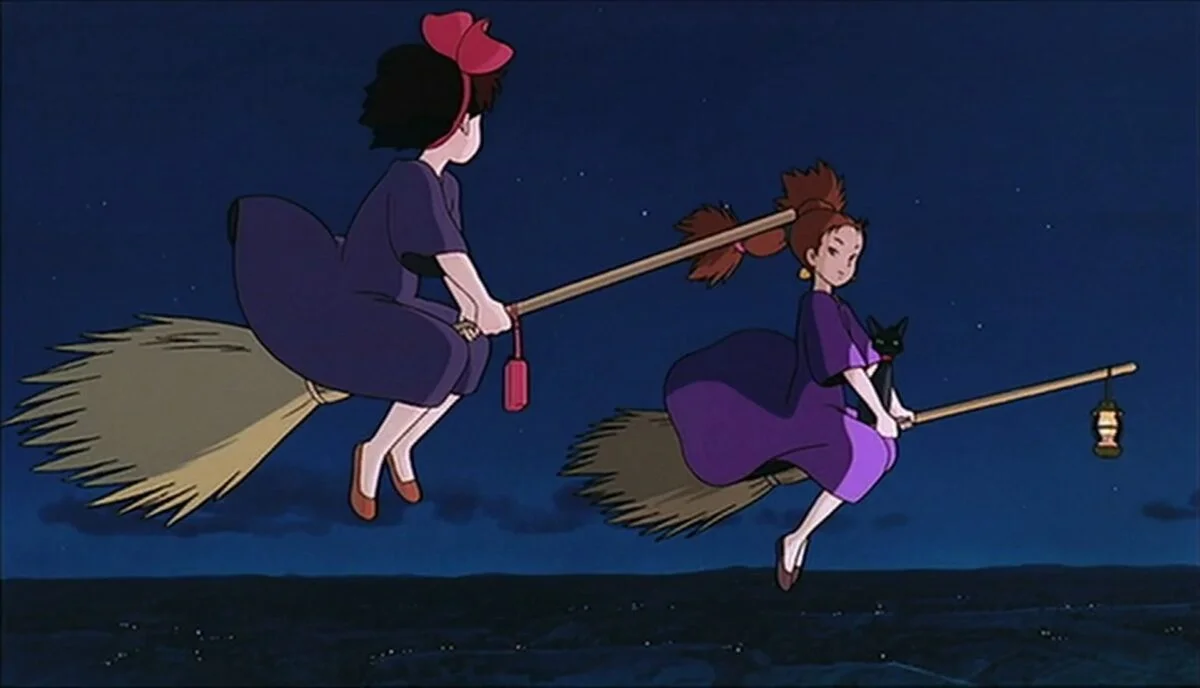
It Wasn’t Originally Miyazaki’s Film
The story behind Kiki’s Delivery Service is different from the one most people know today.
Hayao Miyazaki did not join the project as its director. He initially came aboard as the producer, while directing duties were expected to go to Sunao Katabuchi, then a newcomer.
But as Miyazaki became increasingly involved in the screenplay and character designs, the story gradually took on his unmistakable imprint. By the time he finished the first draft in early June 1988, he had decided to direct the film himself, reasoning that he had already become too deeply involved.
The screenplay also brought him into direct conflict with the original author, Eiko Kadono.
Kadono’s novel was a gentle collection of small delivery episodes, with no major crisis or traumatic turning point.
Miyazaki introduced a flock-of-crows attack, the frustration of losing one’s magic, and the climactic airship rescue. Kadono strongly objected to these changes, and the project nearly fell apart.
Production only resumed after Kadono visited the studio and observed the process firsthand. That history makes one thing clear: the film’s defining story of Kiki’s breakdown and recovery came largely from Miyazaki pushing elements that did not exist in the original novel.
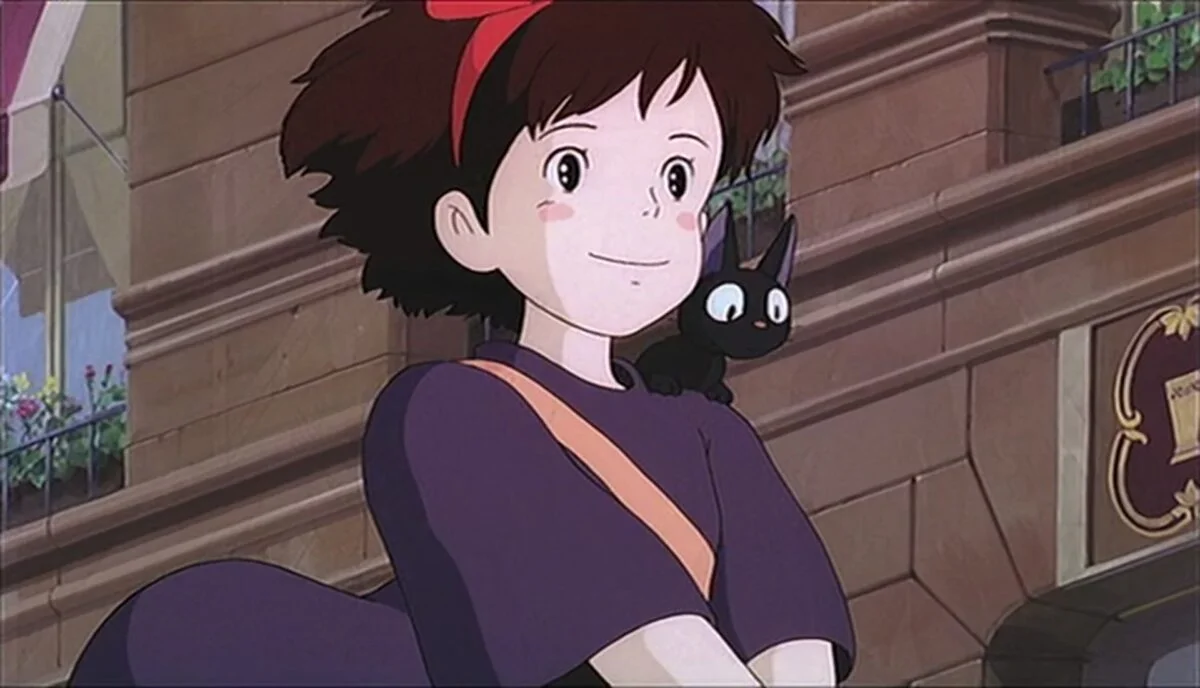
The Hit That Saved Ghibli — and What Came After
Kiki’s Delivery Service grossed approximately ¥4.3 billion in Japan in 1989—about $31 million at the exchange rate of the time—and drew roughly 2.64 million moviegoers, making it one of the year’s biggest domestic hits.
More importantly, it was Ghibli’s first film to become a box-office success from the moment it opened. Considering that Nausicaä of the Valley of the Wind, Castle in the Sky, and My Neighbor Totoro all performed modestly on their initial theatrical releases, it is easy to see how crucial this film was to the studio’s survival and future direction.
Its ¥800 million production budget also placed it among the most expensive anime projects of its day, alongside Akira and Royal Space Force: The Wings of Honnêamise.
The critical response that followed was unusually consistent. The film holds a 98% Tomatometer score on Rotten Tomatoes and an 85 on Metacritic, placing it in the “universal acclaim” category. Siskel and Ebert both gave it a thumbs-up, and even Akira Kurosawa was reportedly impressed by the film.
In 1998, Entertainment Weekly named it the “Video of the Year.”
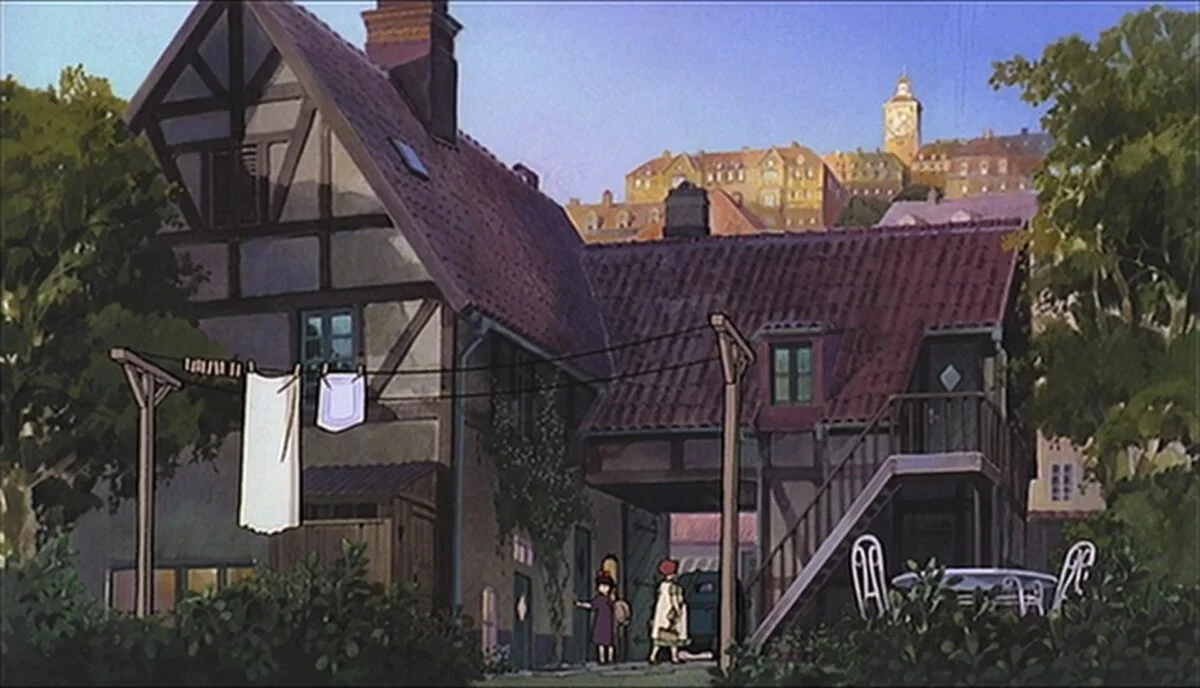
A Clear-Eyed Look at the Film’s Real Weakness
Up to this point, the film may sound like an untouchable classic. But there is one honest criticism worth making.
Not much happens. The quiet, episodic structure of the original novel remains the film’s backbone, so once Miyazaki’s added crises are set aside, most of the story follows a simple pattern: Kiki makes deliveries and meets various people along the way.
Viewers accustomed to today’s faster pacing may find the middle section slow, in particular. Among audiences discovering the film for the first time, it is not unusual to hear that it is gentler than expected or that it contains fewer major events than anticipated.
Still, I see this less as a flaw than as part of the film’s intended rhythm.
Kiki’s crisis is not caused by some huge external event. It is about her confidence quietly collapsing from within, and the storytelling moves at the same unhurried pace.
The film may disappoint viewers looking for a brisk plot, but its calmness is so closely tied to what it is trying to say that it is difficult to treat that quality as a real deduction.
What This Film Has to Say to Us Now
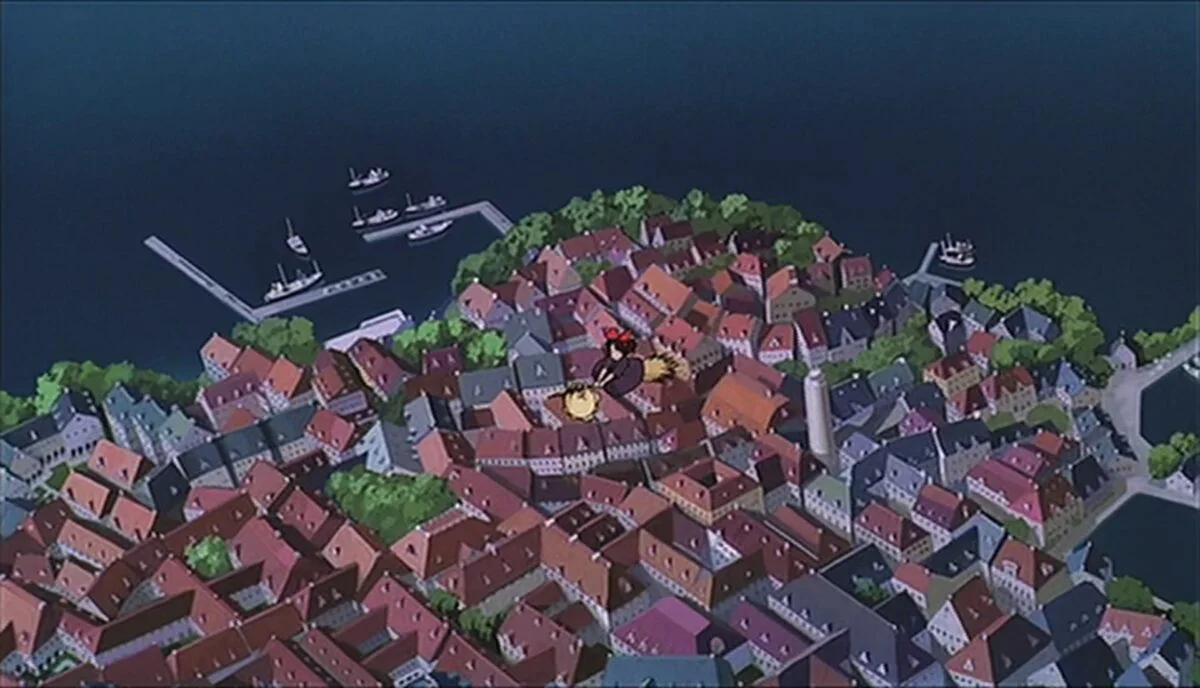
If Kiki’s Delivery Service is read simply as a coming-of-age film about learning to live independently, we miss the real reason it has endured.
Look again at Kiki’s crisis. She begins her delivery business full of energy, then gradually wears herself down until she loses the ability to fly—the very talent that defines both her identity and her sense of self.
In recent years, critics have repeatedly pointed out that Kiki’s experience closely mirrors the three features the World Health Organization identified when it officially recognized burnout syndrome in 2019: depleted energy, cynicism toward one’s work, and reduced professional effectiveness.
In other words, a film made in 1989 depicted a condition that would not receive an official medical name until more than 30 years later.
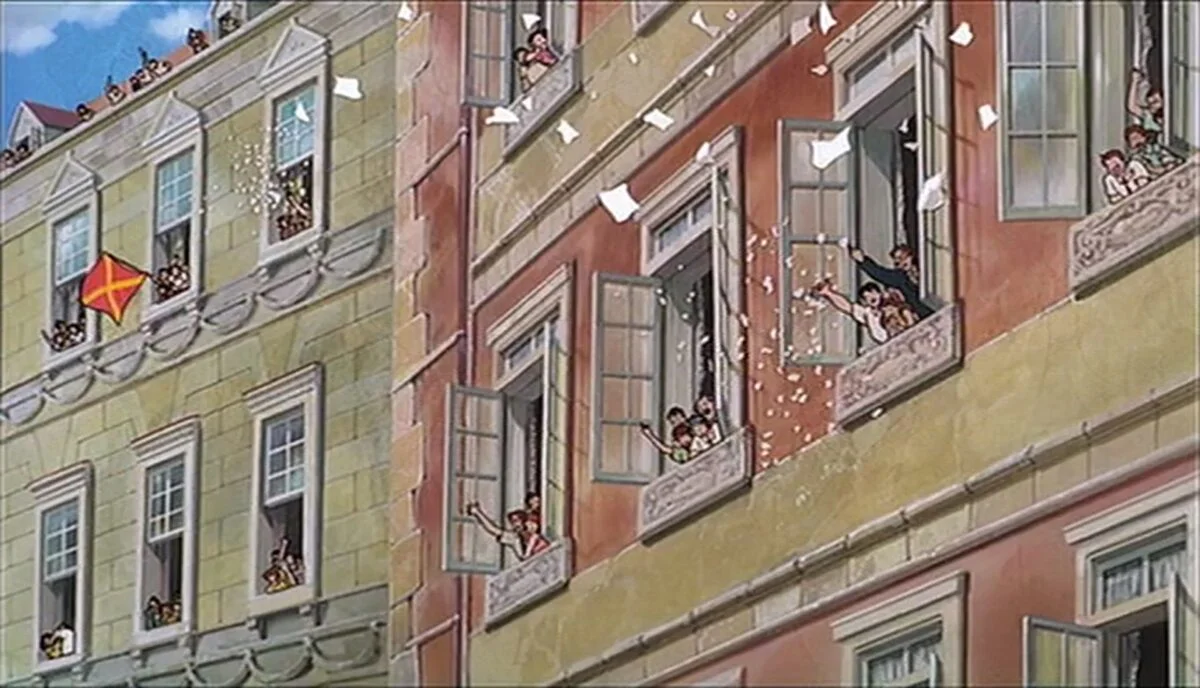
More revealing still is the way Kiki recovers.
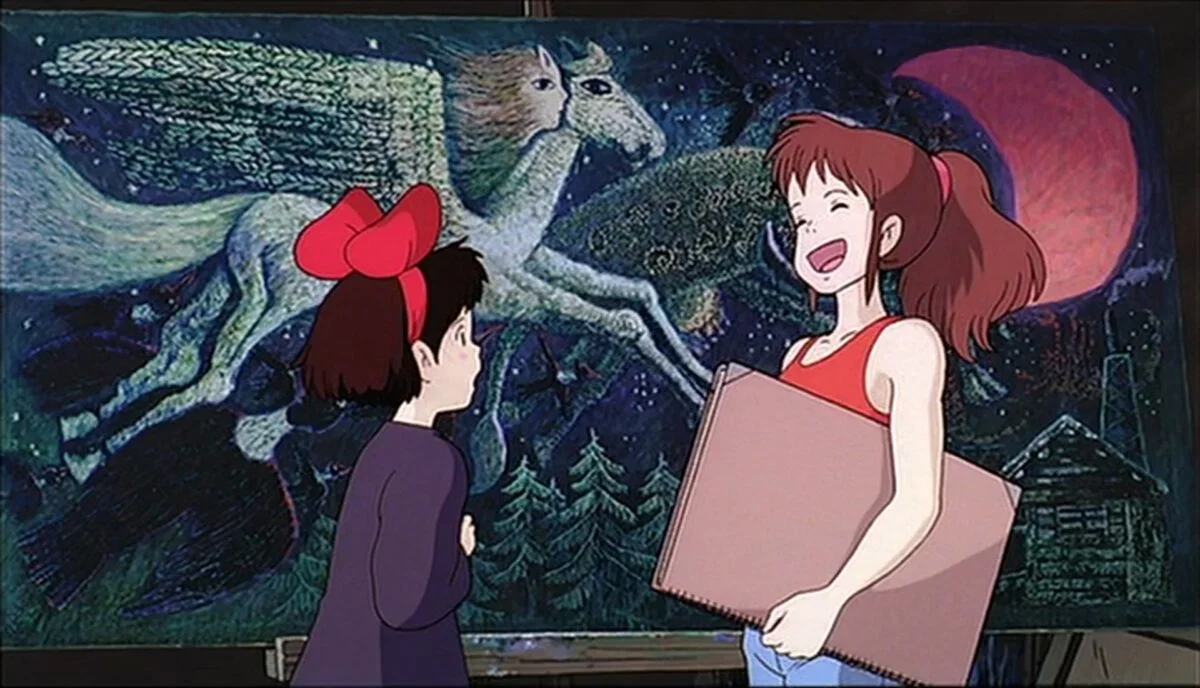
Ursula, the artist who offers Kiki advice, does not tell her to work harder. Instead, she tells her to rest—to look at the scenery and recharge her inner battery.
The film identifies the problem with remarkable precision: the issue was not a lack of effort, but effort taken too far.
And Kiki ultimately flies again not because she pushes herself to perform better, but because she comes to understand that her worth does not depend entirely on what she can achieve.
That idea speaks directly to the way we live now.
In an age when social media lets us monitor one another’s achievements in real time, and even rest is expected to be “productive,” the message this 37-year-old film offers feels sharper than ever.
Losing an ability may not be a failure, but a signal—and recovery begins not by pushing harder, but by stopping. That is ultimately why this quiet animated film, with neither flashy action nor an expansive mythology, has survived through repeated theatrical rereleases.
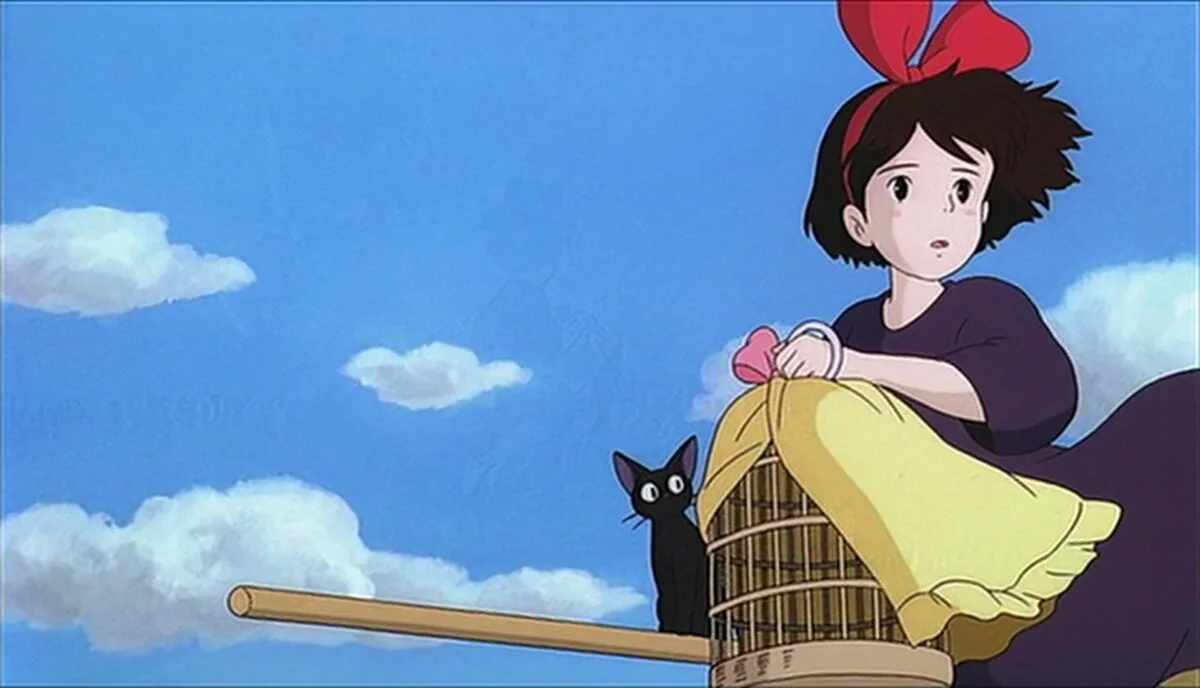
Verdict — 4.5/5
If you expect a perfectly tight, intricately plotted story, the film may feel somewhat loose.
But more than enough to offset that looseness is the fact that a film made 37 years ago anticipated, with striking accuracy, the burnout and self-exploitative approach to work that define so much of the present day.
This is a film too valuable to consume as mere nostalgia—and one with a clear reason to be watched again now.
Frequently Asked Questions (FAQ)
Q1. Is Kiki’s Delivery Service very different from the original novel?
Yes. The novel by original author Eiko Kadono was a gentle series of delivery episodes without any major crisis. After Hayao Miyazaki took over as director, he added dramatic elements including the crow attack, Kiki’s loss of magic, and the climactic airship rescue. The changes caused friction with Kadono and nearly brought the project to an end.
Q2. What is different about the 4K remastered version rereleased in 2026?
The picture quality and soundtrack have been improved, making the colors and details in the flying scenes especially crisp. This is not a remake with a revised story or new dubbing, but a restoration of the original image and sound for modern cinemas.
Q3. Is this a suitable film to watch with children?
Yes. It contains very little violence or other intense material and is a gentle coming-of-age story suitable for general audiences. However, children accustomed to fast-paced stories may find the middle section boring because the film has relatively few major events and moves at a leisurely pace.
Q4. Why is this film important to Studio Ghibli?
Ghibli’s early films—including Nausicaä of the Valley of the Wind, Castle in the Sky, and My Neighbor Totoro—did not perform particularly well when they were first released. Kiki’s Delivery Service was the studio’s first immediate box-office success and played a decisive role in establishing Ghibli financially.
Q5. What does the idea of a witch losing her magic symbolize?
The dominant interpretation is that it is more than a simple fantasy premise: it is a metaphor for a crisis of confidence and identity. More recently, many analyses have compared it to modern burnout, or emotional exhaustion. Kiki regains her magic not by working harder, but by resting and reflecting on herself, which also makes the film a quiet challenge to achievement-focused thinking.
