
Ghost in the Shell (1995): A Great Film Because It Refuses to Hold Your Hand
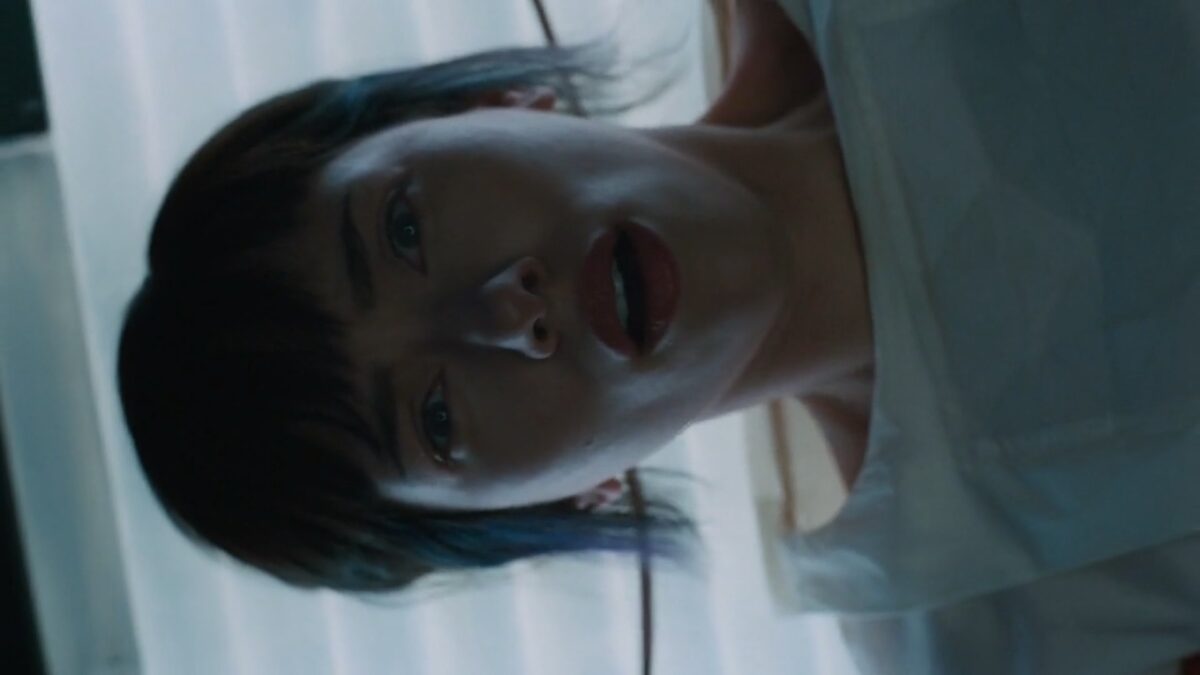
Opinions on Ghost in the Shell tend to fall into two camps.
One side regards it as the pinnacle of science-fiction animation; the other shakes its head and complains that it is “too talky and too boring.”
I think the most irresponsible kind of review is the one that awkwardly presents both sides and leaves it there.
So let me be clear: the criticism that this film is difficult and uninviting is fair.
But that very quality is the key weapon that has kept it alive for nearly three decades.
It may disappoint viewers looking for straightforward entertainment. But the moment you approach it as a film that demands contemplation, it looks entirely different.
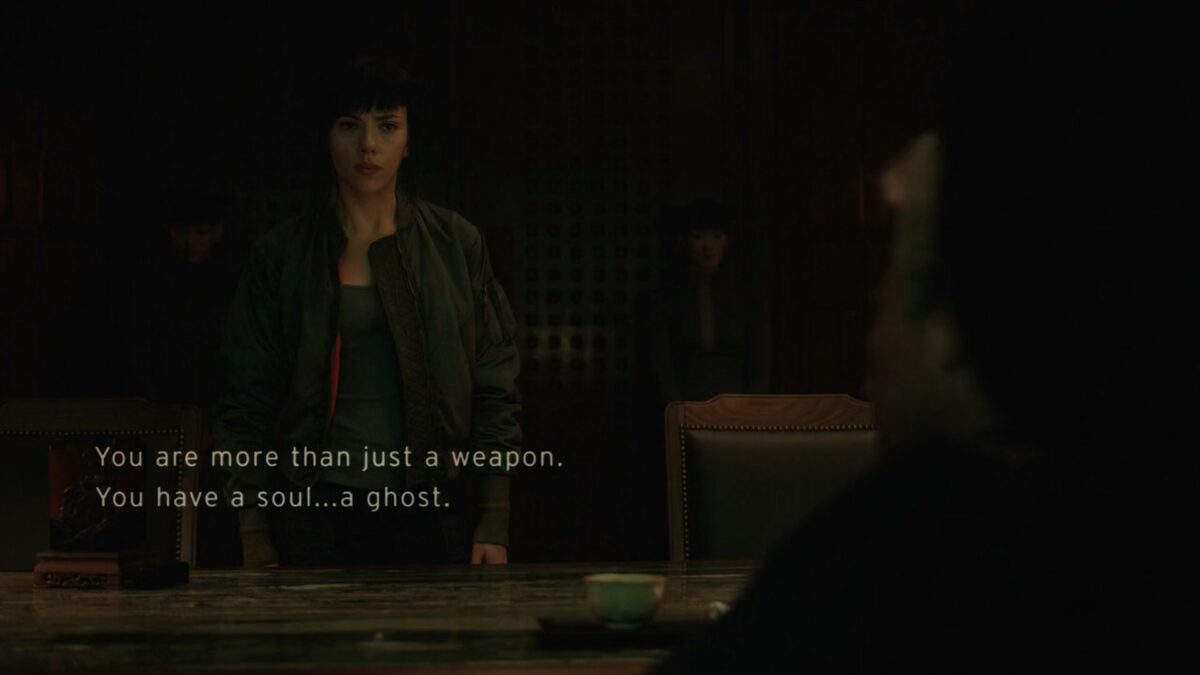
The Question the Title Asks Before the Plot Begins
It is 2029, in a world where becoming a cyborg is an everyday reality. Major Motoko Kusanagi of Public Security Section 9 is pursuing an elusive hacker known as the Puppet Master.
On paper, that sounds like a conventional cyberpunk procedural. In practice, however, the film is driven less by the investigation than by its title itself: “Ghost in the Shell.” If the body of a being has been entirely replaced by machinery, and something remains that can still be called “me,” where exactly is it?
That single question keeps breaking through the film’s detective-story exterior.
What director Mamoru Oshii wanted to explore was not the solution to a case, but the far more fundamental question of how identity begins to shift in a technologically advanced world. I believe he made the right choice.
I Don’t Buy the “It’s Boring” Criticism
The most common complaint about the film is that its static monologues and philosophical dialogue go on for too long at the expense of action.
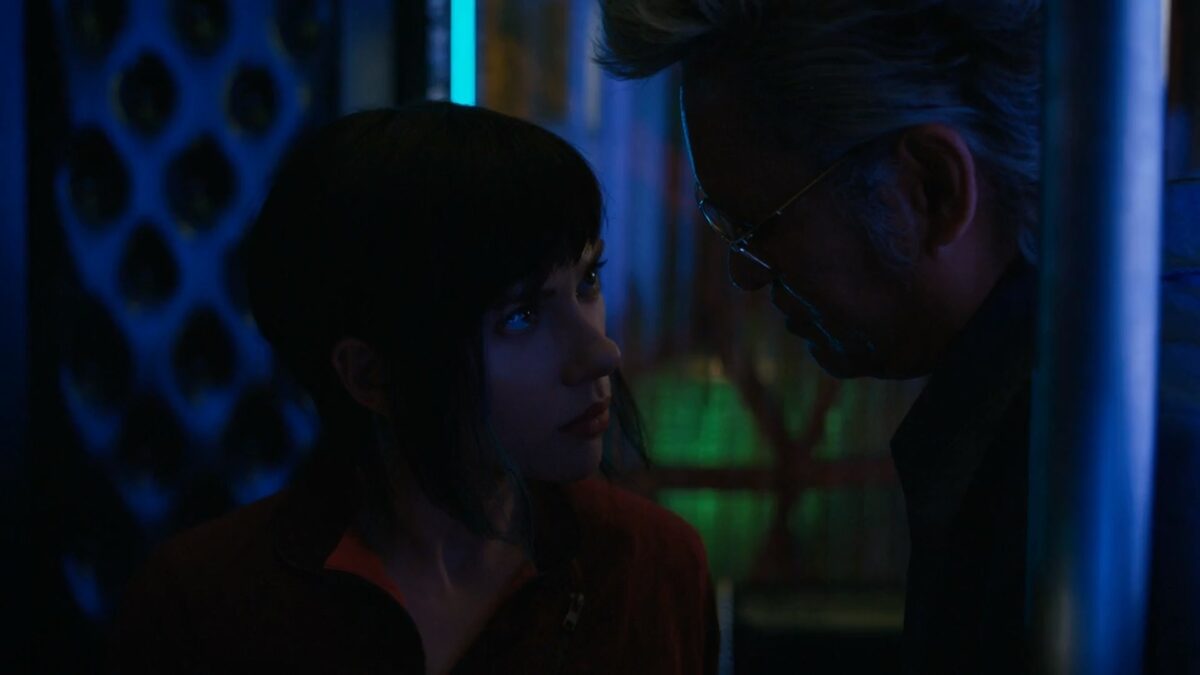
It is true that the sequence in which Kusanagi crosses the city by boat, musing on her own existence, unfolds for several minutes with almost no dialogue. I understand why many viewers find it boring.
But I do not see these scenes as failures of editing. They are deliberate pauses. This is not a film that keeps feeding you dopamine through action; it is designed to make you stop and turn over the question “What am I?” alongside its protagonist.
To viewers accustomed to rapid pacing, those stretches may feel drawn out. But without them, the philosophical weight of the film would not come through at even half its force.
I cannot agree with assessments that treat its lack of hand-holding as a flaw. That would amount to demanding that the film abandon the very thing it set out to do.
The Matrix Took the Style, Not the Questions
There is nothing novel anymore about discussing Ghost in the Shell alongside The Matrix.
The opening credits cascading like digital rain, the slow-motion action, even the stealth sequences resembling thermoptic camouflage: it is widely known that the Wachowskis drew on this film.
But I think everyone misses something in this comparison.
The Matrix took the style, and little more.
The Matrix ultimately answers the question “What is real?” through a clear good-versus-evil conflict between the Chosen One and the system, shaping it into an action blockbuster.
Ghost in the Shell, by contrast, leaves the same question open to the end, without offering a definitive answer.
The film never tells us whether Kusanagi’s decision to merge with the Puppet Master is salvation or annihilation.
One film accepts the discomfort of an unresolved ending; the other removes that discomfort and seals the story with a clear victory. To me, that difference is the real measure separating the two films’ achievements.
The Matrix was undeniably loved by more people, but Ghost in the Shell is clearly the one that asks the more honest questions.
A Film Completely Different from the Manga—and Rightly So
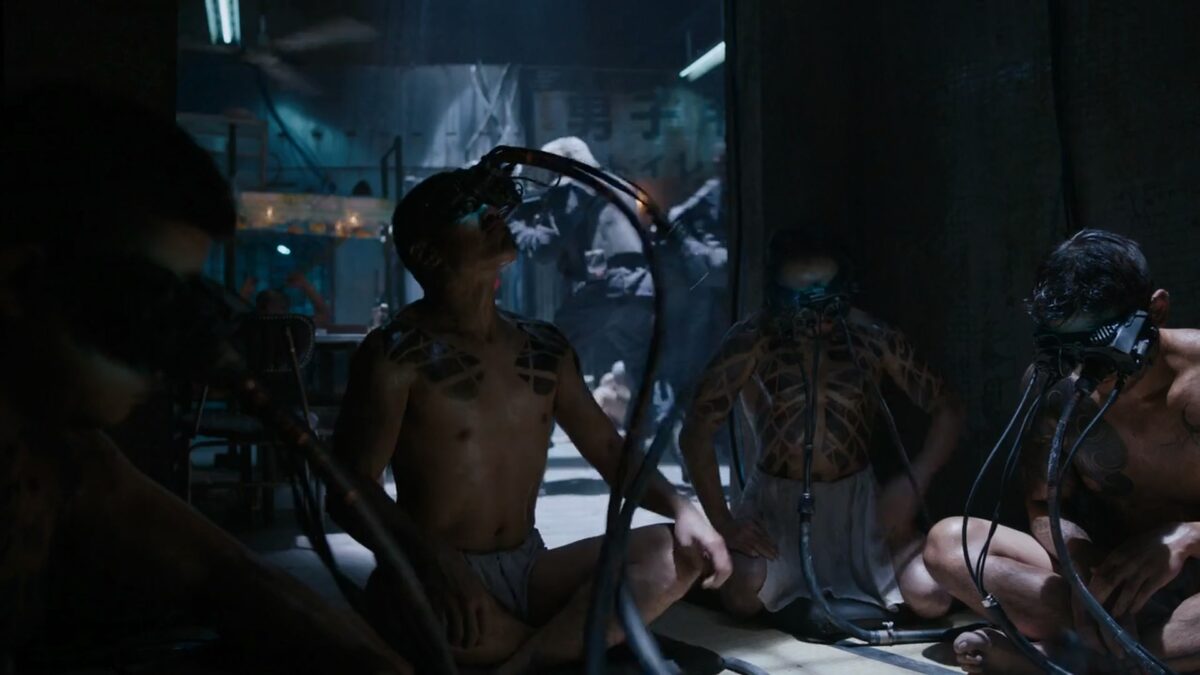
Readers who encountered Masamune Shirow’s original manga first are often startled when they see the film.
The manga is a much lighter and more playful work, blending action and techno-thriller elements with a comedic tone.
Mamoru Oshii stripped away almost all of the humor and assorted side stories, retaining only the framework of the Puppet Master case and rebuilding it as an intensely heavy, meditative film.
For manga fans, the tonal shift is so extreme that they may wonder whether this is even the same story. I do not see it as a betrayal of the source material.
Rather, Oshii extracted the philosophical fragments scattered throughout the manga and compressed them into a single question. Had he simply reproduced the original, the Ghost in the Shell we remember today would not exist.
Faced with a choice between preserving the manga’s light, playful tone and relentlessly pursuing the one weightiest question buried within it, Oshii chose the latter. That decision is what secured the film’s place in science-fiction history.
Why the 2017 Hollywood Version Really Failed
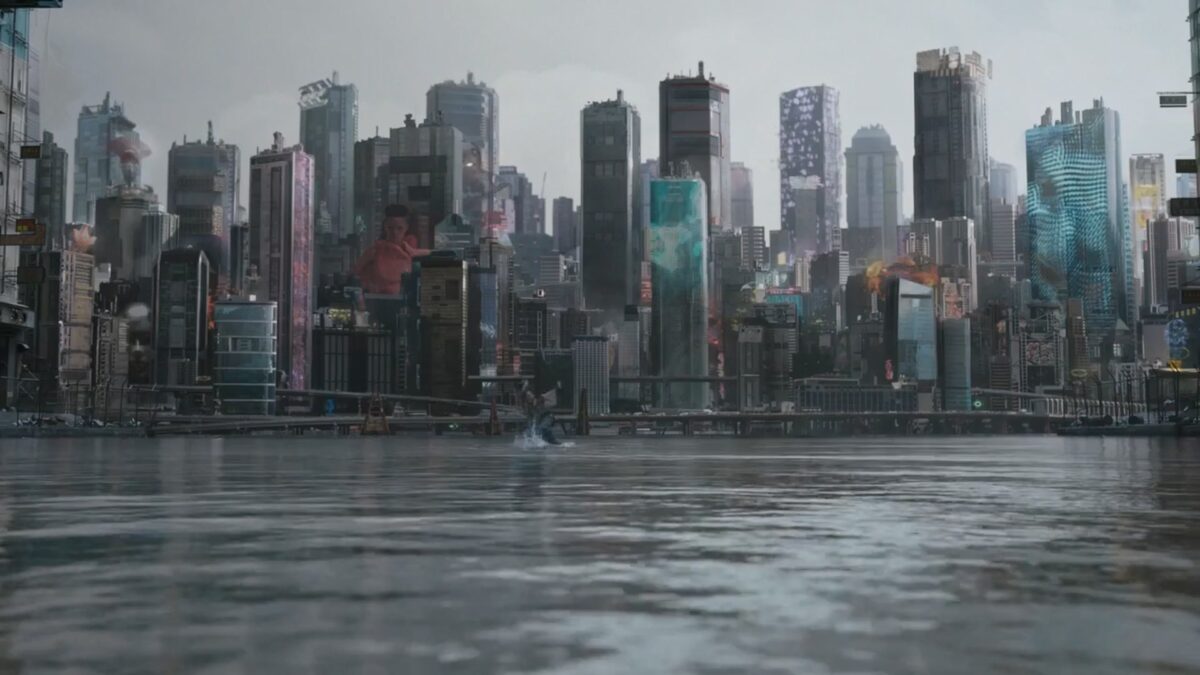
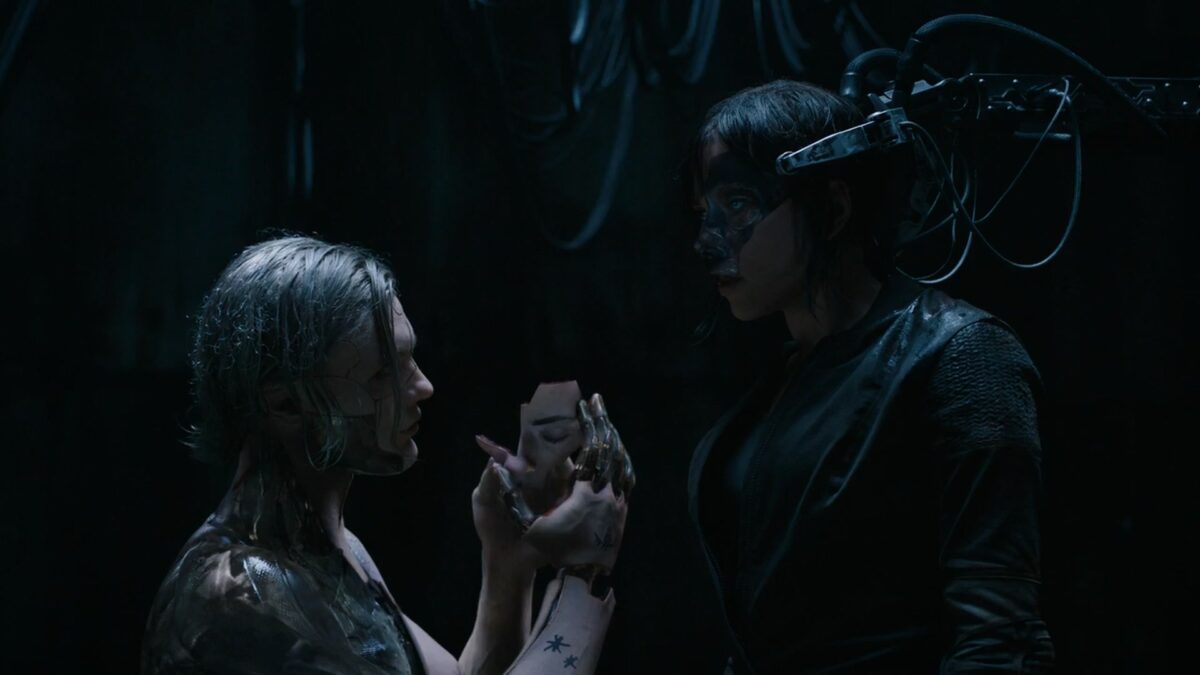
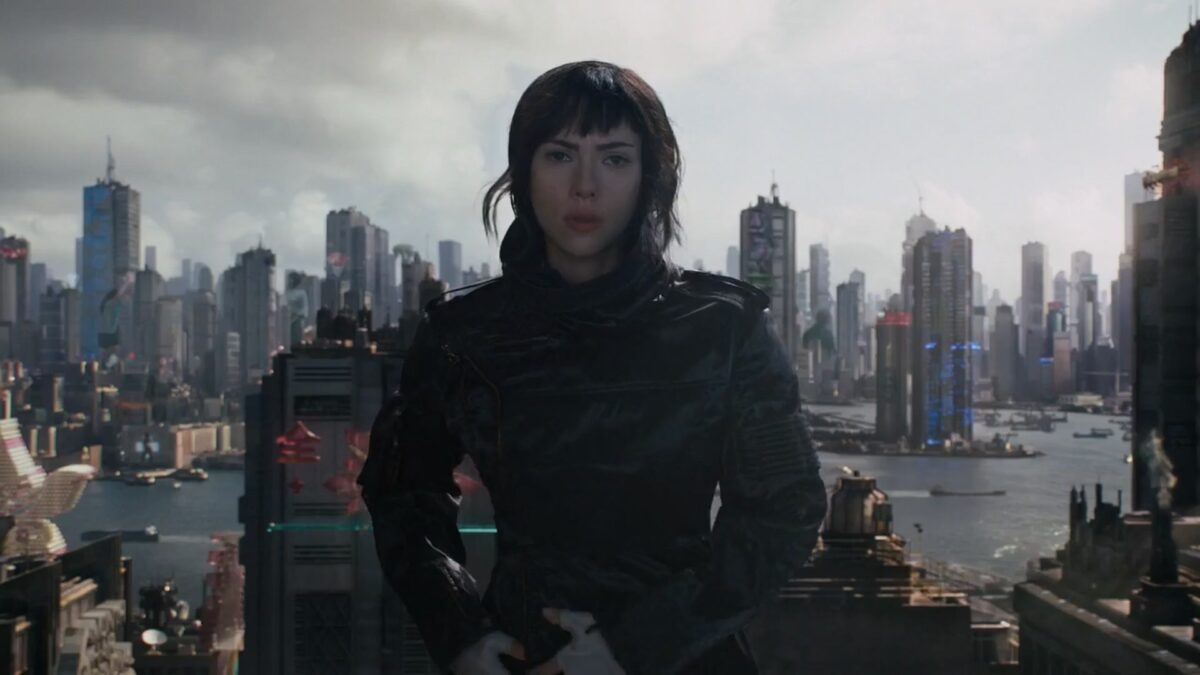
The 2017 live-action adaptation starring Scarlett Johansson was embroiled in a whitewashing controversy before its release.
Because a white actress had been cast as Motoko Kusanagi, a Japanese character, a recasting petition was launched and gathered more than 100,000 signatures.
For the sake of fairness, it should also be noted that the manga’s publisher and Mamoru Oshii, director of the 1995 film, supported the casting.
After its release, the film opened in third place in the United States with $19 million for the weekend, while its Rotten Tomatoes score fell from 71 percent before release to 42 percent during opening week.
The studio cited several causes for the poor performance: the source material’s difficult concepts, North American audiences’ unfamiliarity with the original, the whitewashing controversy, and competition from other releases. I do not think the failure can be reduced to the casting controversy alone.
The real problem was that, in trying to make the story more accessible by sanding away its complexity and adding new characters and expanded plotlines, the Hollywood version also erased the very opacity and unresolved discomfort that had made the 1995 film great.
Even without the whitewashing controversy, the film probably would have struggled at the box office.
The attempt to domesticate the source material’s sharp questions and turn them into accessible entertainment was fundamentally at odds with the identity of Ghost in the Shell itself.
Final Verdict
Ghost in the Shell (1995) is not a friendly film.
It offers only the bare minimum of explanation, asks the audience to fill in the gaps, and ends by leaving questions rather than clear answers.
For some viewers, that approach becomes a source of boredom. For others, it is precisely why they keep returning to the film three decades later.
I am in the latter camp. If The Matrix popularized this film’s style around the world, Ghost in the Shell remains the original work that asks, with unmatched honesty, the real questions beneath that style.
If I were giving it a rating, I would award it 4.5 stars. There is only one reason to dock it points: if you watch it without being prepared for the concentration it demands, it really can feel boring.
Frequently Asked Questions (FAQ)
Is Ghost in the Shell based on a true story?
No. It is based on Masamune Shirow’s science-fiction manga and is not based on real events or people. It takes place in a fictional cyberpunk world set in 2029.
Did The Matrix plagiarize Ghost in the Shell?
It is better described as an officially acknowledged homage than as plagiarism. The Wachowskis are widely known to have cited the 1995 film as a reference when developing The Matrix, and its influence can be seen directly in visual elements such as the digital-rain credits and slow-motion action. The narrative structure and approach to the ending, however, took a completely different path.
How different are the original manga and the 1995 film?
The tone is fundamentally different. The manga is a lighter work that combines action and techno-thriller elements with humor, while Mamoru Oshii’s film removes most of the comedy and reconstructs the story in a philosophical, heavy register. Readers who encountered the manga first may be especially surprised by the film’s tonal shift.
How is the 2017 Hollywood live-action film related to the original?
It is a remake based on both the 1995 animated film and the original manga. Scarlett Johansson played the lead, and the adaptation added new characters and expanded the story. However, it failed to receive the same acclaim as the original because of the whitewashing controversy and its weak box-office performance.
What exactly was the whitewashing controversy surrounding the 2017 film?
When Scarlett Johansson, a white actress, was cast as Motoko Kusanagi, a Japanese character, the decision sparked criticism over the exclusion of Asian actors. A recasting petition gathered more than 100,000 signatures. The publisher of the original manga and the director of the 1995 film, however, publicly expressed their support for the casting.
Are there any sequels or follow-up series?
A sequel, Innocence, was made in 2004, and Ghost in the Shell 2.0, a remastered version of the 1995 film, was released in 2008. There are also several spin-offs, including the TV series Stand Alone Complex and the prequel-style Arise.
Can I watch it expecting an action movie?
The action sequences themselves are excellent, but the film’s center of gravity is not action—it is philosophical reflection on identity. Viewers expecting fast pacing and nonstop spectacle may find the quieter passages slow, so it is best approached as a film that demands contemplation.
