
A 64-Year-Old Plays a 42-Year-Old Captain — and Greyhound Still Runs Smoothly
In the source novel, Captain Ernest Krause is 42.
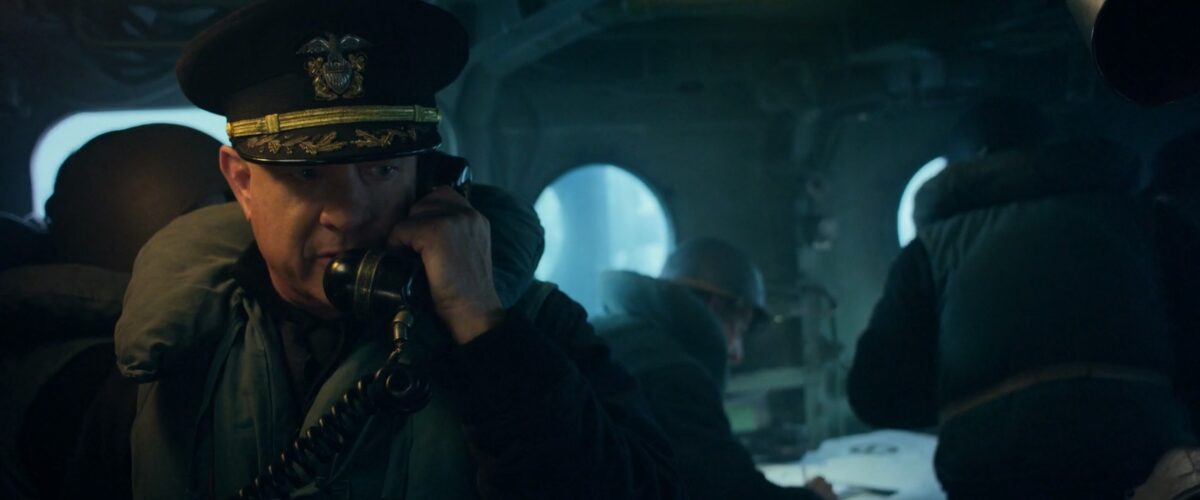
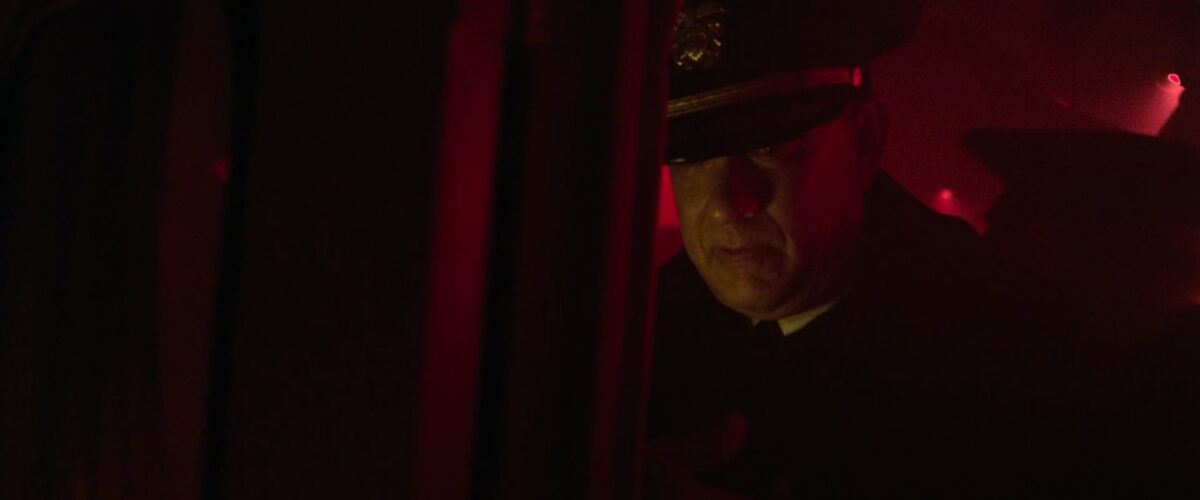
That is young even for an inexperienced captain taking command in combat for the first time. Yet the film cast Tom Hanks, who was 64 when it was shot, in the role.
And somehow, it never feels awkward. In fact, the fact that most viewers miss the mismatch entirely tells you exactly what this film does well.
Greyhound is not a film about showing us a character. It is a film about showing us decisions.
With news that filming on the sequel began in Sydney in early 2026, I took another close look at the original.
Why a 91-Minute Film Was Made This Way
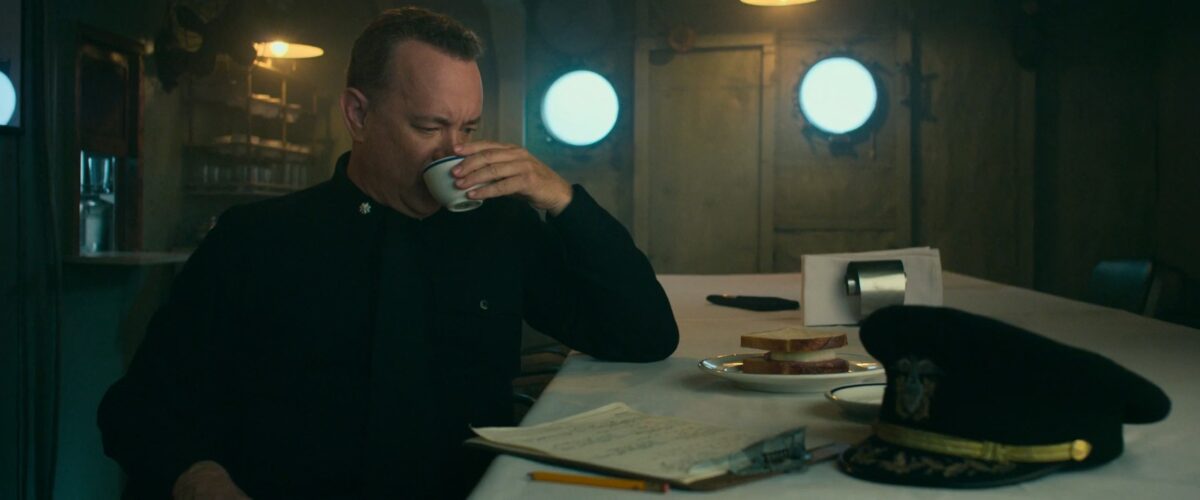
Tom Hanks wrote the screenplay himself, adapting C. S. Forester’s 1955 novel The Good Shepherd.
His long-standing fascination with the Second World War is nothing new. Given his producing credits on Band of Brothers and The Pacific, Greyhound feels less like a departure than a continuation of that tradition.
The film was originally planned for a theatrical release in the first half of 2020. But when the pandemic shut cinemas, Sony sold the rights to Apple TV+, turning it into one of the service’s early flagship titles.
Its 91-minute running time was not the accidental result of an overzealous editing process. The film was designed that way from the start.
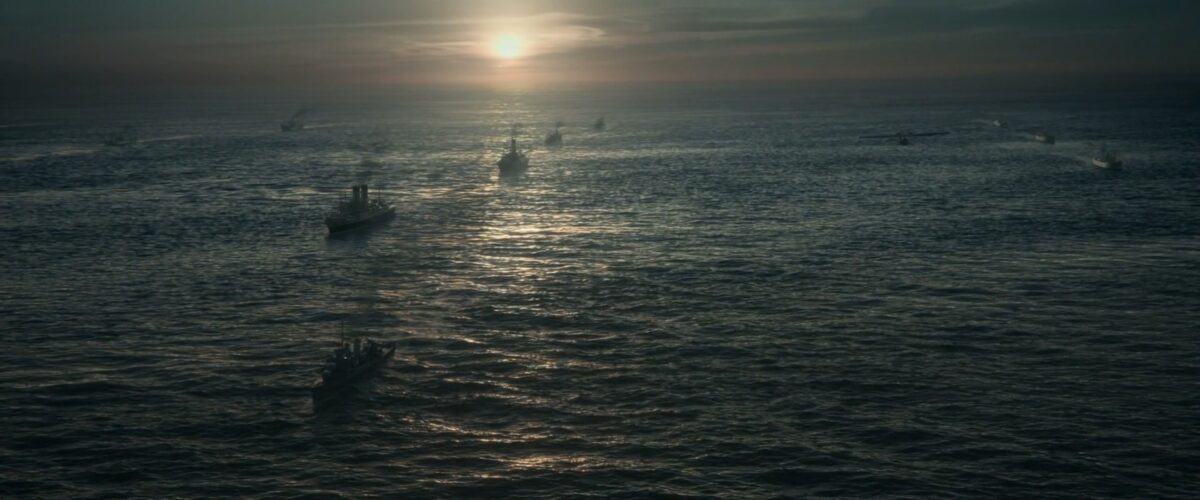
Aside from a few brief flashbacks that function almost like opening credits, the film has virtually no subplot. The ship sails, a pack of submarines gives chase, and a convoy mission lasting more than 40 hours unfolds in a near-real-time compression.
Critics who praised the film for making efficient use of its “90 minutes” and those who criticized it for its “thin character development” were ultimately responding in opposite ways to the same creative choice.
I see that choice as a trade-off rather than a flaw. That said, it is fair to acknowledge that the bargain did not work for everyone.
A 42-Year-Old Captain, a 64-Year-Old Actor — and Details Nobody Cared About
Once you start examining the historical details, the film has more than a few holes.
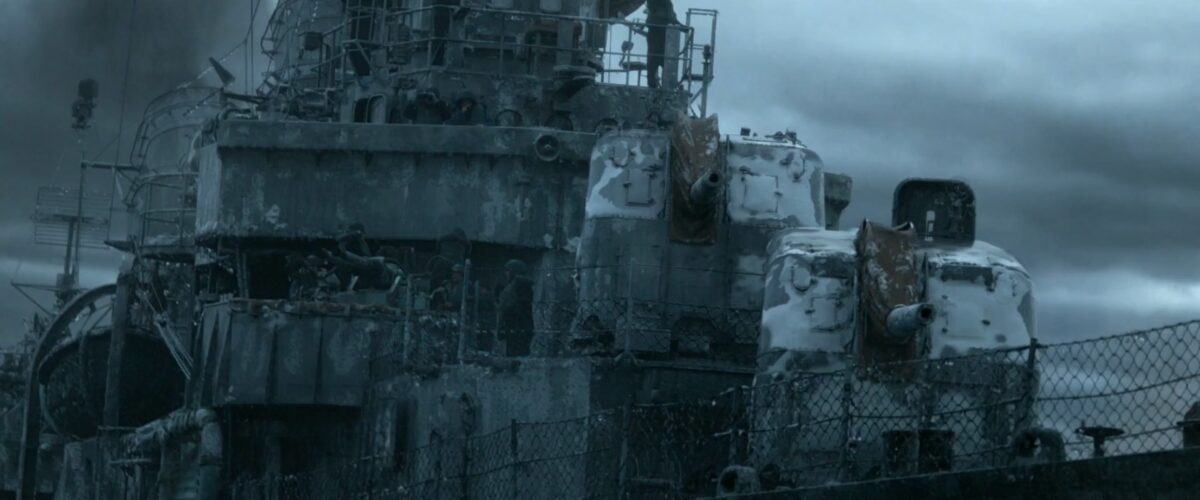
The story is set in February 1942, but the Fletcher-class destroyer used in the production—the USS Kidd, not the USS Curtis Wilbur—did not enter service until after June 1942.
The film also features SG radar and a Combat Information Center, neither of which existed at the time.
The most glaring example is the scene in which a German U-boat captain taunts the Allied fleet over the radio. Dramatically, it is one of the film’s most thrilling moments. But naval historians point out that it is highly unlikely a U-boat of that era would have broadcast such taunts fluently in English.
Then there is the fleeting appearance of the SS United States, a passenger liner not launched until 1950.
But do these details ruin the film? Not at all. The tangible details—naval terminology and steering commands such as “meet her!”—are handled with care. More importantly, most viewers leave having noticed none of these anachronisms.
Leave the pleasure of pointing out historical inaccuracies to the military enthusiasts. The film’s real achievement is that it works remarkably well despite the gaps.
It Is Not That the Characters Are Missing; There Is Only One Character by Design
The most common complaint about the film is that its characters are “paper-thin.”
That is not wrong. The film barely explains why Krause, with no combat experience, was given such an important command, or what emotional weight his relationship with Evie, the woman he left behind on the mainland, carries.
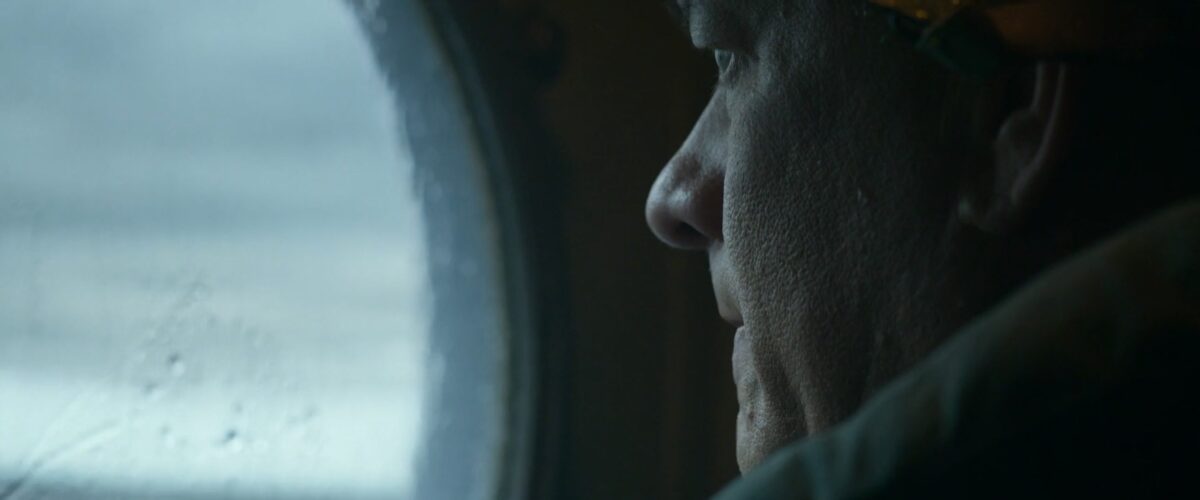
But I see this less as a failure than as a matter of genre. The film is not an ensemble drama. It is about one man making a chain of tactical decisions over 40 sleepless hours.
The executive officer, the helmsman and the radioman are not characters so much as channels through which the captain’s decisions are carried out. Within that design, Krause is the only person given an interior life. The others were never required to be fully developed characters.
That does not mean the choice is emotionally successful in every respect.
Where Das Boot explores the psychological pressure inside a submarine through the relationships among its crew, Greyhound processes that pressure entirely through tactics and timetables.
The result is undeniably tense, but by the time the credits roll, there are few faces left lingering in the memory. That is less a defect than a goal the film never set out to pursue.
The Real Tension Comes from Rhythm, Not Dialogue
What the film genuinely excels at is something else.
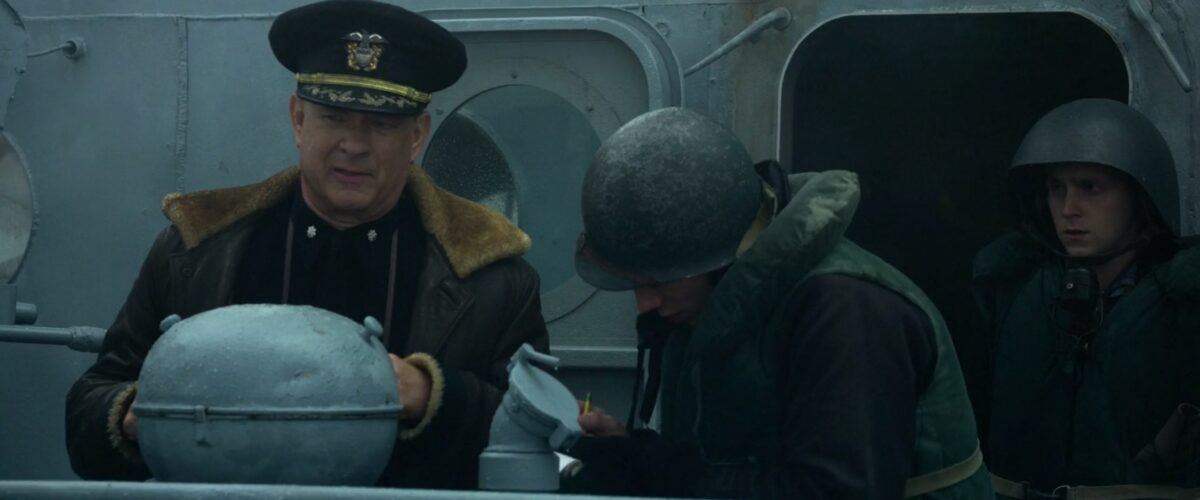
It edits the bridge conversations—an unbroken stream of coordinates, bearings and depth readings—as if they were action sequences.
It is the speed and repetition of lines such as “30 degrees to port, torpedo wake sighted,” rather than explosions or gunfire, that creates the tension.
The result feels convincing in part because the actors were trained and filmed aboard the decommissioned destroyer USS Kidd, giving the movement and noise inside the bridge an air of authenticity.
This procedural rhythm holds the audience in its grip for all 91 minutes without relying on spectacle. That is the film’s most dependable weapon.
The Sequel Is Now Shooting — and the Stage Is About to Get Bigger
Apple has officially approved a sequel, and production began in Sydney in early 2026. Tom Hanks is returning as both screenwriter and star, while director Aaron Schneider is also back.
This time, the story is reportedly expanding from the Normandy landings to the Pacific theater. Personally, I am both hopeful and concerned.
The first film drew its power from an extremely confined setting: “the middle of the Atlantic, 40 hours, one ship.” Expanding that stage from the Atlantic to the Pacific risks diluting the claustrophobic tension that defined the series in the first place.
Still, the return of the same director and screenwriter suggests that the filmmakers understand what the movie does well, so I am not entirely uneasy.
Final Verdict
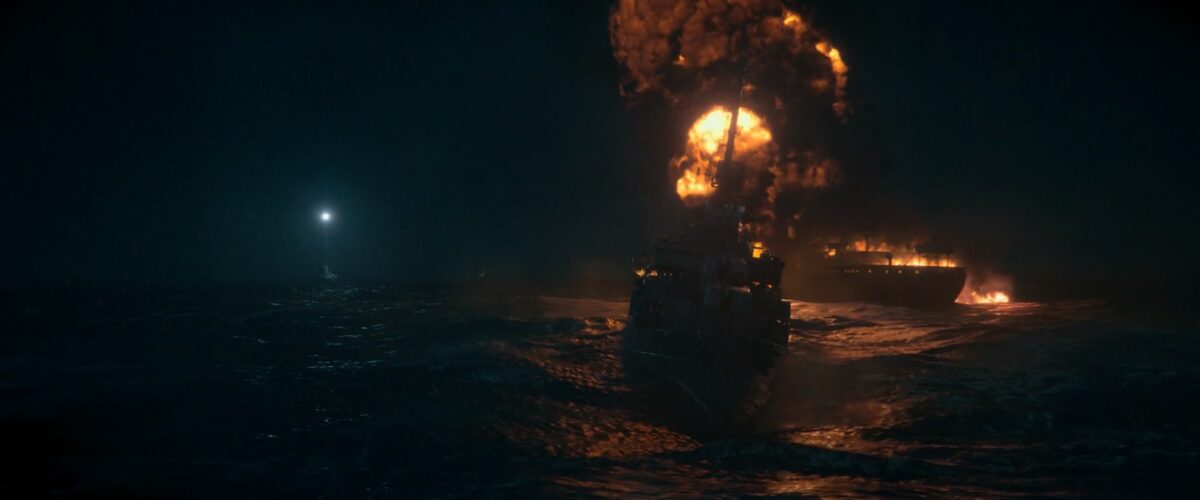
Greyhound is underwhelming as character drama and riddled with historical gaps if you scrutinize its accuracy. But as a 90-minute tactical procedural, it is almost impossible to fault.
It knows exactly what it is trying to do, and within those limits, not a scene is wasted.
I give the film 3.5 stars. Its lack of grand ambition is both its limitation and the reason it can finish its job in 91 minutes and leave.
Frequently Asked Questions (FAQ)
Is Greyhound based on a true story?
It is not a direct retelling of a specific real-life event. The film is based on C. S. Forester’s 1955 novel The Good Shepherd, a work of fiction inspired by the naval battles between Allied convoys and German U-boats during the Battle of the Atlantic in the Second World War. However, it reflects the tactics and procedures of actual convoy operations with considerable fidelity.
Did Tom Hanks really write the screenplay himself?
Yes. Hanks not only stars in the film but also wrote the screenplay. He has long been known for his interest in the naval history of the Second World War, and his work on war dramas such as Band of Brothers and The Pacific reflects that interest.
Why was Greyhound released on Apple TV+ instead of in theaters?
The film was originally scheduled for a theatrical release through Sony in the first half of 2020. But when the pandemic shut cinemas and made its release uncertain, Sony sold the rights to Apple TV+. It was subsequently released as a streaming title and became one of the service’s early signature productions.
When will the Greyhound sequel be released?
Apple has confirmed the sequel and filming began in Sydney, Australia, in early 2026. Tom Hanks is returning as screenwriter and star, with Aaron Schneider again directing. The story is expected to expand from the Normandy landings to the Pacific theater. A specific release date has not yet been announced.
Why is Greyhound only 91 minutes long?
The film was not accidentally shortened during editing. It was designed from the outset to focus on a compressed, near-real-time convoy operation without subplots. That choice keeps the tension high throughout, but it also led to criticism that the characters’ backstories are underdeveloped.
Is Greyhound historically accurate?
The film faithfully recreates many of the broader tactics and naval terms, but it contains several anachronisms in the details. Although the story is set in 1942, it features a Fletcher-class destroyer that entered service later, along with radar and a Combat Information Center that did not yet exist. The scene in which a U-boat captain taunts the Allies in English over the radio is also considered unlikely. Even so, many viewers and critics believe these details do not significantly damage the film’s overall quality.
