
The Selfishness and Existential Dilemma Exposed by Cosmic Isolation: A Deeper Look at Passengers
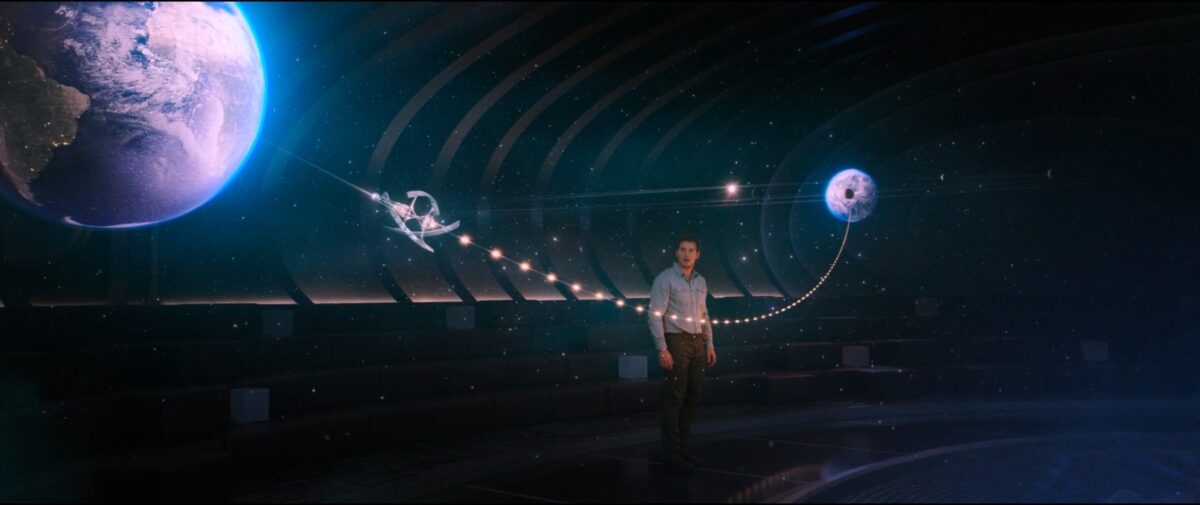
Directed by Morten Tyldum and starring Chris Pratt as Jim Preston and Jennifer Lawrence as Aurora Lane, the 2016 film Passengers generated considerable buzz upon its release, thanks to its dazzling space visuals and pairing of two of Hollywood’s biggest stars.
On the surface, the film appears to be a tender, romantic science-fiction story about a man and a woman set against the vastness of space.
But as the story unfolds, what fills the screen is not the sweetness of romance but the chilling force of two questions: How far can existential isolation corrupt a human being? And what does it mean to impose a destiny on someone without their consent?
Centered on the consequences of one man’s selfish choice after he awakens alone during a 120-year journey through space, this in-depth look at Passengers examines the film’s key details and behind-the-scenes history, analyzes the sharpest responses from critics in Korea and abroad, and explores the existential questions it raises for contemporary society.
1. Passengers: Essential Facts and Its Broad Narrative Structure
① Key Facts and Production Background
- Release: December 2016 (January 2017 in South Korea)
- Director: Morten Tyldum (director of The Imitation Game)
- Screenwriter: Jon Spaihts (writer of Prometheus, Doctor Strange, Dune, among others)
- Cast: Chris Pratt as Jim Preston, Jennifer Lawrence as Aurora Lane, Michael Sheen as Arthur, the android bartender, and Laurence Fishburne as Gus Mancuso
- Budget and box office: Made on a production budget of approximately $110 million, the film earned around $300 million worldwide. It was praised for its visual effects and performances, but its ethical dilemma, discussed below, sparked intense debate among critics.
② The Plot’s Three Turning Points and Conflict Map
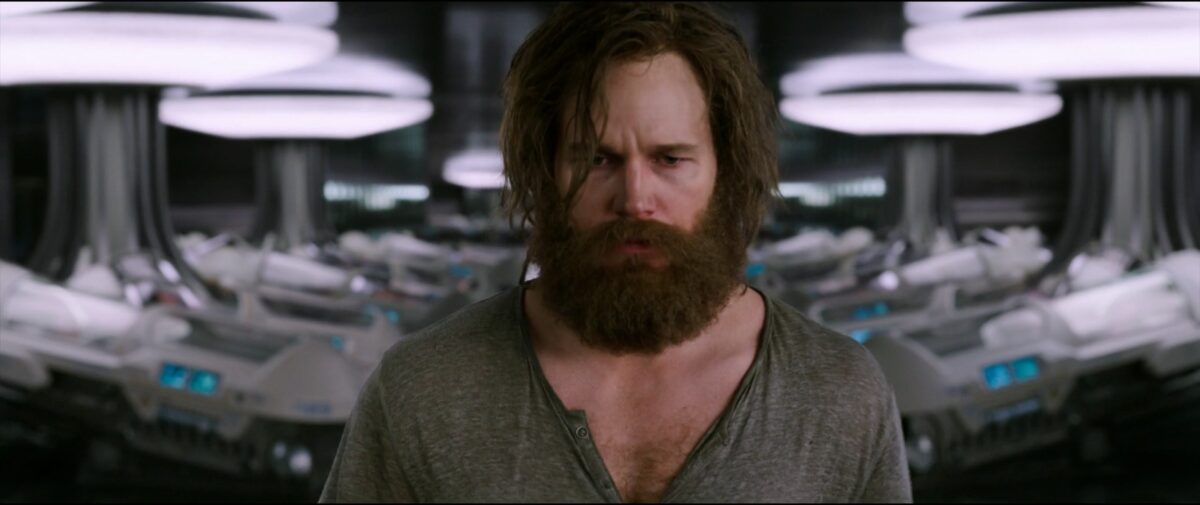
- A personal tragedy: The Avalon, a luxury starship carrying 5,000 passengers to the colony world of New Homestead, collides with space debris—an asteroid—and engineer Jim’s hibernation pod malfunctions. He still has 90 years left in the journey, and there is no way for him to go back to sleep. Jim enjoys the ship’s luxurious amenities alone for a year, but begins to lose his mind in an environment where his only conversational companion is Arthur, the android bartender.
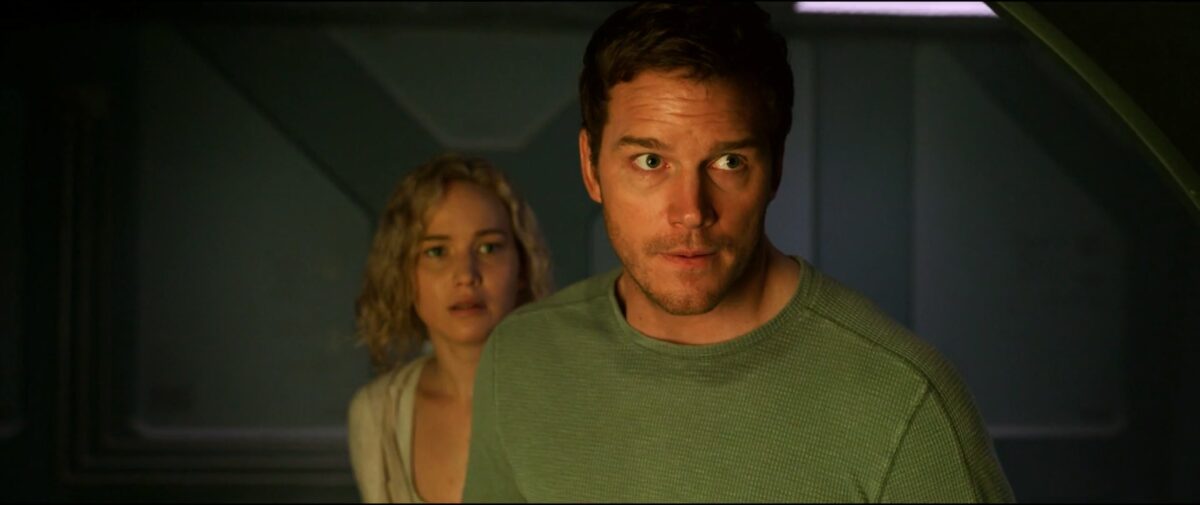
- An ethical collapse: After reaching the point of contemplating suicide because of his crushing loneliness, Jim sees Aurora, a writer still in hibernation, and falls in love with her at first sight. After months of moral anguish, he forcibly tampers with her hibernation pod and wakes her, even though he knows that doing so is tantamount to “murdering her life.”
- A story of redemption and compromise: When the truth comes out, Aurora calls Jim a “murderer” and despises him. But when a reactor malfunction threatens to kill all 5,000 passengers, the two work together to repair the system. Jim risks his life to save Aurora and the ship. In the end, Aurora gives up the chance to use the Med-Pod—the only opportunity for one of them to return to hibernation—and chooses to grow old and die aboard the ship with Jim.

2. Key Critical Responses and the Film’s Reception at Home and Abroad
Few science-fiction films have divided audiences and critics as sharply as Passengers. Taken together, the film’s reviews can be distilled into a conflict between admiration for its technical achievements and discomfort with its narrative choices.
① The Praise: An Existential Portrait of a Man Enduring the Weight of Solitude
Some favorable critics, including those at RogerEbert.com, praised the film’s portrayal of loneliness, particularly in its first 40 minutes.
The film’s defenders argued that Chris Pratt’s anguished performance effectively shows how a person can be psychologically destroyed even when surrounded by extraordinary material abundance—luxurious suites, bars, and entertainment facilities aboard the Avalon—if genuine human connection is absent.
One sequence in particular, in which Aurora nearly drowns after becoming trapped inside a globule of water in the ship’s zero-gravity swimming pool, is often cited as a masterful visual expression of how powerless and isolated human beings are within the vastness of space.
② The Criticism: “Cosmic Stalking” and the Romanticization of Dating Abuse
By contrast, many Western critics—the film recorded a Rotten Tomatoes score in the 30-percent range—vigorously condemned the “ethical deception” at the heart of its plot.
The New York Times and The Guardian argued that “this film should have been a cosmic horror story and thriller disguised as a romantic comedy.”
Jim’s decision to wake Aurora is not simply an expression of loneliness. It is fundamentally comparable to kidnapping and unlawful confinement: he takes away another person’s entire future and turns her into a means of resolving his own existential crisis.
Critics sharply condemned the film’s decision to introduce a contrived disaster involving the ship’s imminent destruction in its second half, thereby granting Jim a “heroic pardon,” and to have Aurora, the victim, forgive and fall in love with Jim, the perpetrator. They described the ending as a “Hollywood patriarchal fantasy that legitimizes Stockholm syndrome.”
3. A Deeper Reading of Passengers Through a Contemporary Lens
The film’s real value lies beyond the romance Hollywood intended to present. Beneath that surface, Passengers functions as a mirror reflecting the pathological conditions and philosophical dilemmas of contemporary society.
① Digital Isolation and the Existential Alienation of Modern Life
Jim is the only person awake on a starship where thousands of passengers remain asleep.
His situation symbolizes the paradox of modern digital society: hundreds of millions of people are closely connected through the internet and social media, yet many feel intensely lonely because they cannot form genuinely meaningful relationships.
Jim repeatedly questions the ship’s artificial-intelligence computer, only to receive mechanical answers drawn from its manual. It is a portrait of people today, surrounded by chatbots and algorithms while slowly dying alone.
The film paradoxically suggests that even amid material abundance and advanced technology, human beings cannot ultimately survive without another person who truly understands them.
② The Loss of Consent and a Society Built on Gaslighting
The central contemporary issue running through the film is consent.
Aurora made an autonomous decision about the course of her life: she boarded the ship intending to travel from Earth 100 years into the future and write about it.
But in order to resolve his own loneliness, Jim eliminated any possibility of seeking Aurora’s consent and forcibly rewrote the course of her destiny.
After the truth is revealed, Jim says, “I couldn’t help it. I loved you.” That excuse mirrors the characteristic logic of gaslighting, breakup-related crimes, and dating-abuse perpetrators in the real world.
The way the film hastily wraps this enormous act of violence in the noble cause of “saving the ship,” packaging it as love, offers an instructive reflection of how readily society still disregards the right of vulnerable people and victims to give or withhold consent.
③ A Futuristic Projection of Class Inequality
The systems aboard the Avalon operate according to a rigid class hierarchy.
As a Gold-level passenger, Aurora receives premium espresso and the finest meals, while Jim, a lower-ranking technician, is limited to cheap drip coffee and restricted rations.
It is Jim, a member of the working class, who is awakened first by a mechanical failure and forced to confront the system’s injustices firsthand. Aurora, representing the upper class, sleeps safely without knowing anything, her life ultimately shaped by the sacrifice or choices of a worker.
Through the metaphor of a futuristic starship, this setup evokes the bitter reality of capitalist society: when climate crises or economic disasters strike, it is usually those at the bottom who are hit first, pushed to the edge of survival, and forced to confront impossible moral dilemmas.

4. Conclusion: The Strange Peace Left Behind in the Avalon’s Garden
The final scene of Passengers shows what the passengers and crew discover when they awaken 88 years later.
At the heart of the ship’s cold, metallic interior is an “Eden” filled with green trees, shrubs, and animals—an ecosystem Jim and Aurora cultivated throughout their lives.
The passengers marvel at the beautiful landscape as they listen to Aurora’s moving narration.
This eerily beautiful conclusion leaves viewers with a difficult question.
Is their life the best romance they could create from the tragedy they were given, or is it the product of a brutal compromise—one in which they have been absorbed into the selfish crime of a single human being?
It is said that the original screenplay—an early draft by Jon Spaihts—had a much darker and more existential ending. The hibernation pods of all 5,000 passengers would be ejected into space after the ship’s systems failed, leaving only Jim and Aurora alive to propagate a new generation through artificial insemination.
Hollywood producers reportedly reshaped that story into a conventional romantic happy ending, cutting away much of the film’s philosophical depth in the process.
Even so, Passengers leaves important questions for a contemporary society marked by a new Cold War, rising individualism, and increasingly severe digital isolation.
Through the vast, lonely screen of space, the film continues to ask a cold and unsettling question about humanity’s instinctive selfishness—the desire to pursue personal survival and happiness even at the expense of another person’s rights—and about our sorrowful capacity to adapt, allowing even violence to be domesticated over time in the name of “love” and “security.”
FAQ
FAQ 1. Is Passengers simply a science-fiction romance?
No. On the surface, it is a romance set in space, but at its core it is closer to a psychological drama examining how extreme isolation can undermine human ethics and judgment. The story revolves around the existential question of whether another person’s life can be used as a solution to one’s own loneliness.
FAQ 2. Why did Jim’s decision to wake Aurora cause such controversy?
Because Jim forcibly changed the rest of Aurora’s life without her consent. Many critics interpreted the act not as an expression of love but as a serious ethical violation that deprived another person of her life as she had chosen it. Others viewed it as a tragedy that realistically portrays the psychological collapse of a human being under extreme isolation.
FAQ 3. What is the most important social message of Passengers?
The film emphasizes the existential isolation experienced by modern people and the importance of human relationships. It shows that no matter how abundant the surroundings or advanced the technology, people can psychologically collapse without genuine connection. At the same time, it establishes an ethical boundary: one person’s choices must not violate another person’s freedom and rights.
FAQ 4. What does the Avalon symbolize in the film?
The Avalon can be read as more than a spaceship; it is a condensed version of modern society. Its unequal services, divided according to class, and its inhabitants’ dependence on complex systems reflect real-world inequality and technological dependence. As a sealed environment from which no one can easily escape, it also serves as a metaphor for modern life itself.
FAQ 5. Does Passengers have a happy ending?
On the surface, the ending appears hopeful: the two choose to share a life and leave behind a beautiful garden. Yet because their life begins with a nonconsensual choice and an imposed destiny, many viewers experience the conclusion as deeply bittersweet. Ultimately, the film lingers less as a story about love and forgiveness than as an examination of human choice, responsibility, and ethical compromise.
