
Timothée Chalamet, the New Superstar

Timothée Chalamet has established himself as one of the most distinctive actors in Hollywood history.
In Denis Villeneuve’s epic Dune series, he has taken center stage in global cinema with a definitive portrayal of Paul Atreides—the savior and destroyer of the universe.
Seen through the eyes of a critic, this wide-ranging analysis traces his journey from childhood and family background to the decision to become an actor, the evolution of his filmography, and the latest assessments of a career where acclaim and controversy increasingly intersect.
Vulnerability and Grandeur in One: The Timothée Chalamet Chronicle
1. Hell’s Kitchen’s Artistic Legacy and a Hybrid Identity
The defining emotion running through Timothée Chalamet’s acting is the sophisticated fusion of seemingly incompatible qualities. That sensibility is inseparable from the circumstances in which he was born and raised.
Born in 1995 in Hell’s Kitchen, the bohemian artists’ quarter of Manhattan, he grew up in a family rich in cultural capital. His French father was an editor at UNICEF, while his American mother was a former Broadway dancer who later became a real-estate agent. His maternal grandfather and aunt were also artists, working as a Hollywood screenwriter and writer.
That background gave Chalamet two decisive advantages.
- Cultural hybridity: The polished urban sensibility of New York and the European atmosphere of summers spent in Lyon, France, coexist within him. He speaks both English and French fluently in conversation.
- Artistic receptivity: Having grown up surrounded by dance, music, and theater, he developed an instinctive ease with artistic expression from an early age.
He began refining his talent in earnest at Fiorello H. LaGuardia High School of Music & Art and Performing Arts, a celebrated training ground for actors. It was there that he began the decisive transformation from “the child of an artistic family” into an actor with a consciousness of his own craft.

2. What Led Him to Acting: The Theater as Salvation and a Fateful Awakening
Chalamet did not dream of becoming a professional actor from the beginning. As a child, he sometimes imagined becoming a soccer player, and he treated acting almost as a hobby while moving between modest commercials and bit parts. The decisive turning point, however, came with his admissions interview for LaGuardia and the plays he encountered there.
In one interview, he admitted that Heath Ledger’s performance as the Joker in The Dark Knight left him profoundly shaken as an artist. He realized that acting could be more than simple representation: it could be a “creative explosion” capable of disturbing the depths of the human psyche.
After appearing in school productions including The Talls, he discovered the exhilaration of exchanging energy with an audience onstage. Even after enrolling at Columbia University and New York University, he ultimately chose to leave college and commit himself to acting rather than his studies. It was the moment his awareness of himself as an actor became complete—the point at which he could no longer imagine living without acting.

3. The Evolution of His Filmography: From a Vulnerable Boy to a Ruler Bearing the Weight of Power
Timothée Chalamet’s career can be summed up as a remarkable evolution from indie-film darling to messiah carrying a blockbuster franchise on his shoulders.
❶ Fragile Youth and a Breakthrough Arrival (2014–2017)
After first becoming recognizable to audiences as a minor character—the protagonist’s son—in Christopher Nolan’s Interstellar (2014), he sparked a worldwide phenomenon in 2017 with Luca Guadagnino’s Call Me by Your Name.
- Call Me by Your Name (as Elio): Playing Elio, a 17-year-old boy suffering through the fever of first love beneath the blazing Italian sun, Chalamet etched human loss onto the screen with three minutes of tears by a fireplace in the film’s final scene alone. The role earned him an Academy Award nomination for Best Actor, making him the youngest nominee in the category in 80 years.
- Lady Bird and Hot Summer Nights: In the films that followed, he portrayed everything from a narcissistic teenage bad boy to the precarious edges of youth, becoming an irreplaceable icon of youthful vulnerability.
❷ Broadening His Range Through Pain and Responsibility (2018–2020)
Chalamet was careful to avoid being trapped by a single image. In Beautiful Boy (2018), he gave a harrowing depiction of a son descending into the devastation of drug addiction. In the Netflix original The King (2019), he conveyed the solitude and razor-edged coolness of a young monarch forced to bear the weight of the crown.
Through Laurie in Greta Gerwig’s Little Women (2019), he also acquired a classic romantic quality.
❸ The Dune Series and the Rise of a Fantasy King (2021–Present)
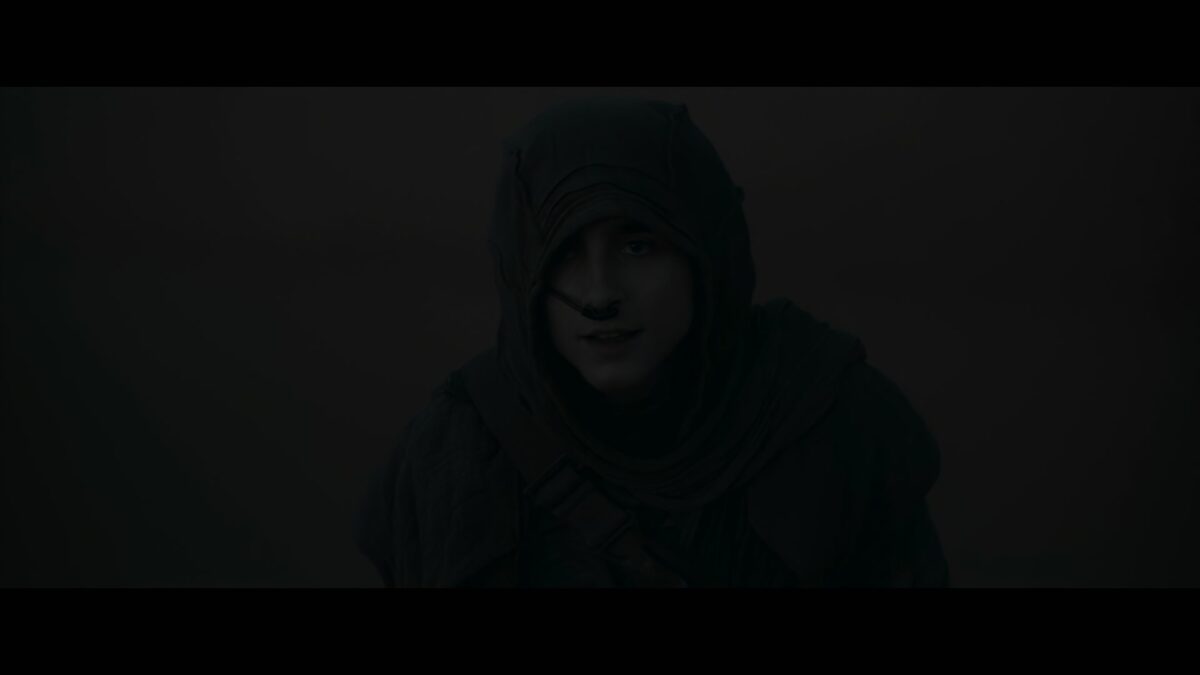
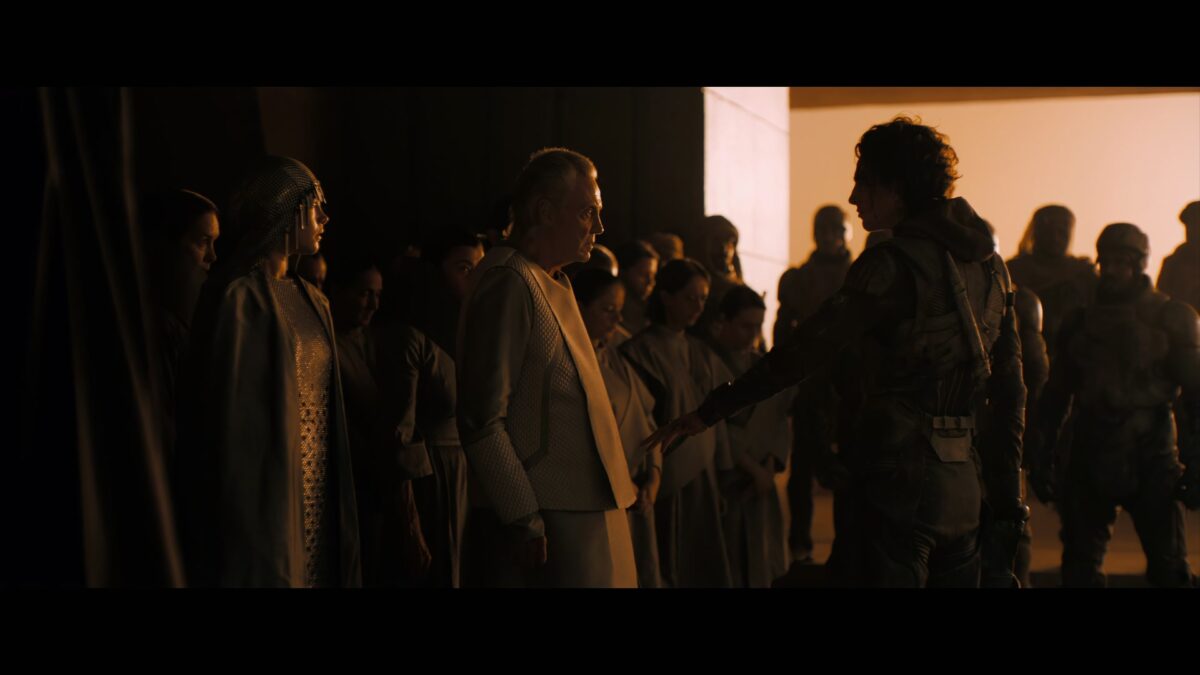
Denis Villeneuve’s Dune (2021) and Dune: Part Two (2024) are the masterpieces that elevated Chalamet from a star into an icon of his era. He fully inhabited Paul Atreides’ inner transformation—from a boy adrift in the face of his family’s destruction to a hardened figure who learns the brutal laws of the desert and ultimately becomes the terrifying messiah Muad’Dib, sending the entire universe into the flames of war. Even amid vast digital effects and monumental direction, his deep, melancholy gaze firmly anchors the film.
He went on to demonstrate a range spanning opposite extremes, playing the cheerful, warm-hearted magician in the musical Wonka (2023) and Bob Dylan in director James Mangold’s biographical film A Complete Unknown (2024).

4. Recent Achievements and an Analysis of His Acting Style
Timothée Chalamet is at the forefront of a 21st-century “New Masculinity.” Unlike the macho, unyielding image of manhood that once dominated Hollywood, he makes his vulnerability and sensitivity his greatest weapons.
| Element of his acting style | Characteristics and expression | Representative film |
|---|---|---|
| Subtle physical language | Rather than raising his voice, he conveys a character’s anxiety through a wavering gaze and the faintest tremor in his fingers | Call Me by Your Name |
| Ambivalent presence | Boy and man, sacredness and corruption, softness and sharpness coexist in the same face | Dune: Part Two |
| Overwhelming screen presence | Even amid dazzling production design and enormous scale, he holds the audience’s gaze | The King |
Most recently, he has earned critical acclaim for playing a table-tennis champion in director Joe Safdie’s sports drama Marty Supreme (2025), winning Golden Globe and Critics Choice awards for Best Actor.
With both commercial success—achieving global box-office records with Wonka and Dune: Part Two—and artistic accomplishment to his name, he is clearly one of the most powerful box-office draws in Hollywood today.
5. Crisis and Critical Dilemmas: Cracks in the “Flawless Star”
But the brighter the light, the deeper the shadow. Chalamet has recently faced the most intense critical test of his career.
The biggest fracture emerged during awards season.
After mounting an extensive campaign for Marty Supreme, widely considered a strong contender for an Academy Award nomination for Best Actor, he ultimately failed to win the Oscar.
Beyond the disappointment itself, some critics accused him of pursuing a marketing campaign that appeared overly conscious of winning trophies.
More damagingly, during an interview conducted amid the Oscar voting period, he remarked to the effect that “classical arts such as ballet and opera lack sufficient influence on modern culture.” The comment triggered a strong cultural backlash, disappointing Academy voters and the public who value artistic depth. It also damaged the long-standing image of Chalamet as a humble, intelligent young artist.
Some critics have offered concerned assessments that, having grown too powerful at the summit of the Hollywood system, he may be allowing his “star self-consciousness” to take precedence over the raw honesty he displayed during his independent-film years.
6. Conclusion: A 2026 Sabbatical and the Leap Toward Dune: Messiah
Chalamet has now completed filming on Dune: Part Three—also known as Dune: Messiah—and is taking his first official “one-year break from acting” in years. Numerous acclaimed directors and studios are reportedly lining up with astronomical offers to secure his next project, but he is said to be considering his options carefully.
The break is a timely choice. After recent missteps and the brutal awards-season aftermath have overheated public opinion, he needs time for inner consolidation—to move from a “consumed star” toward a mature master of his craft.
He remains beautiful, precarious, and immense all at once. The actor who once captivated the world through a boy’s vulnerability is now absorbing, with his entire body, the weight of a ruler expected to govern that world.
In the forthcoming Dune: Part Three, scheduled for release in December 2026, Paul Atreides’ tragic conclusion may become a mirror of sorts—an image of how Timothée Chalamet himself must learn to handle his crown.
We are witnessing one of the most fascinating transitional periods in modern cinema: the moment when a gifted actor sheds the skin of youth and evolves into a truly great master.
FAQ
What led Timothée Chalamet to become an actor?
Timothée Chalamet had some early experience in commercials and minor roles, but it was his exposure to theater at New York’s Fiorello H. LaGuardia High School that made him seriously consider acting as a career. Deeply influenced by the experience of connecting with audiences onstage and by Heath Ledger’s performance, he chose acting as his life’s work and later left college to pursue it full-time.
Which role made Timothée Chalamet a global star?
The biggest turning point was Call Me by Your Name. His Academy Award nomination for Best Actor brought him worldwide attention, and he went on to establish himself as an actor capable of combining artistic credibility with commercial appeal through the Dune series and Wonka.
What are the defining features of Timothée Chalamet’s acting style?
Rather than relying on exaggerated emotion, he expresses a character’s psychology through subtle changes in expression, his eyes, and his physical movements. He is also known for a distinctive presence that combines vulnerability and strength, innocence and charisma, allowing him to move naturally among a wide range of genres and characters.
Why has Timothée Chalamet recently become the subject of controversy?
He drew criticism during the recent awards season because of his aggressive Oscar campaign and comments made in several interviews. After failing to win the expected Academy Award for Best Actor, debate continued over his management of his public image and his public statements. His acting ability, however, continues to receive a high level of praise.
Which upcoming project is attracting the most attention?
The most anticipated project is Dune: Messiah. Chalamet is expected to portray Paul Atreides in the final stage of his journey, making it a key film in completing the series. Many film fans are watching to see whether it will become another defining achievement in his career.
