
Paying the Debt Left by the First Film
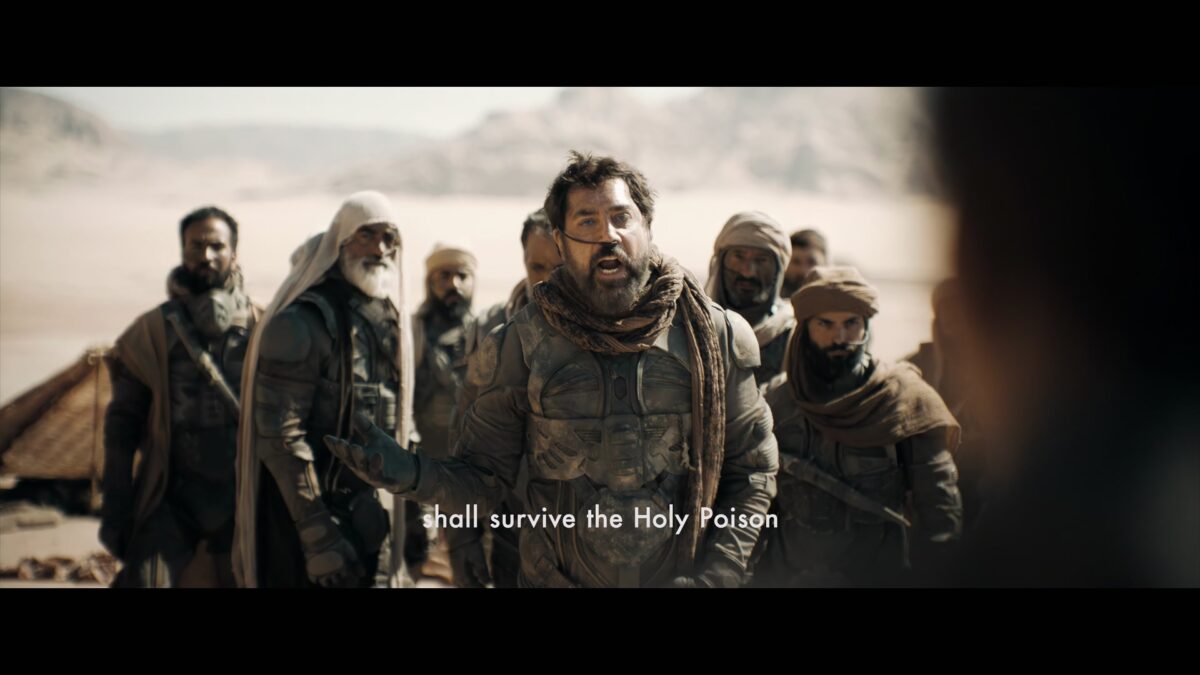
Three years ago, I described Dune (2021) as “a magnificent overture, but an overture all the same.”
The story was unfinished, and its self-critique of the white-savior narrative felt only half sincere. So I approached Dune: Part Two less with anticipation than with the sense that it was facing an examination.
This was the moment to find out whether Denis Villeneuve had really come to settle that debt. The short answer is yes. But the way he pays it off is far darker—and far more uncomfortable—than expected.
The film picks up exactly where its predecessor stopped: with Paul Atreides and Lady Jessica placing themselves under the protection of the Fremen.
Over the next two hours and 46 minutes, it sets about methodically breaking the familiar fantasy framework in which “the chosen one saves the world.”
The result is a film with a much more accomplished narrative structure than the first, yet one that leaves a considerably more bitter aftertaste.
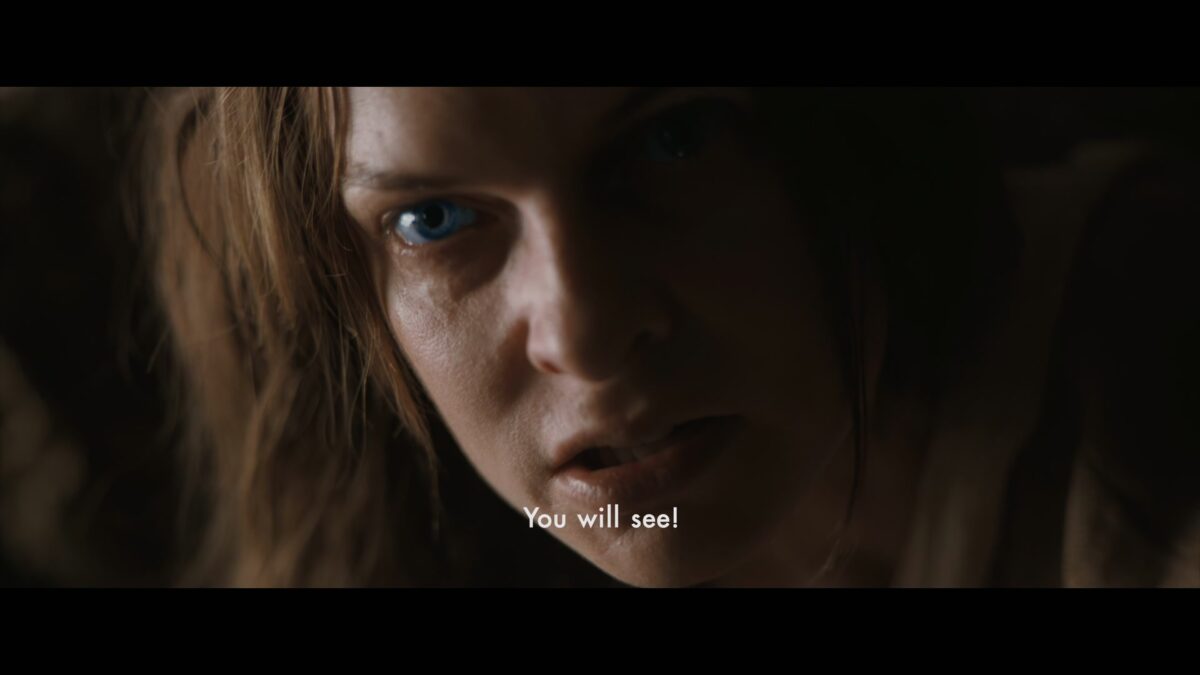
This Time, It Is a Complete Story
The first thing worth noting is the change in the film’s narrative architecture.
If the first installment was criticized as “a trailer that ended with the story still open,” this film has a clear beginning, middle and end.
Paul is absorbed into Fremen society. To win over the fundamentalist tribes of the southern desert, he decides to embrace the prophesied identity he has feared—Muad’Dib, the Lisan al-Gaib.
The film ends as he confronts the galaxy-spanning holy war that choice will unleash. Rather than concluding neatly, it stops at the precise moment he steps over the edge.
The ending clearly points toward the next installment, Dune Messiah. But unlike its predecessor, this film can at least be read on its own as a complete tragic arc.
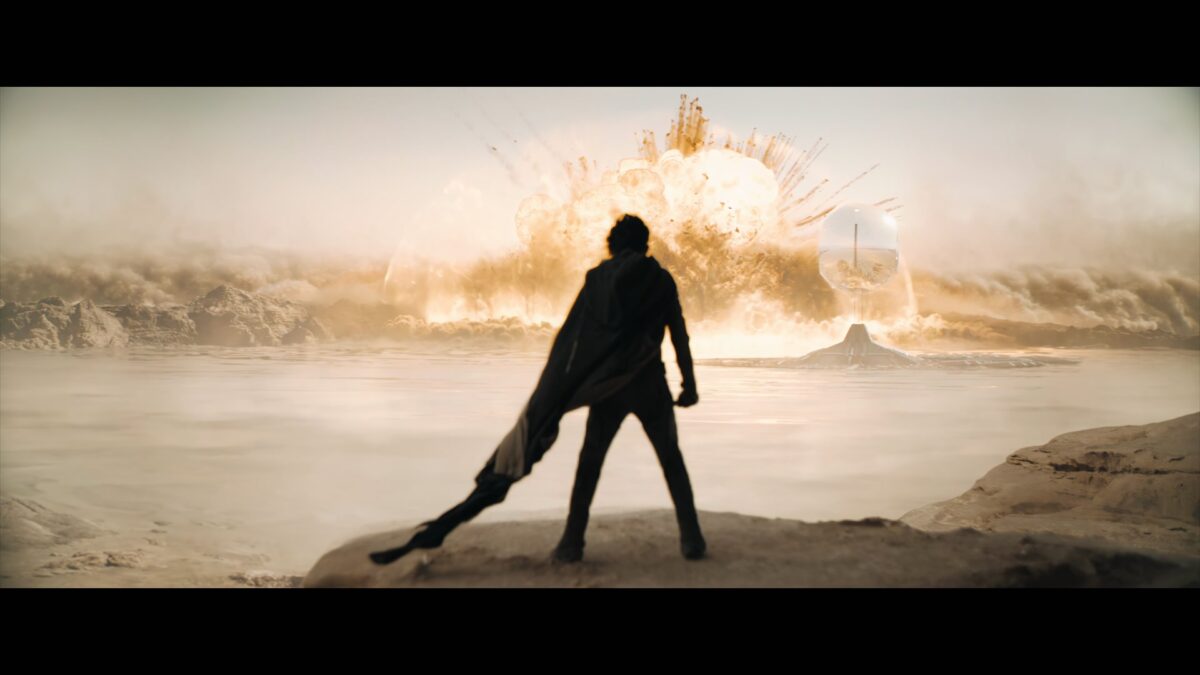
There is little need to rehearse the film’s overwhelming technical achievement.
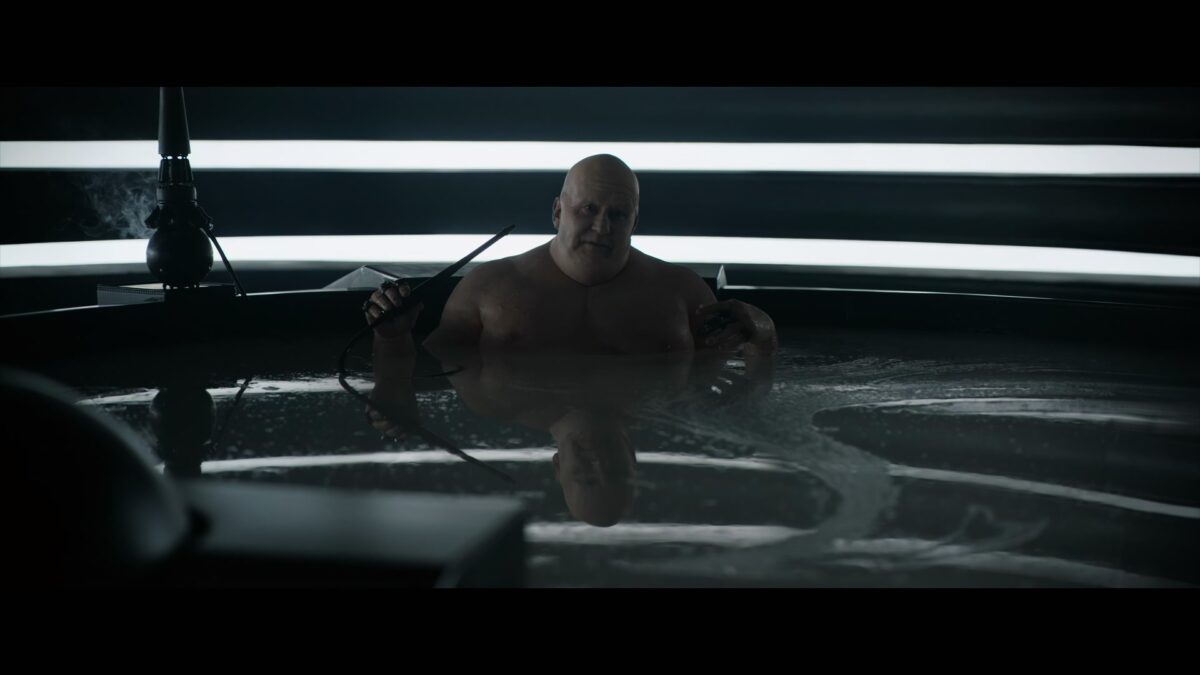
One of the most striking aesthetic choices in the entire series is the sequence set on Giedi Prime, the Harkonnens’ homeworld, under sunlight so desaturated it is almost black and white.
With its color drained away, the planet looks as though life itself has been leached from the screen.
Hans Zimmer pushes the experimentation of the first film even further, with an intriguing consequence under the Academy’s eligibility rules.
He was left off the Oscar nominations entirely because he reused too much of the previous film’s thematic material. Ironically, the episode also demonstrates just how powerfully this film’s score remains connected to its predecessor.
The White Savior Kills Himself This Time
The point I found most painful in the first film—its lukewarm treatment of the white-savior narrative—is addressed far more directly here.
At the center of that shift is Chani.
In the novel, Chani is essentially a supporting character whose primary role is to bear Paul’s children.
Here, however, she has been reimagined as the voice of skepticism within Fremen society. “If you want to control people, you tell them a messiah exists,” Chani says—a line that amounts to the film’s central question to itself.
From the moment Paul surrenders himself to the prophecy, she no longer trusts him. She watches coldly as he consolidates power.
This is unmistakable progress.
At the same time, it would be difficult to say that the film has solved the problem entirely.
The film divides Fremen society between the “fundamentalists” of the south and the “skeptics” of the north, a binary that is far too neat.
It can seem as though everyone with religious convictions is a blind fanatic, while only those who keep their distance from belief are portrayed as rational.
That framework risks othering Fremen culture once again—even though the culture unmistakably borrows visual and linguistic codes from the Middle East and Islam.
The idea of the south as a place where “nothing can survive without faith” is poetically beautiful. But we should still ask whether that beauty quietly legitimizes a secularist view that treats religious conviction itself as inferior.
Even so, the scenes in which Paul travels south and completes the prophecy himself—and the final sequence in which he ultimately chooses the mass slaughter he has foreseen—represent the series’ most ruthlessly self-negating moment yet.
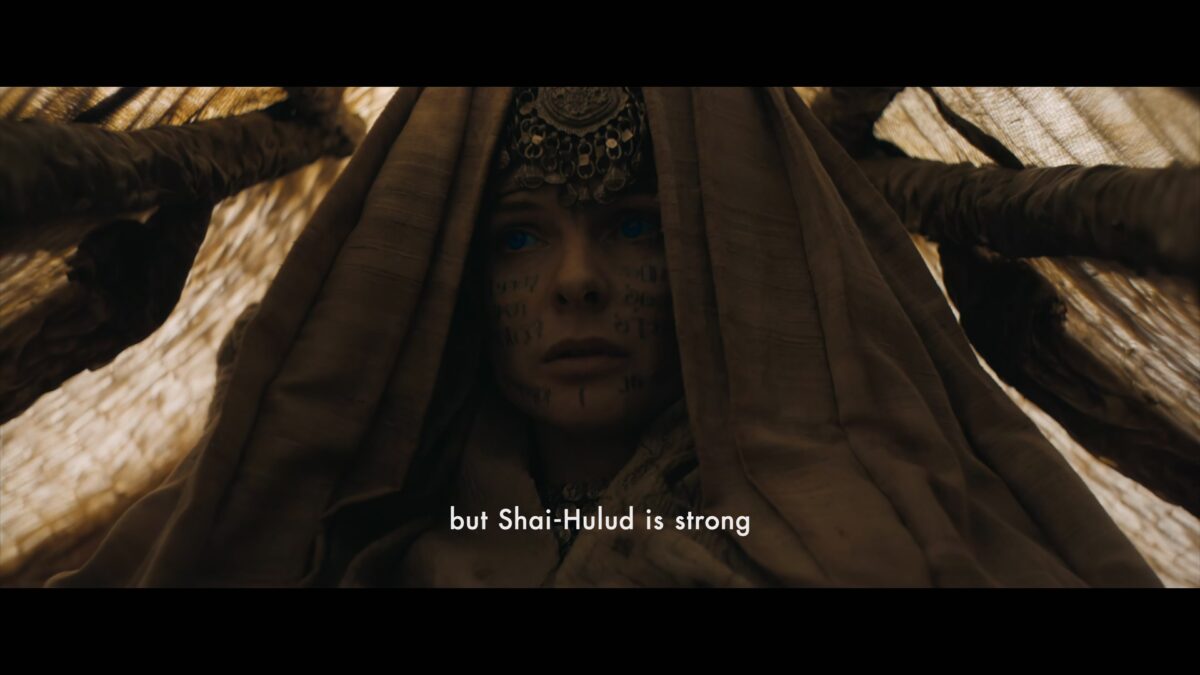
Paul is no longer a savior.
He is someone who exploits the fact that he has no choice but to become a savior in order to seize power, and the film refuses to romanticize that process as heroic.
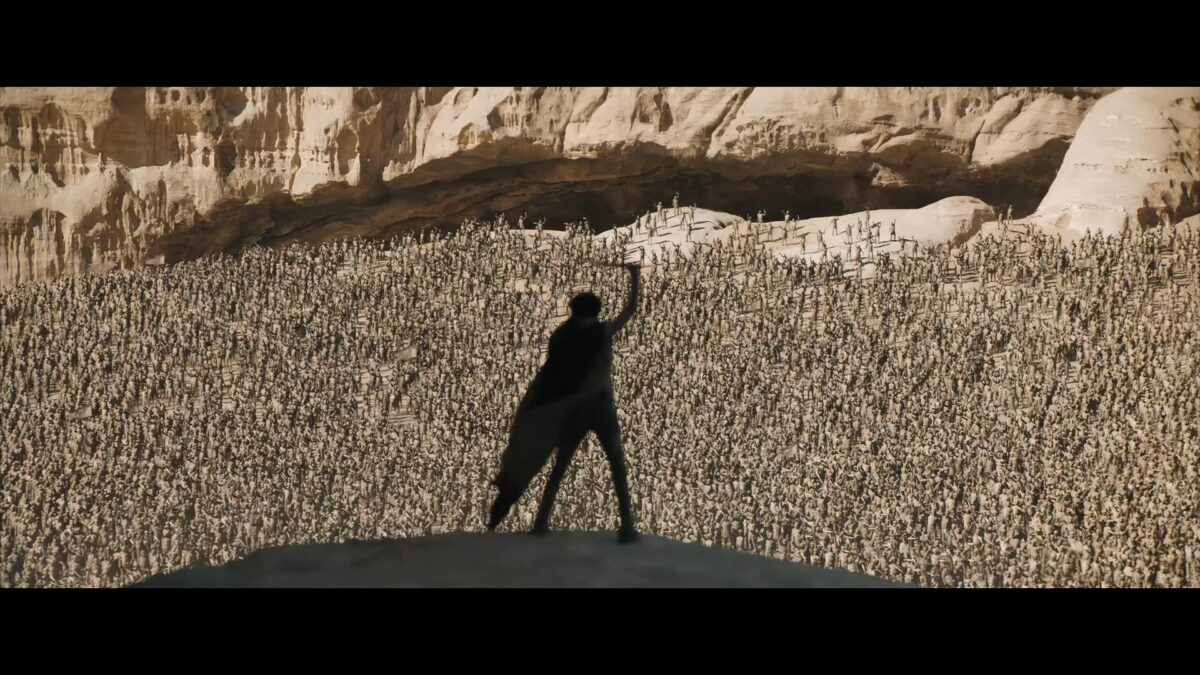
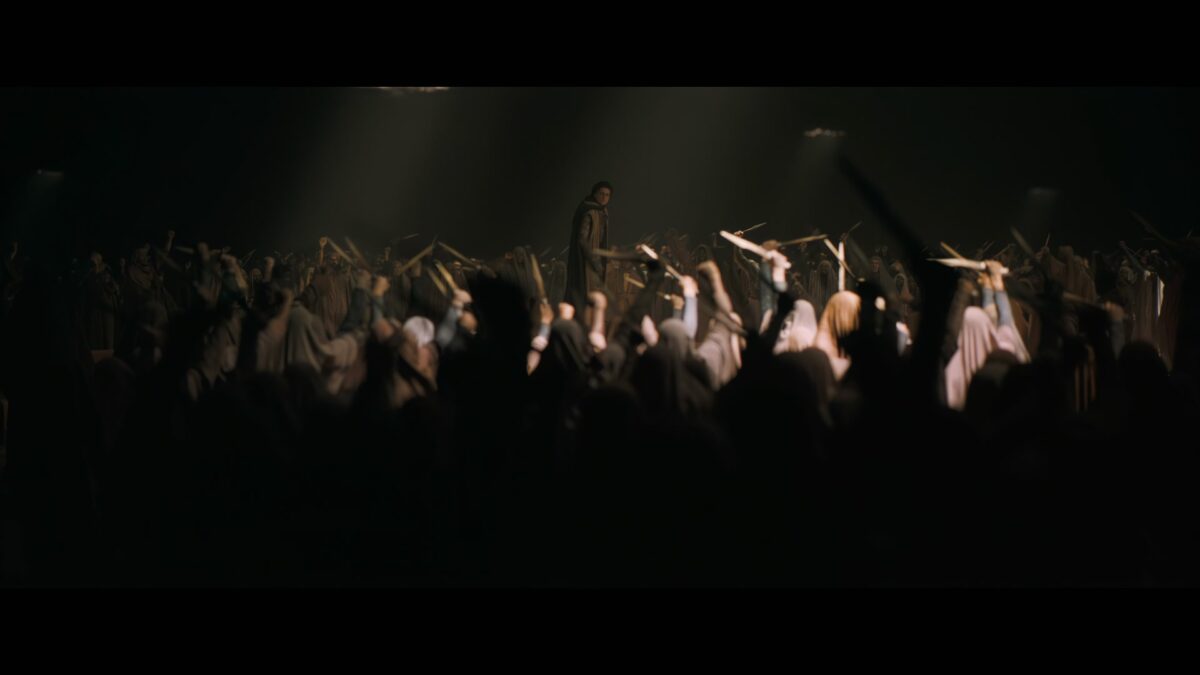
When the Fremen chant Paul’s name and cheer, the camera frames their celebration not as a victory but as an omen of disaster. This is how Villeneuve genuinely answers the criticism leveled at the first film three years ago.
When Characters Become Mere Instruments
That narrative progress comes at a cost.
Jessica and Chani, two female characters, are so heavily tasked with carrying the film’s themes that their emotional arcs sometimes become overly linear.
Jessica is used almost exclusively as a “ruthless strategist,” while Chani’s movement between anger and affection happens with abruptness and little explanation.
That may have been an unavoidable choice in compressing the novel’s complex inner lives. But from the audience’s perspective, it is hard to shake the feeling that these characters have been reduced from people to vehicles for ideas.
Austin Butler’s Feyd-Rautha and Florence Pugh’s Princess Irulan make strong impressions despite their limited screen time. Christopher Walken’s Emperor, however, has strangely little weight for a man at the summit of a galactic empire.

Box Office, Critical Response and the Questions That Remain
Commercially, the film easily surpassed its predecessor.
It earned more than $700 million worldwide, while 92 percent of 456 reviews on Rotten Tomatoes were positive.
At the Academy Awards, it won for sound and visual effects and received nominations in five categories. Audiences and critics alike effectively declared it “a sequel better than the original.”
And it is easy to see why. The narrative is tighter, the themes sharper, and the spectacle has lost none of its force.
Still, I am reluctant to call the film a masterpiece without qualification.
That is because the question it has finally begun to confront directly—how blind faith in a charismatic leader can lead to catastrophe—is still being posed through the Fremen, a fictional people modeled on a real-world culture.
Villeneuve succeeds in recasting the white savior not as a savior but as a new oppressor. Yet the film’s self-critique remains only a partial success because it still divides the people who grant that oppressor mythic legitimacy—the Fremen—through the Western binary of “fundamentalists versus skeptics.”
Conclusion: A More Clear-Eyed Film That Still Isn’t Free
Dune: Part Two fully pays the narrative debt left by its predecessor.
The story reaches a conclusion, the protagonist is no longer morally safe, and the film does not hide that fact from the audience.
That is a clear achievement. Ideologically, however, the film remains less than fully free of the old habit of borrowing another culture to complete its own story.
To tell the story of the downfall of Paul, the white savior, the film ultimately still needs another fictional community of people of color as its stage set.
A good sequel matters because it recognizes the flaws of the original and wrestles with them.
Dune: Part Two is exactly that kind of film. The struggle, however, does not end in complete victory.
As the series moves toward its next installment, Dune Messiah, the real test will not be the scale of its spectacle but whose voice ultimately gets to complete this story.
The fact that we are still waiting for that answer is itself part of what makes the film compelling to the end.
If you are adding an FAQ at the end of the review, it works best when it addresses the questions readers are most likely to have. It could be structured as follows.
FAQ
Q. Do I need to watch the first film before seeing Dune: Part Two?
A. Essentially, yes. Dune: Part Two is less a standalone story than the second half of Dune (2021). It picks up immediately and offers very little exposition about the characters or the world, so viewers who have not seen the first film may struggle to follow its emotional and political context.
Q. How different is the film from the original novel?
A. The broad storyline remains faithful to Frank Herbert’s novel. The biggest change involves Chani. In the book, she largely supports Paul; in the film, she represents the strongest skepticism toward the messianic myth. The change can be understood as an adaptation designed to sharpen the film’s critique of the white-savior narrative.
Q. Does the film really criticize the “white savior” narrative?
A. Much more directly than the first film did. Paul is portrayed less as a hero than as someone who uses his own mythology to acquire power, and the film presents the consequences not as a triumph but as the beginning of a tragedy. However, the simplification of Fremen society into “fundamentalists versus skeptics” remains open to debate.
Q. Is the ending open-ended?
A. To some extent. Paul’s political and psychological journey forms a complete tragedy, but the consequences of the galactic war and holy war are only beginning. The story is expected to continue in the sequel, Dune Messiah.
Q. Why does Chani leave Paul at the end?
A. In the film, Chani is someone who does not believe in the Fremen myths. She watches Paul go from the man she loved to someone who accepts the role of messiah for the sake of power, and she leaves because she cannot accept that choice. It is one of the film’s biggest departures from the novel and a crucial device in presenting Paul as a figure of power rather than a hero.
Q. Is this film a masterpiece?
A. Judged solely by its technical achievement and narrative density, it deserves to be considered one of the finest modern blockbusters. But its portrayal of Fremen culture, its Orientalism and its treatment of religion remain the subject of ongoing criticism. That is why this review stops short of calling it a “complete masterpiece.”
