
Everything in a Tom Hanks film is beautiful.
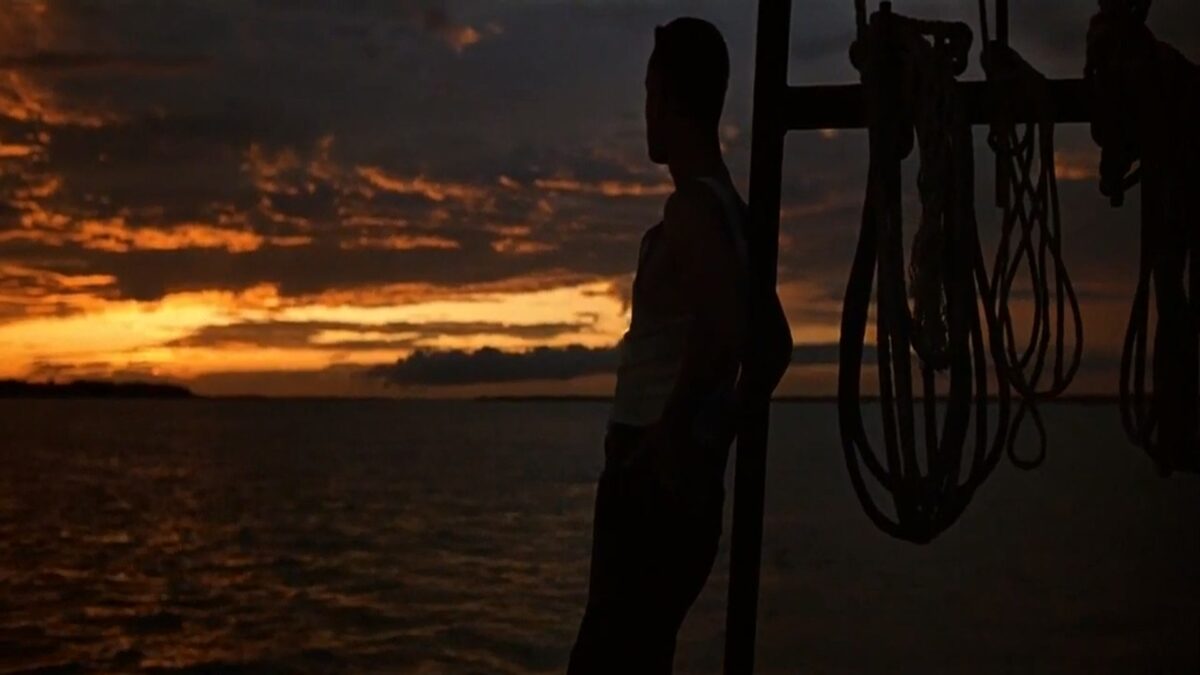
On the surface, Forrest Gump (1994) can be read as the heartwarming story of an intellectually disabled man with an IQ of 75 who manages to succeed against the odds. Tom Hanks‘s extraordinary performance and the immortal line, “Life is like a box of chocolates”, helped establish the film as a beloved example of feel-good cinema.
Look more closely, however, and the film reveals a far more complicated structure: Robert Zemeckis’s carefully disguised political neutrality, its conservative hymn to modern American history, and its sharp existential questions about loss and survival are all woven together beneath the surface.
Drawing on cultural criticism, historical context, and film studies, let’s take a closer look at the many layers of Forrest Gump—and the pointed messages hidden beneath its sentimental surface.
1. Modern American History Through the Eyes of an “Idiot”: Depoliticization as the Most Sophisticated Form of Politics
The film’s most powerful device is the way it filters the brutal, turbulent history of late-20th-century America through Forrest’s supposedly harmless and innocent perspective.
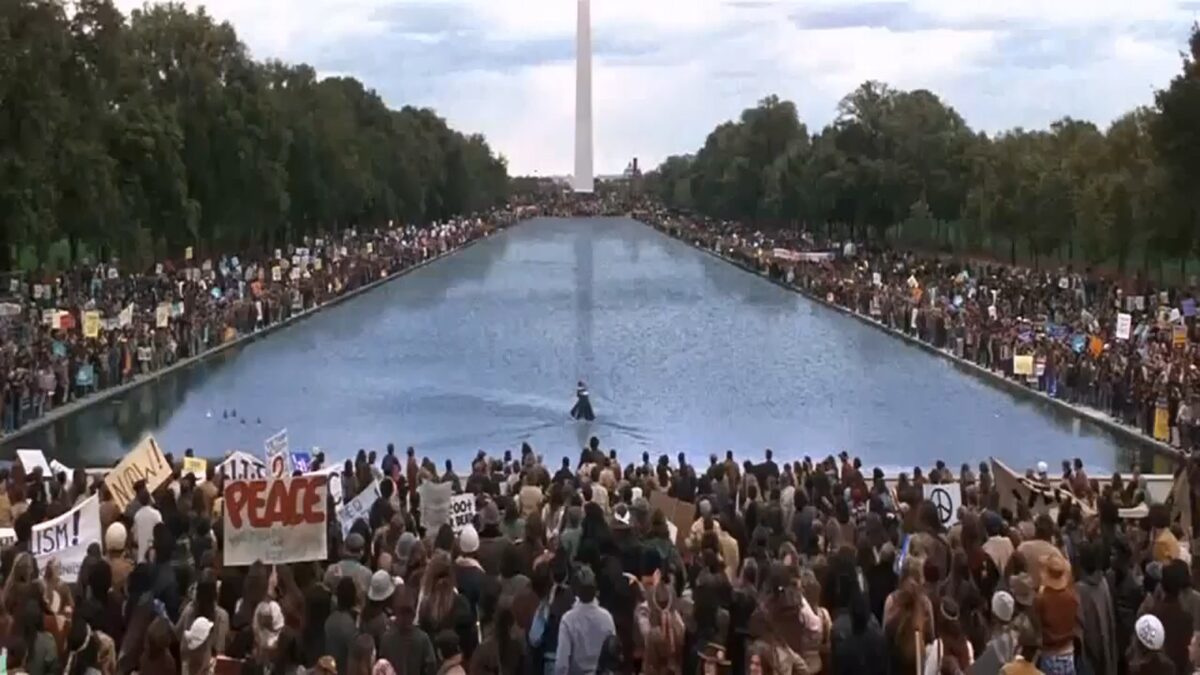
The story spans the United States from the 1950s through the 1980s. Some of the most ideologically charged events in American history—the civil rights movement, including the King assassination and the University of Alabama‘s refusal to admit Black students; the Vietnam War; antiwar protests; the Watergate scandal; and ping-pong diplomacy—intrude randomly into Forrest’s life.
This is where Zemeckis’s incisive directorial strategy becomes apparent. Forrest stands at the center of these enormous historical upheavals, yet he understands none of their political context.
- The University of Alabama: As the governor stands in a historic standoff to block Black students from enrolling, Forrest simply walks into frame to return a dropped book.
- Watergate: After spotting burglars breaking into the Democratic National Committee headquarters, he reports them to security because the lights in the building across the way are out and keeping him awake—ultimately helping bring about President Nixon’s resignation.
Critics have drawn sharply opposing conclusions from this approach. Some regard the film as “the purest form of art ever created by stripping away political debate,” while cultural critics have interpreted it instead as “a defense of the conservative order disguised as depoliticization.”
At the time, America’s national pride and moral confidence had been gravely wounded by the defeat in Vietnam and the Watergate scandal.
By erasing shameful and complicated chains of historical causation and replacing them with the random, amusing episodes of a man with an intellectual disability, the film offers American audiences a strange form of absolution and comfort. Rather than confronting the wounds of history, it encourages viewers to consume them romantically, with a shrug: “Well, that happened.” It is a highly ideological screen effect disguised as harmless nostalgia.
2. Forrest and Jenny: A Conservative Utopia Versus a Progressive Dystopia
The sharpest way to analyze the film is through the radically contrasting stories of its two protagonists, Forrest Gump and Jenny Curran. Together, they represent two great forces that shaped modern American history.
If Forrest embodies traditional American values—religion, patriotism, hard work, military service, and family—Jenny represents the counterculture that shook the United States in the 1960s and ’70s: hippie culture, feminism, antiwar protest, drug use, and sexual liberation.
Follow the trajectories of their lives and their eventual fates, and the film’s moral standards reveal themselves as unmistakably harsh and conservative.
| Character | Values represented | Path through the film and its rewards |
|---|---|---|
| Forrest | Traditional values, obedience, devotion to the nation | Faithfully follows military orders ➔ receives medals / works hard ➔ becomes a millionaire ➔ settles into a peaceful life |
| Jenny | Counterculture, resistance to the establishment, liberalism | Moves through hippie communities, becomes addicted to drugs, attempts suicide ➔ contracts AIDS (presumably) ➔ dies tragically |
Forrest obeys the system without question.
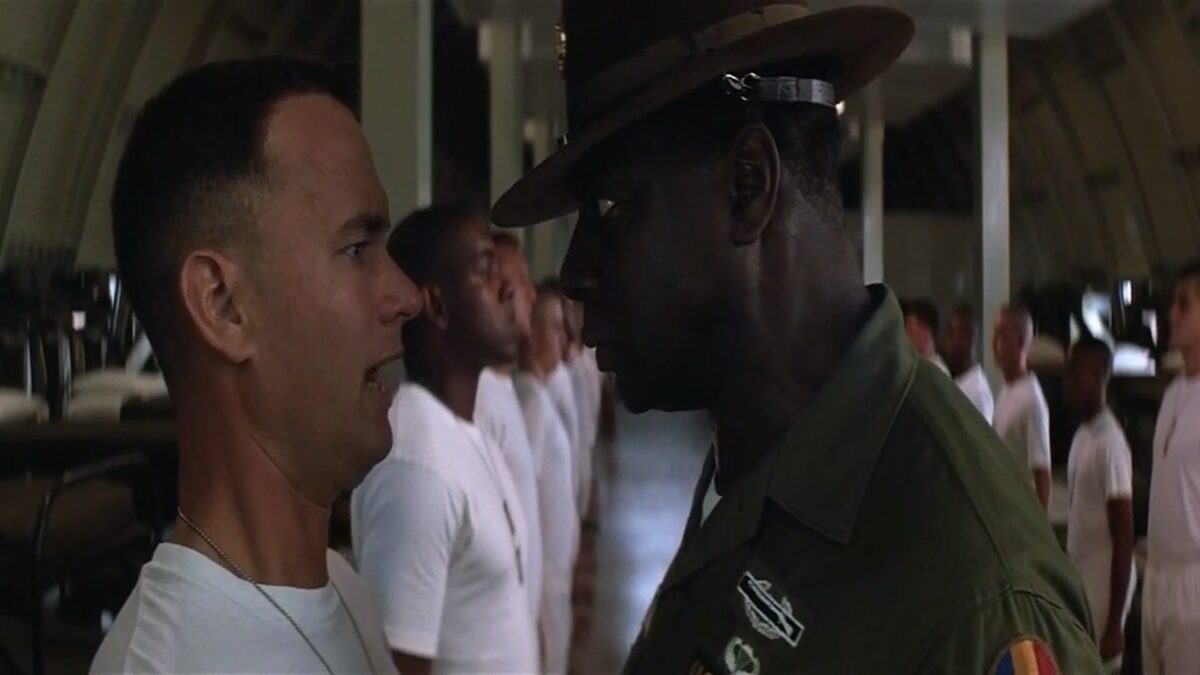
When his drill instructor asks what the purpose of his military service is, Forrest shouts, “To do whatever the sergeant orders me to do!” The instructor praises him as a genius.
For his unquestioning obedience to the nation’s commands, he receives medals and becomes a hero. He then happens to make a fortune in the shrimp business.
Jenny, meanwhile, carries the scars of sexual abuse by her father and resists the contradictions of mainstream society with every part of herself. Her life is thoroughly destroyed. She suffers domestic abuse from a man she meets through an antiwar protest group and is portrayed at her lowest point, high on drugs and preparing to jump from a building.
The film defines Jenny’s resistance as the wandering and corruption of a wounded soul. She is finally shown finding salvation only after returning to Forrest—the conservative, secure home and family. Yet even that salvation is temporary: the film ultimately kills her off through illness.
This narrative structure leaves behind a pointed ideological message.
“Those who conform to the system will be saved and enjoy prosperity, even if they are ignorant; those who resist the system and long for a new order will meet disease and ruin.”
The film’s release in 1994 coincided precisely with a political moment when conservatism was resurgent, reaching a high point as the Republican Party won a sweeping electoral victory and called for a “Contract with America.”
3. The Aesthetics of the Feather: Determinism and Spontaneity Existing Side by Side
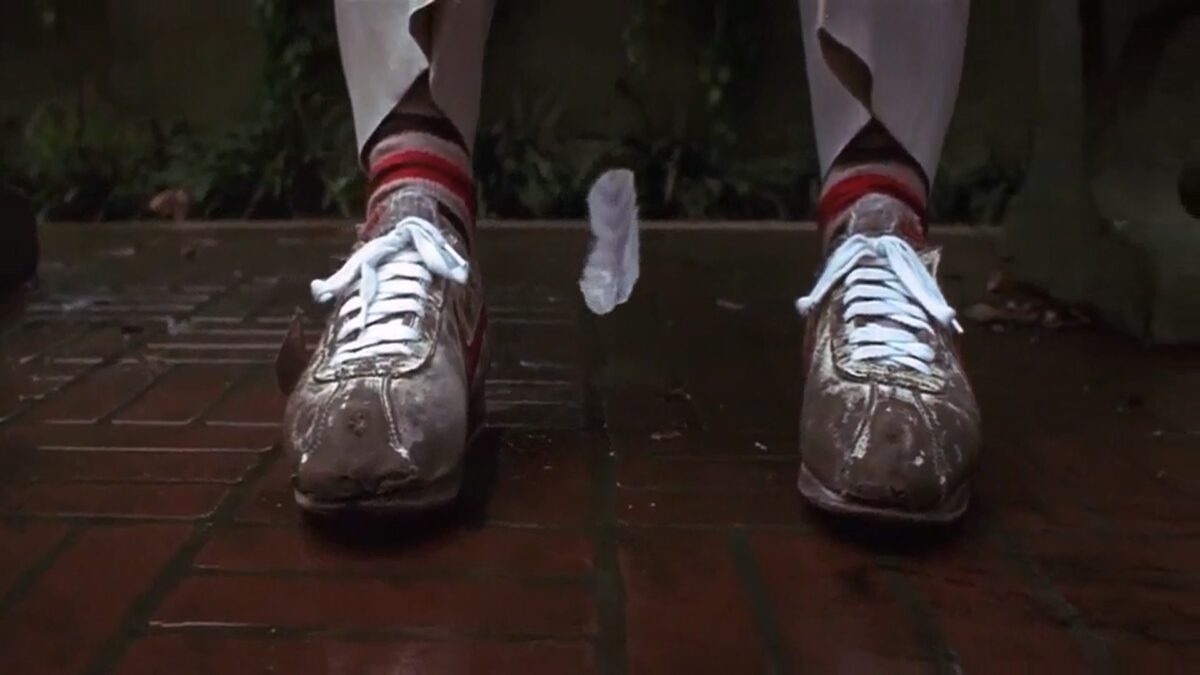
The white feather drifting on the wind, the film’s metaphorical object at both its opening and its conclusion, is the key device that reveals the philosophical depth Forrest Gump ultimately achieves.
The feather raises an existential question: What principle governs human life?
Lieutenant Dan believes that every human life has a predetermined destiny. Just as his ancestors died in every American war, he believes it is his fate to die honorably in Vietnam.
That is why he is furious when Forrest saves him: Forrest has, in his eyes, ruined his destiny. Forrest’s mother, by contrast, compares life to a box of chocolates in which you never know what you are going to get, viewing it as a continuous chain of chance and choice.
Forrest is the figure who brings these two perspectives together. Standing before Lieutenant Dan’s grave, he reflects:
“I don’t know if Momma was right or if Lieutenant Dan was right. I don’t know if we each have a destiny, or if we’re all just floating around accidentally, like a feather on the breeze… I guess maybe it’s both. Maybe both things are happening at the same time.”
This line serves as the film’s artistic saving grace, allowing Forrest Gump to become more than a simple piece of conservative propaganda and instead endure as a timeless classic. Forrest’s life is tossed about like a feather carried by the wind of chance.
His running ability happens to catch the eye of an Air Force recruiter, sending him to college. He enlists in the army while seeking shelter from the rain, then picks up a table-tennis paddle for the first time and becomes a national player.
Yet running through all those accidental twists is Forrest’s own “choice and sincerity.” He may have limited intelligence, but he understands how to keep a promise—such as the one he makes to Bubba to go shrimping—and how to love the person in front of him without conditions, as he does Jenny.
The film arrives at an existential conclusion: even an individual powerless before the grand forces of history and society can give life a noble meaning by showing kindness to others within the small world he can control and quietly continuing to run his own race.
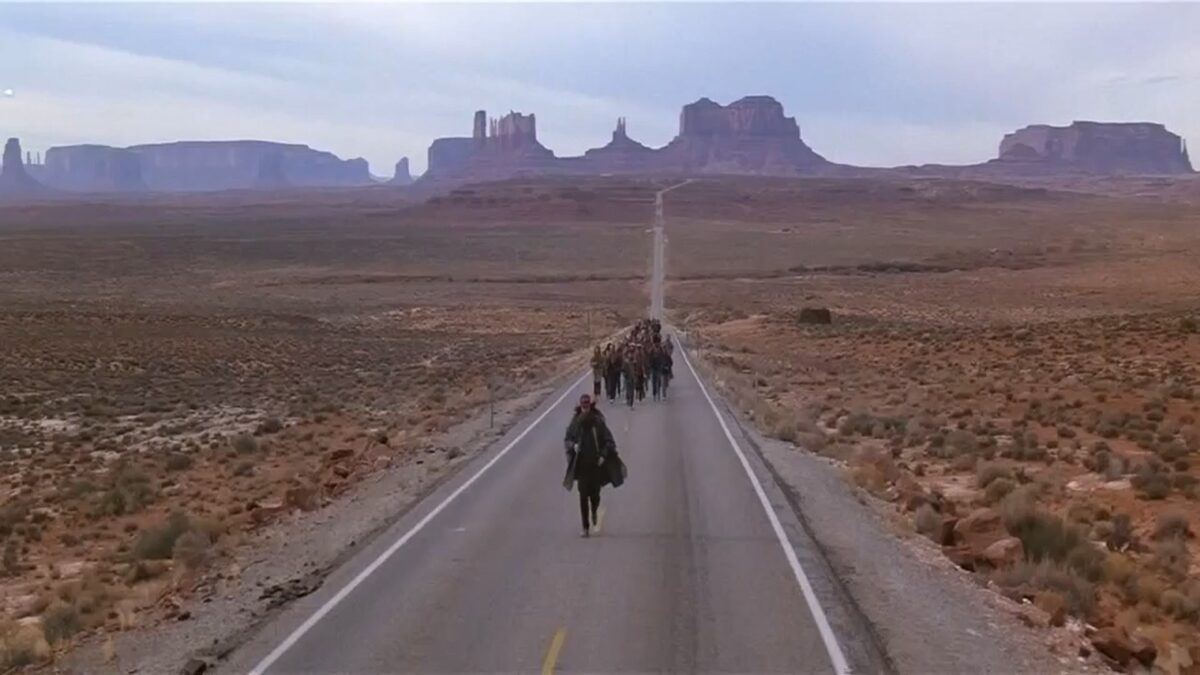
4. The Film Theory of Historical Fabrication Through Technical Innovation
From a technical standpoint, Forrest Gump is a landmark that helped usher in the dawn of digital cinema in the 1990s.
Using the cutting-edge CGI technology and chroma-key compositing of the time, Zemeckis inserted the fictional Forrest Gump with remarkable precision into archival footage of real historical events.
Scenes in which Forrest shakes hands with President John F. Kennedy and says he needs to urinate, sits beside John Lennon on a talk show and inspires the lyrics of Imagine, or shows President Lyndon B. Johnson the bullet wound in his backside offered audiences immense visual pleasure and immersion.
Yet, examined more critically, this technical achievement also contains the aesthetic danger of “historical fabrication and decontextualization.”
Serious and solemn moments involving real historical figures are reduced to decorative backdrops designed to heighten the comedy of Forrest, a clownish figure. Through digital technology, history is transformed from something to be confronted and reflected upon into a theme-park attraction—a “historical amusement park” that can be edited and distorted at will.
This directorial approach also exposes a limitation of the film’s storytelling: instead of encouraging audiences to grapple deeply with the painful mistakes and tragedies of modern history, it invites them to let history evaporate harmlessly amid the wonder and humor produced by the technology.
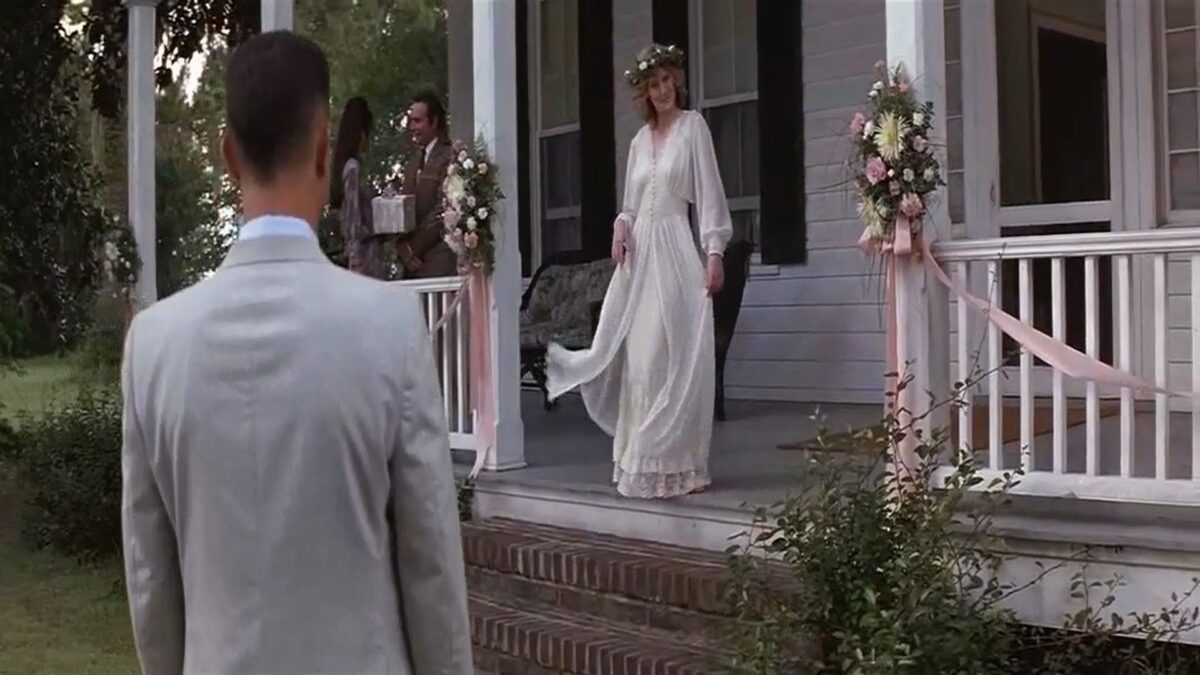
5. Final Thoughts: An Intelligent Fantasy That Comforted an Era
Ultimately, Forrest Gump is a profoundly American modern myth and fable—by Americans, for Americans, and about America.
The film takes the bloody massacres and absurdities of the Vietnam War, along with the progressive values sought by the hippie movement, and throws them into the vast melting pot of one man’s innocent life story, dissolving everything into the harmless sugar water of “inspiration.”
Forrest’s peaceful life, set against Jenny’s tragic death, clearly carries the tone of a conservative, conformist moral lesson. The film’s treatment of historical events likewise reveals a shrewd desire to preserve a state of political blankness.
Even so, the reason this film continues to move audiences around the world three decades later is that it makes an entirely convincing case for “the value of simplicity and sincerity” to people exhausted by the weight of grand narratives.
In a world where people hate one another amid complicated calculations, ideologies, and political conflicts, Forrest’s confession—”I’m not a smart man, but I know what love is”—carries a powerful human resonance in its own right.
When dissected with a sharp analytical blade, Forrest Gump reveals countless political and ideological contradictions, along with clear conservative limitations.
At the same time, it is undeniably one of cinema’s most cleverly constructed fantasy masterpieces: a witty and beautiful portrait of the purest moral compass an individual can preserve in a turbulent world.
Whatever its political message, Forrest’s love for Jenny continues to remind us of the grandeur of devoted, unconditional love.
