
A Confession Before the Screen
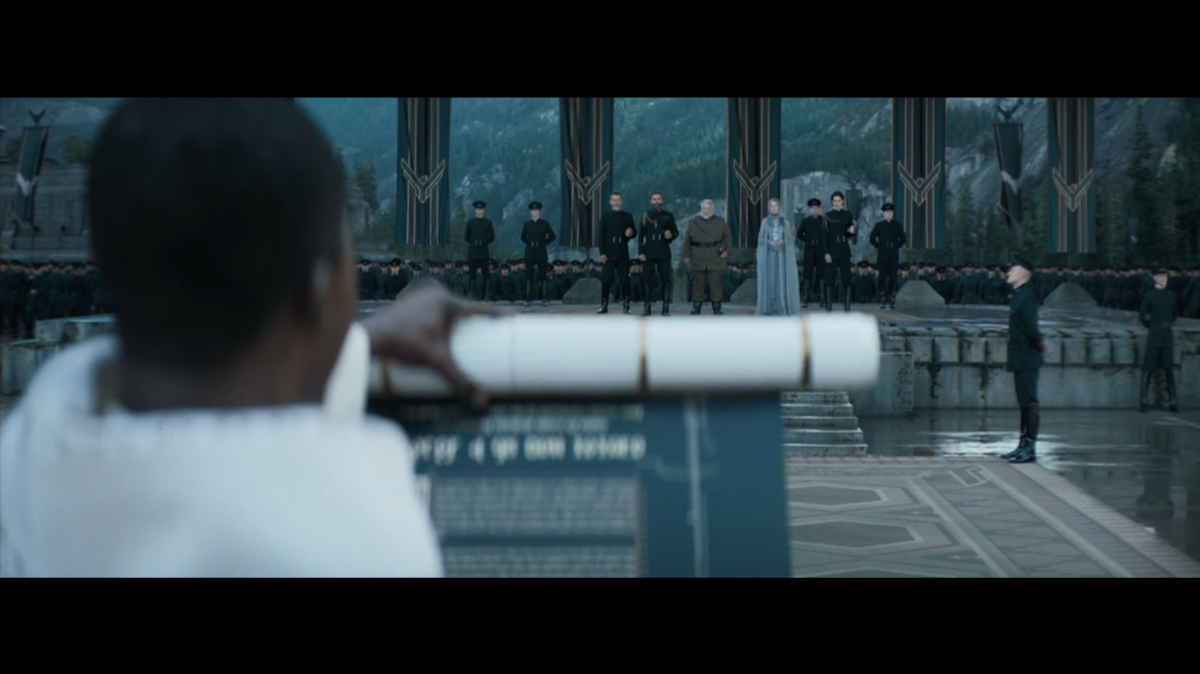
You know from the moment the lights go down and the first image appears that this is not a film made to hold the audience’s hand.
Unfamiliar place names and dynasties flash by in subtitles, while political implications drift past without explanation. Denis Villeneuve never set out to provide a helpful summary of Frank Herbert’s sprawling source material.
He seems to be telling the audience: “Keep up if you can.” That arrogance may be the single word that best captures the identity of Dune (2021). And, remarkably, it is mostly justified.
I remember the waves of praise that greeted the film: “the best movie of the year,” “a new benchmark for science fiction.”
I find myself half agreeing and half shaking my head. That is because this is not a finished work so much as the overture to something that is meant to be completed. Whether you recognize that going in or are swept along without realizing it makes all the difference to the experience.
The Overwhelming Part Is Undeniable
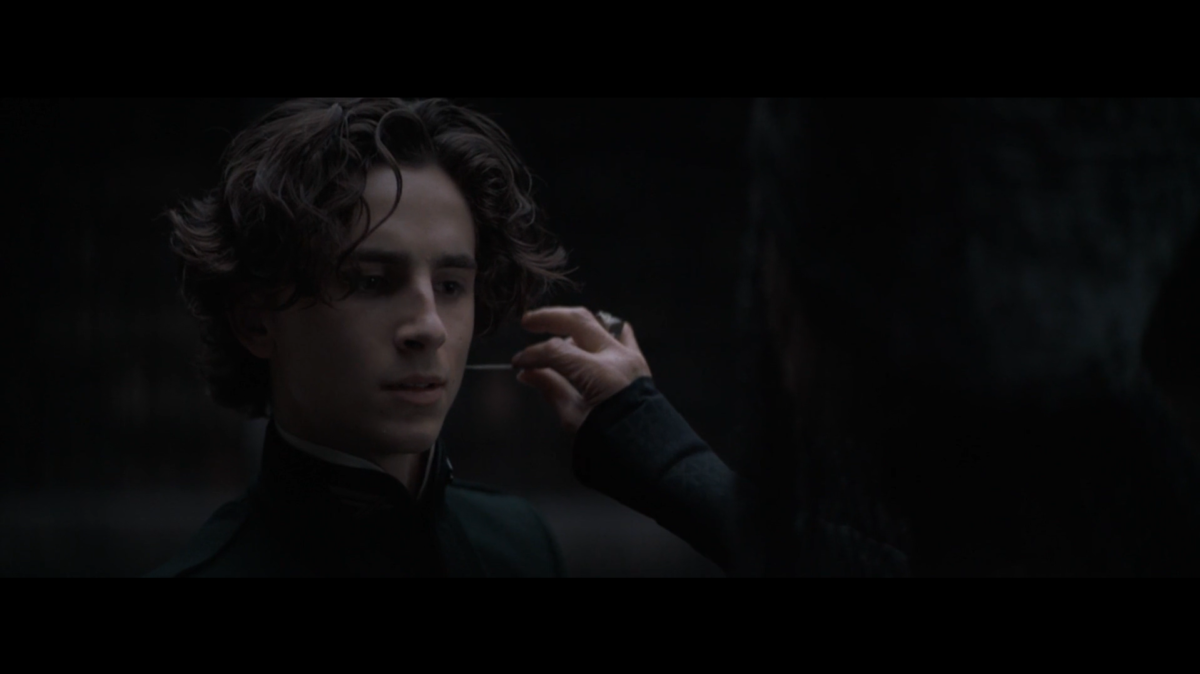
Let’s give the film its due first. Its audiovisual achievement is overwhelming, beyond the need for excuses.
The landscapes of Arrakis captured by cinematographer Greig Fraser reduce human beings to creatures of almost unimaginable smallness. When a colossal sandworm erupts from the dunes, the camera does not frame it as a heroic spectacle.
Instead, it shows how puny the human species is—an intruder on an unforgiving planet. That single choice of perspective tells us how carefully this film has been designed.
Hans Zimmer’s score works in much the same way.
Rather than relying on a familiar orchestra, he rebuilt the film’s sonic landscape from female vocals, percussion and instruments of uncertain origin that were created specifically for the project.
The result is less majestic than alien. It does not put the listener at ease; it unsettles them. It feels like a deliberate rejection of the “triumphant brass” that audiences often expect from imperial spectacle.
The following year, the film swept six Academy Awards—for cinematography, original score, production design, film editing, sound and visual effects. That was also a sign of how little disagreement there was over its technical accomplishments.
But Where Is the Story?
This is where the trouble begins. The film ends roughly halfway through the first novel, just before Paul Atreides truly joins the Fremen.
And it does so not at a dramatic climax, but in a way that feels closer to the promise that “this is where the real story begins.” Audiences expecting the familiar arc of a beginning, middle and end can only feel as though the film has abruptly cut out halfway through its second act.
That reaction was common. It is no wonder some cynical viewers called the film “a two-and-a-half-hour trailer.”
There are, of course, defenses to be made: the unprecedented production conditions created by the COVID-19 pandemic; the lessons left by the failure of David Lynch’s 1984 adaptation, which tried to force the sprawling source material into a single film; and the studio’s calculation that shooting a political epic simultaneously, as Peter Jackson did with The Lord of the Rings, carried too much financial risk. Once all that context is understood, the film’s choices begin to look reasonably sensible.
But as a critic, I believe context and outcome have to be judged separately. However difficult the production circumstances may have been, the audience is ultimately left with an unfinished story.
Villeneuve chose the promise of a sequel over the completeness of the film in front of us. The gamble happened to pay off at the box office, but judged on its own, the film is difficult to defend as a complete piece of storytelling.
The Old Shadow of the White Savior Narrative
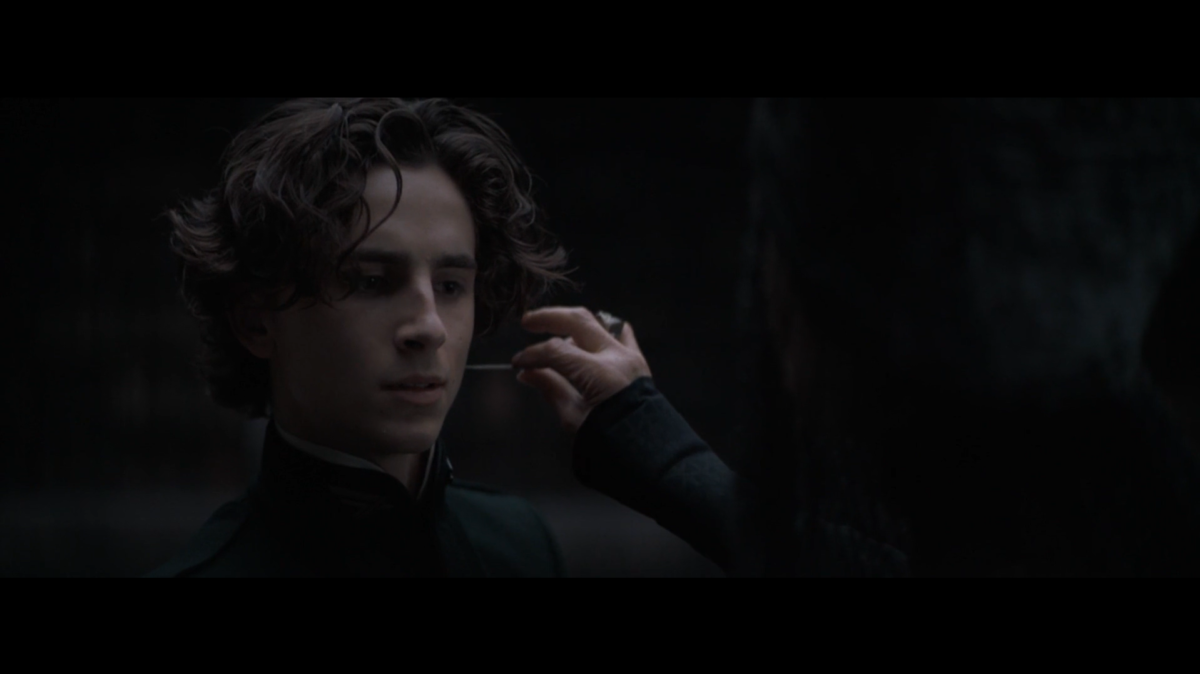
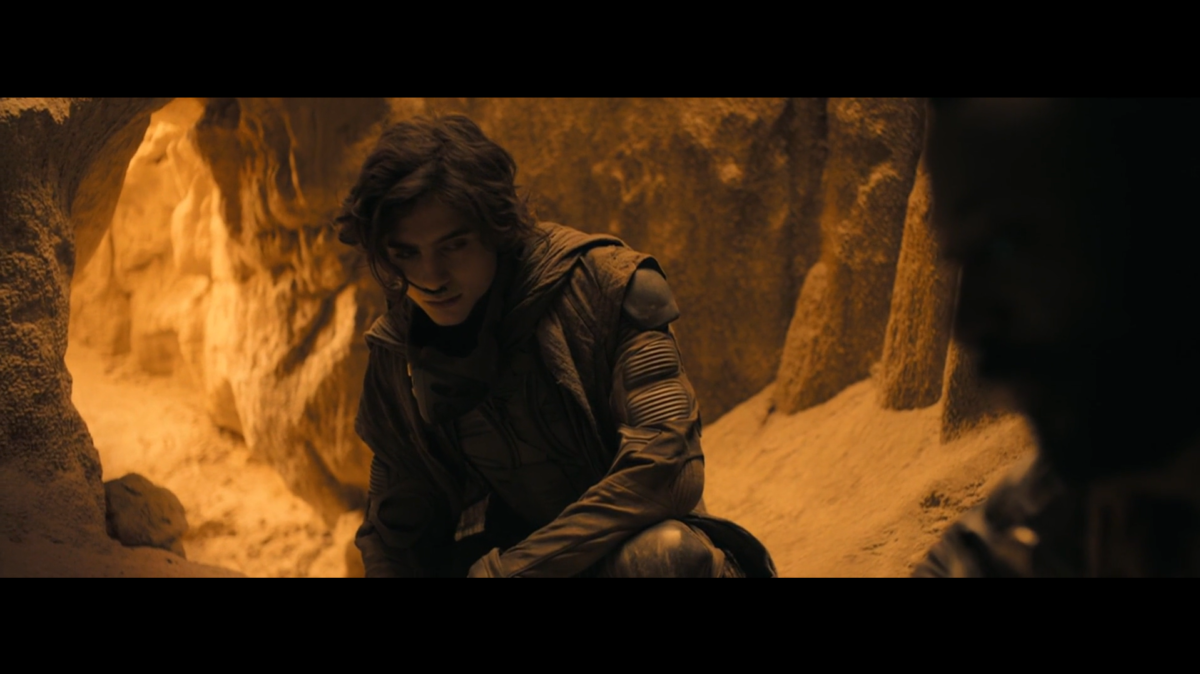
More sensitive than the film’s technical achievement or narrative structure is the ideological ground on which it stands. Paul Atreides arrives on a desert planet as a young white aristocrat and is gradually accepted as the prophesied savior of the indigenous Fremen.
That structure follows the basic template of the white-savior narrative Hollywood has repeated for decades, from Lawrence of Arabia to Avatar.
Villeneuve has repeatedly said that the film is meant to critique that trope. Paul foresees the massacres and holy war—jihad—that he will set in motion, and scenes of his anguish over that future appear throughout the film. Clearly, this is not a straightforward hero story.
But intention cannot completely absolve the result.
Ironically, the film’s most painful problem lies less in the story itself than in its casting and production choices.
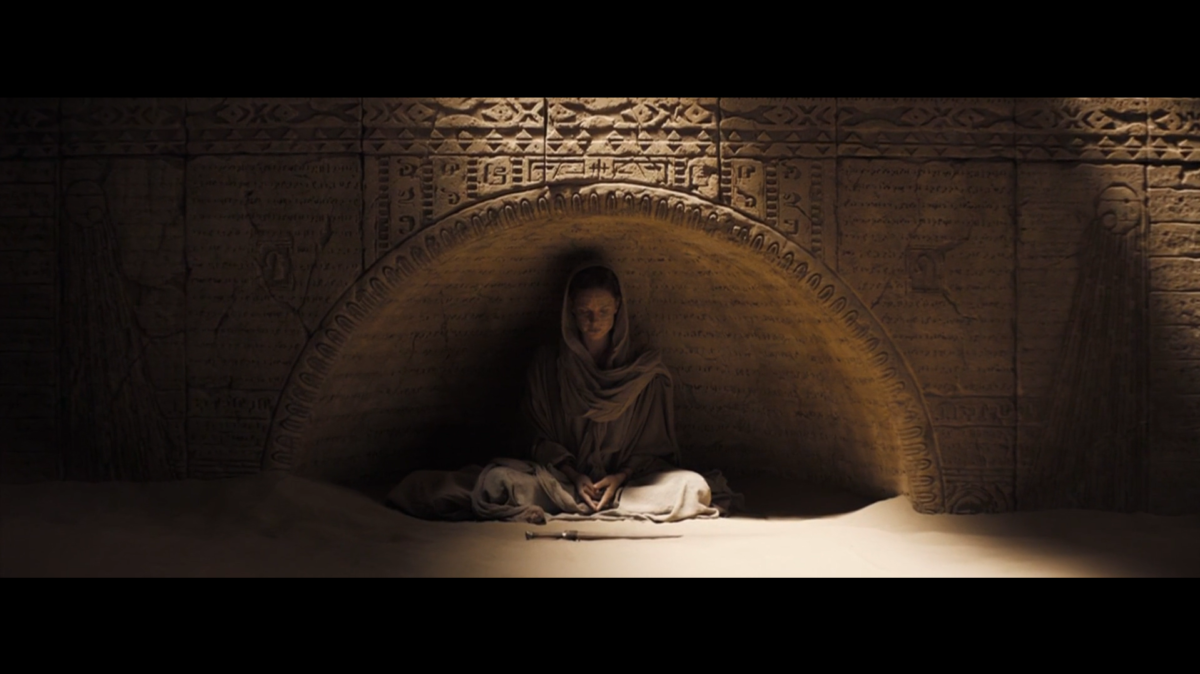
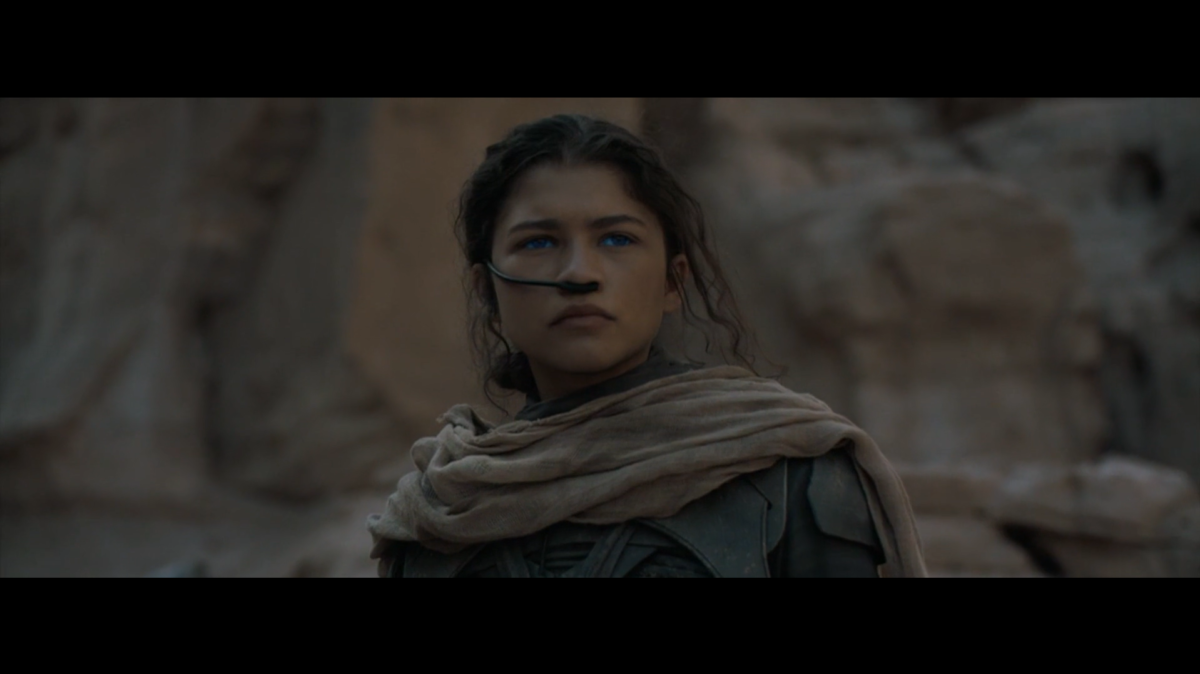
The film was shot in the deserts of Jordan and the United Arab Emirates, and its costumes, architecture and language are saturated with visual codes drawn from Islam and the Middle East. Yet Muslim and Southwest Asian and North African (SWANA) actors and crew members—the people whose cultures are being represented—are almost nowhere to be found in the major roles.
The Atreides family is almost entirely white, while the Fremen are played by Black or Middle Eastern actors.
It is a familiar pattern: borrow the cultural symbols while leaving out the people who created them. The film does more than inherit the Orientalist limitations of the novel; in some respects, it deepens them.
No matter how elegantly Villeneuve renders this world, he cannot escape the question of whose story that beauty is speaking for.
What Remains Anyway
So is the film a failure?
It would be too simple to say so. The impact of the film has been too significant. In South Korea, it passed one million admissions just 20 days after its release; worldwide, it earned more than $400 million. More importantly, it sent a novel more than half a century old back onto bestseller lists.
That goes beyond commercial success. It is a rare example of a film creating a new readership for classic science fiction literature that had seemed to be fading from view.
It is also worth noting that the sequel, Dune: Part Two, showed the film recognizing and attempting to correct some of its own shortcomings.
Chani, the Fremen woman who functioned almost as a passive prop in the first film, is reimagined in the second as a critical voice willing to challenge Paul’s transformation into a godlike figure.
That can be read as evidence that Villeneuve tried, belatedly, to repay the ideological debt incurred by the first film.
Whether that debt was fully settled in the second film is another matter of debate. At least when the first film is considered on its own, the issue remains unresolved.
Conclusion: A Great Overture, but Only an Overture
So how should we sum up this film? I would put it this way.
Dune demonstrates one of the technical heights that science-fiction cinema can reach, but it is not a self-contained story. Few blockbusters have treated grandeur of scale, restraint of style and awe before the power of nature with such seriousness.
At the same time, the film has one foot in the very narrative trap it wants to criticize, and never quite manages to pull itself free.
Good films sometimes leave us with uncomfortable questions. The question Dune leaves behind is this:
How often do we call a beautifully filmed landscape of exploitation a masterpiece? The search for an answer is precisely what carries this film beyond the screen and gives us reason to keep turning it over in our minds.
It is not a perfect film, but it is a film worth discussing for a long time to come. That is my final judgment.
FAQ
How much of the original novel does Dune (2021) cover?
Dune (2021) covers roughly half of the first book in Frank Herbert’s original series. Because the story ends just before Paul Atreides fully joins the Fremen, viewers expecting a self-contained conclusion may find the ending somewhat anticlimactic. For that reason, many critics have described Dune less as a complete work than as the overture to a much larger saga.
Why did Dune (2021) receive such high praise at the Academy Awards?
Dune was recognized for its extraordinary cinematography, sound design, production design and visual effects. Its depiction of Arrakis on a monumental scale, Hans Zimmer’s distinctive score, and its immersive sound and visual effects were widely hailed as setting a new standard for contemporary science-fiction cinema. On the strength of those technical achievements, the film won six awards at the Academy Awards: cinematography, music, production design, editing, sound and visual effects.
Why did Dune face criticism as a “white savior” story?
The film follows Paul Atreides, an aristocratic outsider who is accepted as the prophesied leader of the indigenous Fremen in the desert. Critics argued that this setup resembles the “white savior” narratives repeatedly seen in Hollywood. Although the director has described the film as a critical interpretation of that tradition, it also prompted accusations of Orientalism because it borrows extensively from Middle Eastern and North African cultures without giving substantial roles to people from those cultural backgrounds.
Does Dune (2021) tell a complete story on its own?
No. Dune was made with a sequel in mind, so viewed on its own it can feel as though the narrative ends in the middle. To experience the full story, it is best to continue with Dune: Part Two. Taken together, the two films complete the arc of Paul’s development, the political conflict and his relationship with the Fremen.
Is Dune (2021) still worth watching?
Absolutely. Although its narrative incompleteness remains a weakness, its overwhelming visual and sonic design and its world-building alone make it a landmark of modern science-fiction cinema. It also explores power, religion, colonialism and the environment, giving viewers plenty to interpret and debate beyond its status as a blockbuster.
