
Sophie Wasn’t Growing Old—She Was Losing Herself: Rewatching Howl’s Moving Castle
In 2003, Hayao Miyazaki did not attend the Oscars.
He was set to receive the Academy Award for Best Animated Feature for Spirited Away, yet he never showed up to the ceremony.
The reason was simple. The United States was bombing Iraq that year, and he said, “I don’t want to visit that country.”
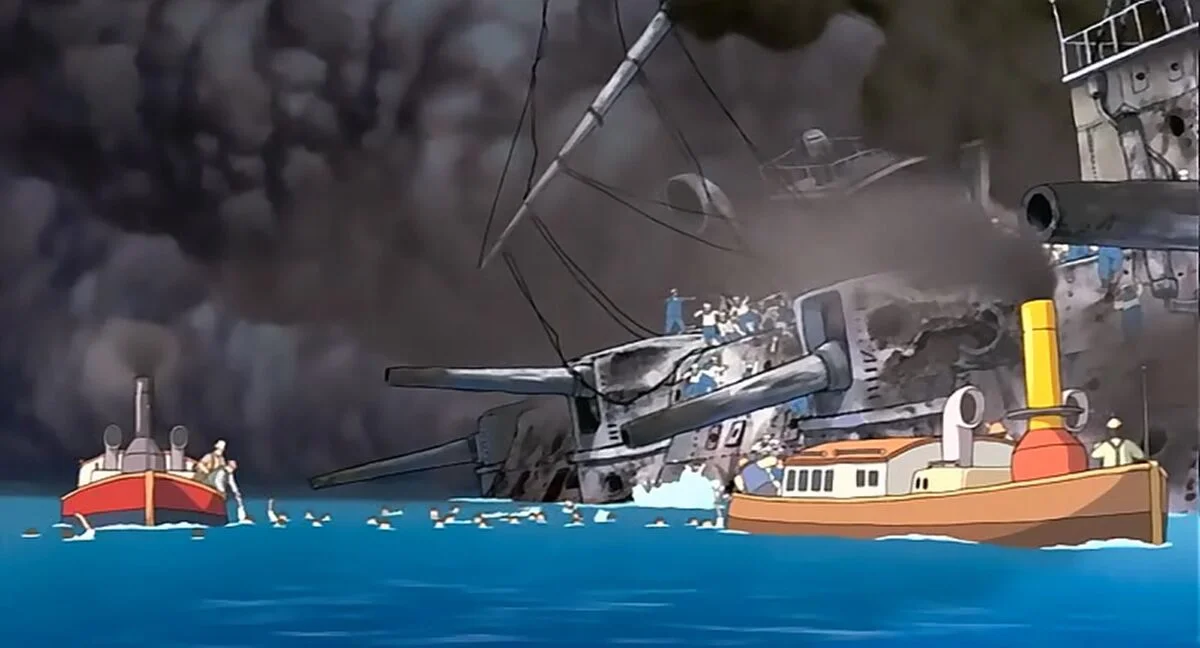
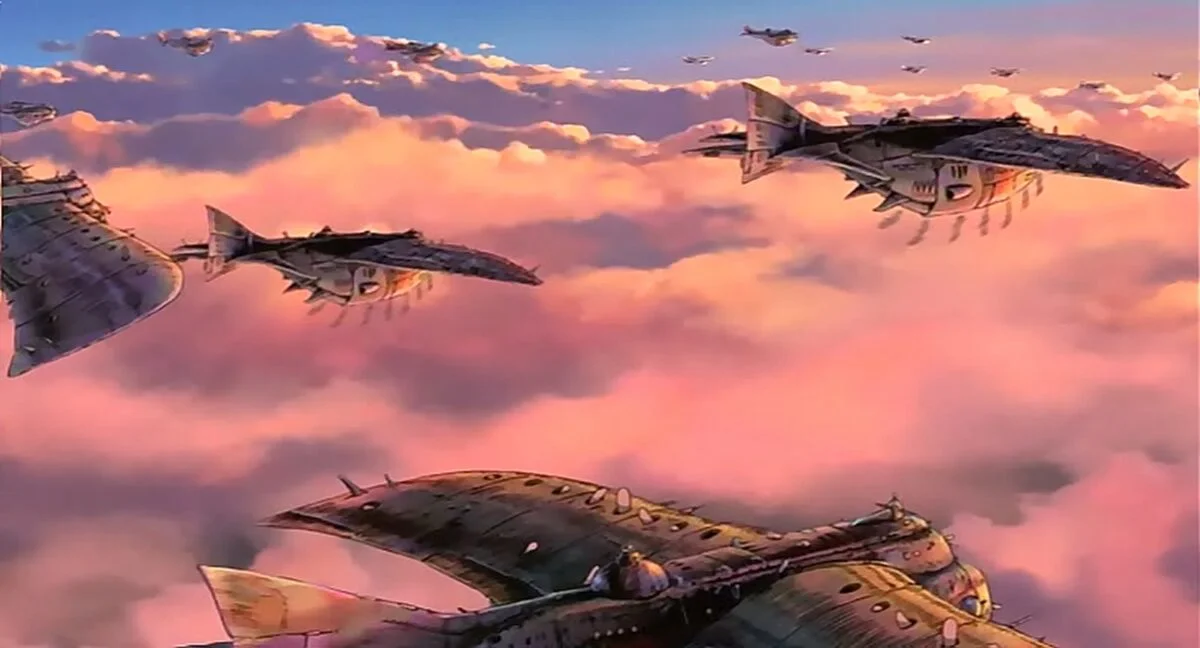
At precisely that time, he was making Howl’s Moving Castle. Once you know that context, it becomes easier to understand why bombers repeatedly appear out of nowhere in this beautiful fairy tale, setting towns ablaze.
It is a deeply personal statement that was absent from the original novel and that the director deliberately forced into the film.
An Eighteen-Year-Old Turns Ninety: The True Nature of the Curse
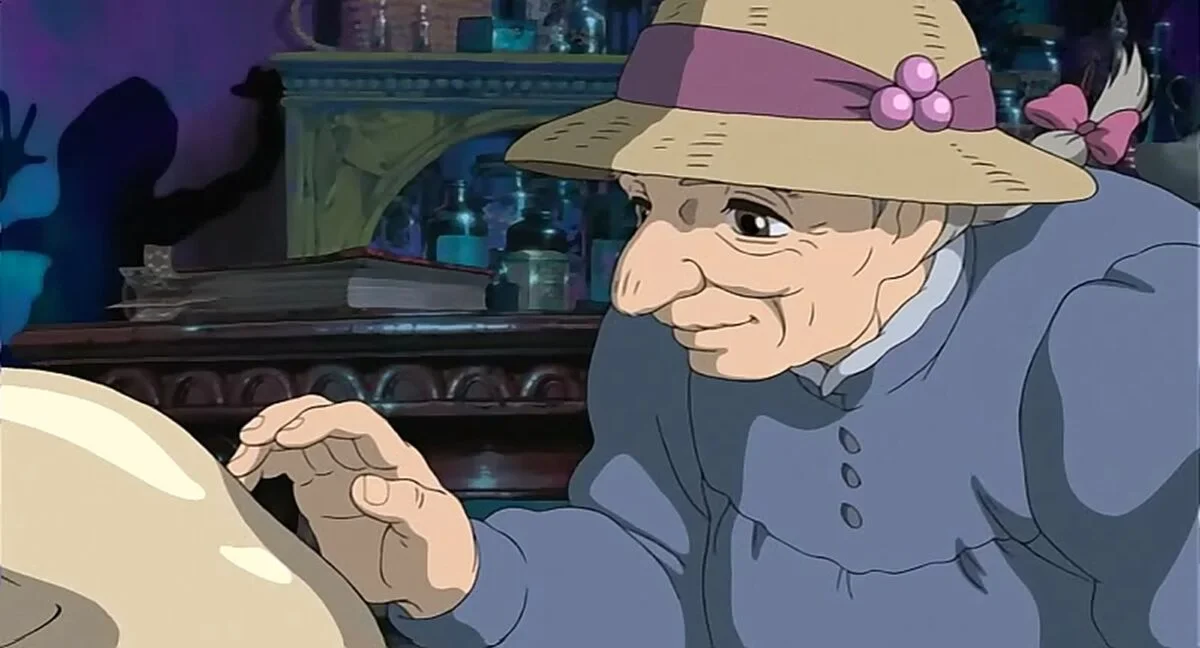
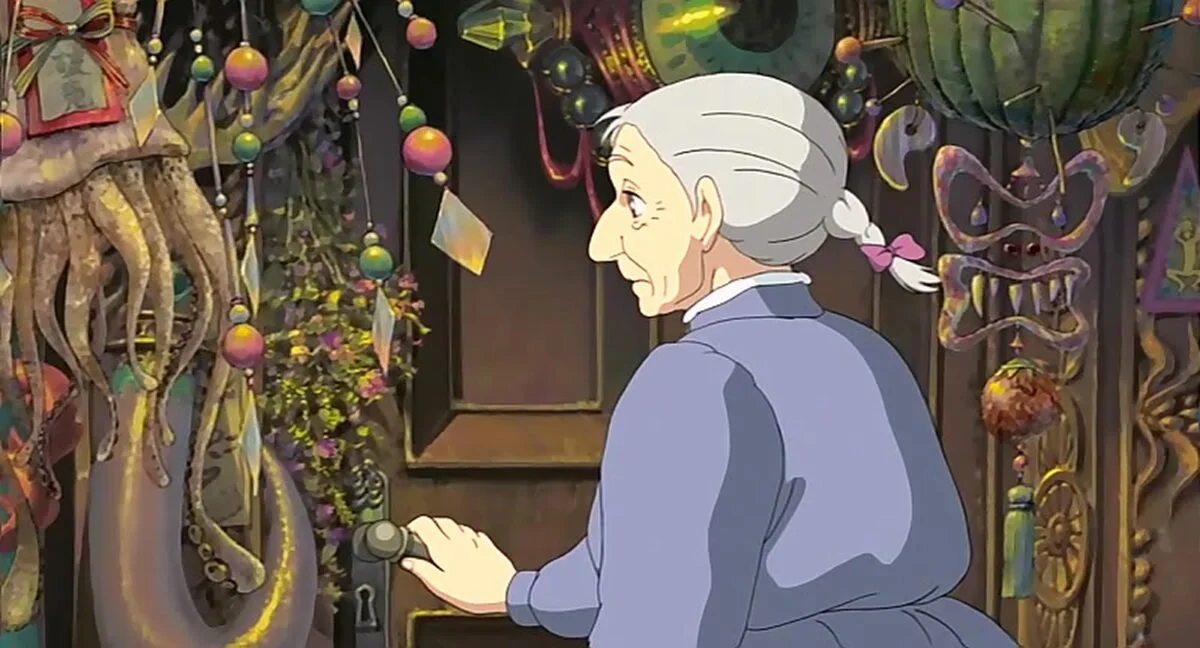
Sophie, an eighteen-year-old working in a hat shop, is cursed by the Witch of the Waste and turns into a ninety-year-old woman overnight.
So far, it is a familiar fairy-tale premise. What makes the film clever, however, is that Sophie’s outward appearance never remains fixed.
When her confidence falters, her back bends further and her wrinkles deepen. When she becomes angry with herself or feels certain of her convictions, her face briefly grows younger. In other words, the curse is not really about age; it is a device that visualizes how much Sophie believes in herself.
When Sophie is finally freed from the curse, it is not through the power of magic. It happens when she decides to accept both herself and Howl as they are.
Her attitude changes first, and her body follows—a reversal of the usual order that, in my view, is what sets this film decisively apart from the fairy tales of the 1990s.
The Novel and the Film Tell Stories with Different Temperatures
The film is based on the 1986 novel of the same name by British writer Diana Wynne Jones.
Read the novel, however, and the difference in tone is immediately apparent.
The Howl of the novel is vain, cowardly and quietly pathetic—in short, the sort of character who is fun to tease. The film’s Howl, by contrast, is a serious, handsome wizard who spends much of the story flying through the sky with a melancholy expression.
Korean critic Duna once observed that Miyazaki “turned a work closer to genre satire into a serious steampunk science-fiction drama,” and I largely agree. The novel’s playful cynicism disappears, replaced by Miyazaki’s characteristic sense of solemnity.
What is interesting, though, is the reaction of the original author, Diana Wynne Jones.
In an interview with The Guardian, she expressed surprise that “the castle had legs,” but was otherwise highly favorable toward the film.
She was reportedly fond of the adaptation enough to keep several models of the film’s castle in her home. The direction of the adaptation, then, did not betray its original creator.
If we view it as a reinterpretation for a different medium and a different audience, the gap in tone is less a flaw than the result of two artists completing the same story in their own ways.
A Film That Began Where Mamoru Hosoda Left Off
It is surprisingly little known that this was not originally intended to be a Miyazaki film.
In 2000, Studio Ghibli tapped Mamoru Hosoda—the director who would later make Summer Wars and Wolf Children—to helm the project.
For nearly two years, however, he struggled to find a way to adapt the novel for the screen. With Ghibli’s resources focused on Spirited Away at the time, he also failed to receive the support he needed.
In April 2002, he ultimately stepped down as director after being told that the project was “no longer feasible.” It was reportedly such a major setback that he thought, “Perhaps I can’t work in this industry anymore.”
Miyazaki took over the vacant director’s chair and made the film we know today.
Knowing how the film came together makes its somewhat loose second half easier to understand.
After a long period of uncertainty, the screenplay was completed under pressure, with the director’s own counterwar message layered on top. It is hardly surprising that the story does not always feel smoothly organized.
An Antiwar Film with No Clear Enemy
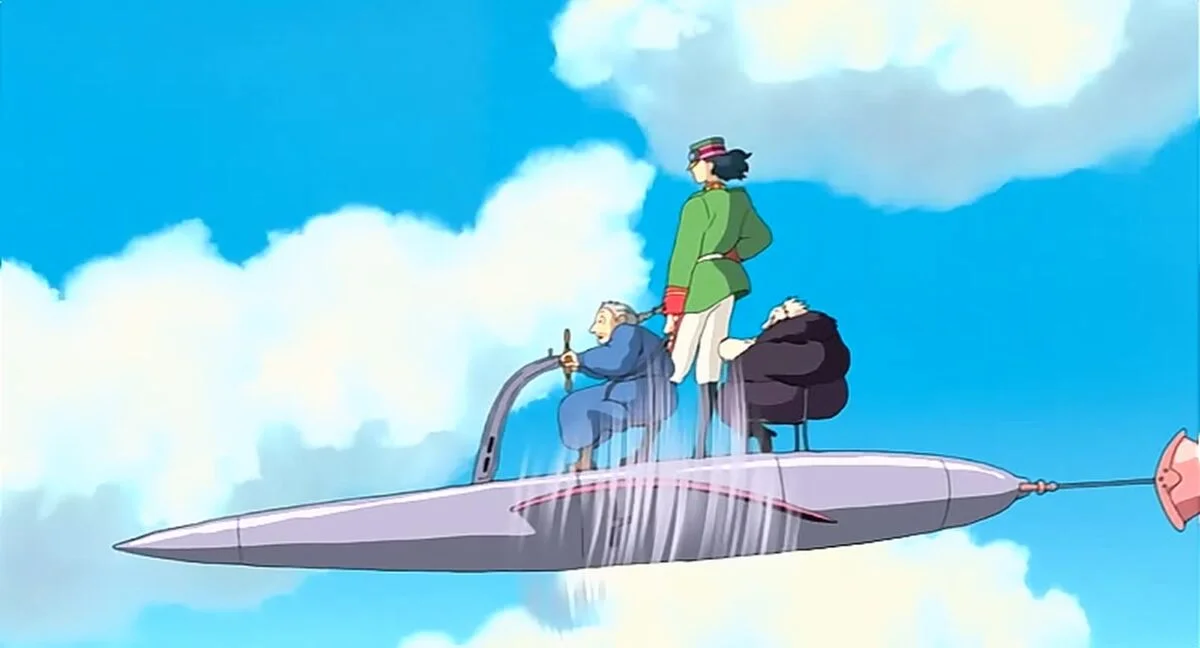
From the middle of the film onward, a war between two kingdoms takes up roughly half the story.
Yet the war has no name. The film never explains which country is the aggressor, which is the victim, or what justification lies behind the conflict.
The bombers simply burn towns, while Howl simply turns into a monster and fights in the sky. This is not an oversight but a deliberate choice. Miyazaki has repeatedly made clear his belief that “neither side is morally right,” and the film transfers that conviction directly onto the screen.
I see both strengths and weaknesses in this approach.
Its strength is that it allows the film to address the meaninglessness of war itself, beyond any particular era or nation. Its weakness is that, without a specific political frame of reference, the message becomes somewhat blunt.
A film born of specific anger over the Iraq War becomes, on screen, an abstract antiwar sentiment whose target is impossible to identify.
Even so, once we understand that this was a conviction the director upheld to the point of refusing to attend the Oscars, the film’s vagueness can be read not as evasion but as a form of caution.
An Imperfect Second Half, Saved by the Music
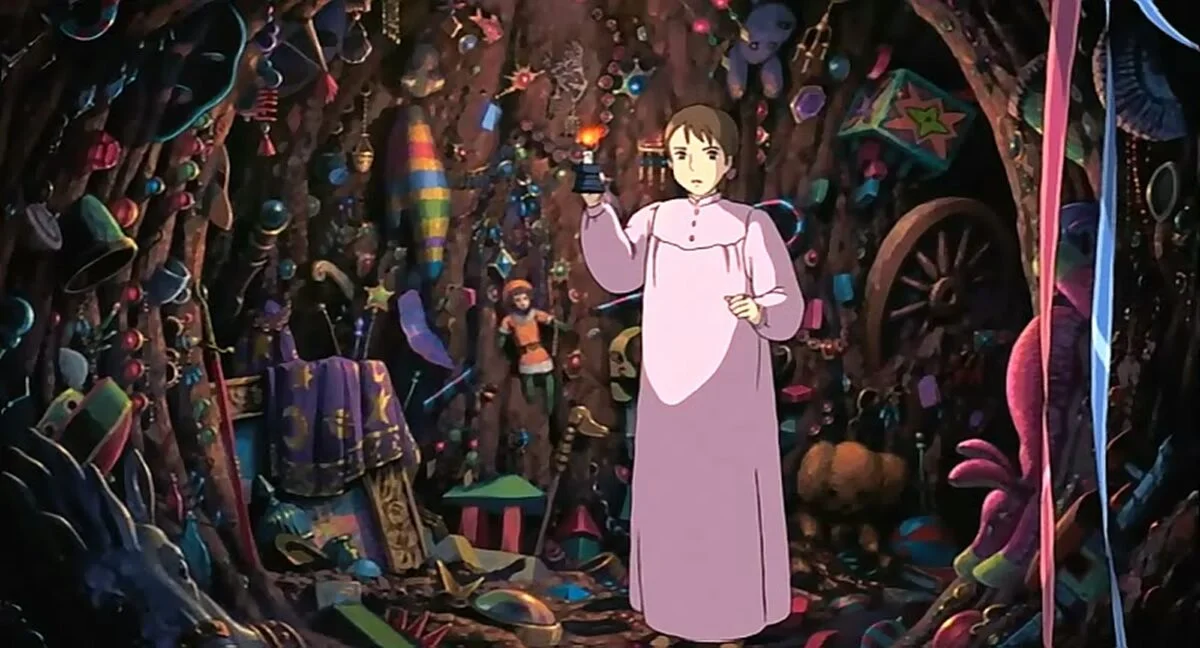
To be honest, the final 30 minutes are narratively loose.
Sophie’s sudden journey into the past, the timing of the reveal about the scarecrow Turnip Head, and the way the war ends are all driven more by emotional momentum than by clear causality.
If you examine the plot strictly on logical grounds, you will find more than a few holes.
And yet the reason the film remains forgivable to the end is that the music of Joe Hisaishi fills those gaps.
In particular, “Merry-Go-Round of Life,” unfolding as a waltz in triple time, has the power to fill the story’s empty spaces with emotion. Where the narrative cannot explain, the music and images persuade instead—one of Miyazaki’s recurring strengths.
Box-Office Success, Awards—and the Takuya Kimura Factor
By any measurable outcome, the film was a clear success.
It topped the Japanese box office in 2004, grossed more than $230 million worldwide, and drew 3.01 million viewers in South Korea.
Its awards record was solid as well: Venice Film Festival awarded Studio Ghibli the Technical Achievement Award, also known as the Golden Osella, and the film won 19 awards in total, including Best Animated Feature from the New York Film Critics Circle.
It was nominated for the Academy Award for Best Animated Feature, but the Oscar that year went to Wallace & Gromit.
One intriguing variable was Takuya Kimura, who voiced Howl.
Casting one of Japan’s biggest idols and actors at the time surely helped the film at the box office, but opinions remain divided over the quality of his voice performance. Some Japanese media have gone so far as to rank him among the stars who “ruined Ghibli dubs,” while others argue that his languid vocal tone suited Howl perfectly.
I lean toward the latter view. His was perhaps not a flawless voice performance, but that subtly awkward languor feels strangely appropriate for Howl, a character who is already half broken.
Final Verdict
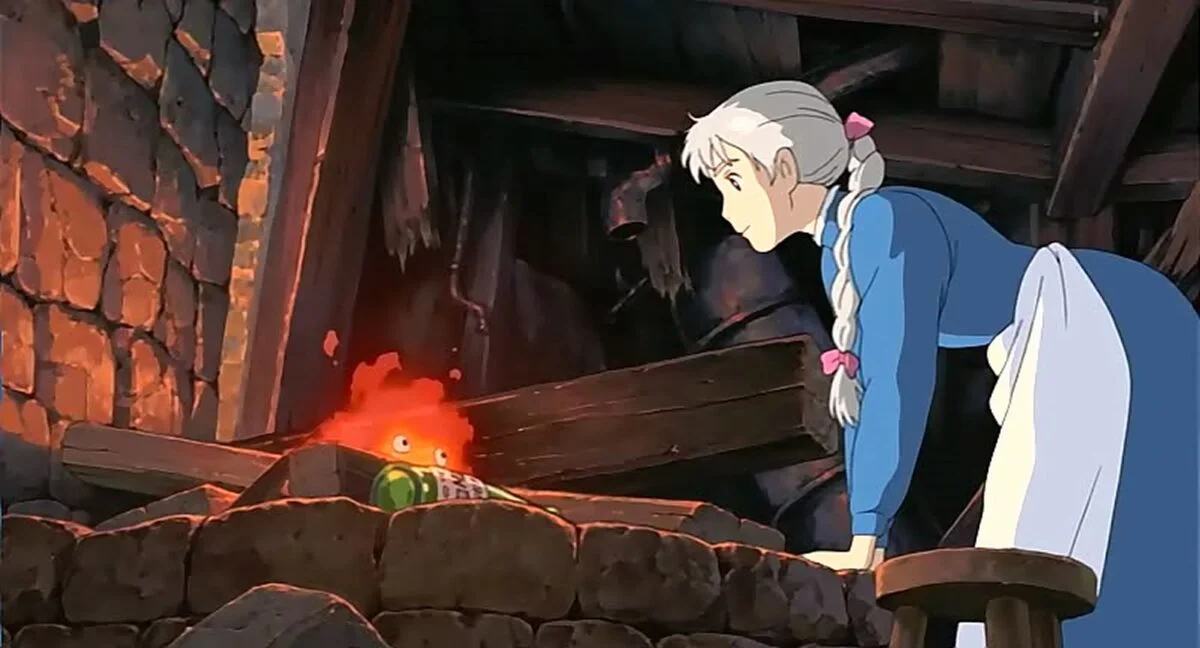
If I had to sum up the film in one sentence, it would be this: the story is loose and the message somewhat blunt, but the gaps are filled by the artwork, the music and the director’s sincerity. Judged by the precision of its storytelling, it falls short of Miyazaki’s other major works.
Still, the single insight that “growing older means gradually losing yourself” is enough to make the film well worth revisiting. My rating would be 4 out of 5. It is not a perfect film, but its imperfections are precisely what make it feel human.
Frequently Asked Questions (FAQ)
Is Howl’s Moving Castle very different from the original novel?
Quite different. Diana Wynne Jones’s 1986 novel is closer to a comedy that playfully twists genre conventions, and Howl is portrayed as an endearingly inept character. Miyazaki reinterpreted it as a serious steampunk drama, completely changing the tone. The original author, however, was highly favorable toward the film.
What real-world war inspired the conflict in Howl’s Moving Castle?
The film does not directly model the conflict on any particular country or event. It is well known, however, that production took place during the 2003 Iraq War, to which Miyazaki was strongly opposed. The absence of a clear distinction between aggressor and victim in the film’s war can be read as a reflection of the director’s antiwar belief that “neither side is right.”
Why did Hayao Miyazaki skip the Oscars during the Iraq War?
When Miyazaki won the Academy Award for Best Animated Feature for Spirited Away in 2003, he did not attend the ceremony. The United States was bombing Iraq at the time, and he said that he did not want to visit a country doing so. That conviction also carried into the antiwar message of Howl’s Moving Castle, which was being made during the same period.
Why does Sophie keep changing from old to young?
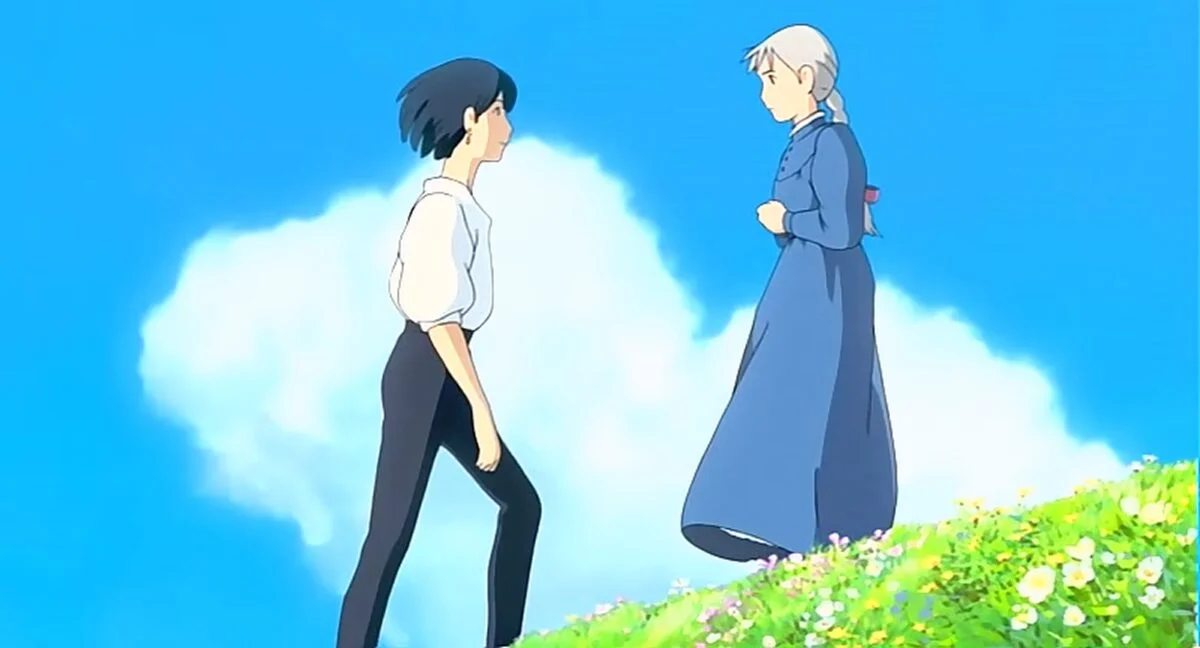
It is initially caused by the Witch of the Waste’s curse, but Sophie’s appearance is not fixed throughout the film. She looks older when she loses confidence or feels intimidated, and briefly grows younger when she feels certain of herself or experiences intense emotions. The curse can therefore be interpreted as a psychological device—not merely magic—that shows how much Sophie believes in herself.
How is Takuya Kimura’s performance as Howl regarded?
Opinions are divided. Casting one of Japan’s most popular stars clearly had a marketing impact, but viewers still disagree about the quality of his voice acting. Some outlets cite it as one of the weaker choices in Ghibli’s dubbing history, while many others believe his languid, unstable delivery suited Howl’s character well.
Did Howl’s Moving Castle win an Academy Award?
No. It was nominated for Best Animated Feature, but the award that year went to Wallace & Gromit: The Curse of the Were-Rabbit. The film did win 19 international awards, including the Technical Achievement Award, or Golden Osella, at the Venice Film Festival and Best Animated Feature from the New York Film Critics Circle.
