
Could a person left alone on Mars survive? The film “The Martian” dedicates 142 minutes to answering this question. And the answer is surprisingly simple: science, humor, and the fact that someone remembers you.
Ridley Scott’s film does not portray space as a stage for death. Instead, it depicts it as a series of small problems. How to create water. Where to grow potatoes. How to communicate with Earth. When Watney is left alone at the Mars base, the film portrays him not as a victim of death, but as an engineer.
However, this film does not simply list survival techniques.
Even as Watney is planting potatoes and making water on Mars, someone on Earth is working to rescue him. This includes the NASA ground team, the crew of the spacecraft, and even the China National Space Administration. Isolation does not mean being alone.
This is what “The Martian” is trying to convey: Keeping a human alive in an isolated environment is a matter of science, but it is also a matter of community, that is, the feeling that someone remembers you and wants to save you.

Isolation is a problem, not death
“The Martian” portrays the individual left on Mars not as a victim of death, but as an engineer who must solve hundreds of small problems. Every time Watney is faced with a moment of despair, the film asks: “So, what is the next problem that needs to be solved?”
How will we produce water at the base? Where will we grow potatoes? Does the Martian dust provide nutrients for plants?
The film depicts the process by which Watney solves these questions one by one. He digs up the soil from the base to create a potato farm, and mixes fuel components to produce water. All of this goes beyond simple survival techniques and appears as a series of small, everyday calculations.
When Watney records video logs in front of the camera, what he calculates is not despair, but time. “If I plant potatoes, I can consume this much energy, and if I do that, I can survive for this much longer.” Like an accountant, like an engineer, he meticulously calculates the list of things that one person can do alone at the Mars base.
This seems strange. All the problems are being solved perfectly.
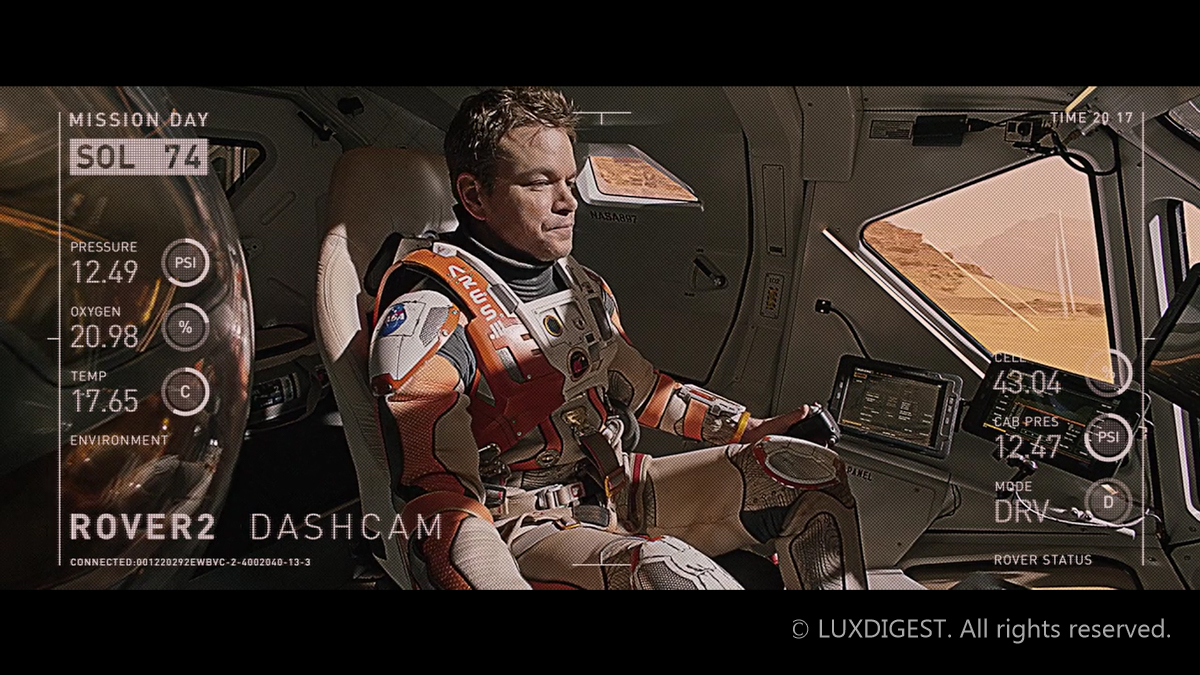
An interesting point is how Watney measures time. The film repeatedly uses the term “sol.” A Martian day is approximately 40 minutes longer than an Earth day. Watney calculates how long he can survive within this extended time frame. He counts on his fingers, writes on paper, and mutters to himself. In the act of calculating, the issue of survival becomes paramount.
A movie with a lot of exposition
This film uses visual action on screen to explain complex concepts, such as Martian agriculture and scientific principles, instead of relying on dialogue.
That’s why it’s not frustrating. A movie that should be frustrating is actually exciting.
Let’s observe the process of cultivating a potato field. Watney digs up the soil, mixes in water, and places it in a location with sunlight.
The film does not state the chemical formulas. The camera shows the color of the soil changing, the emergence of green shoots, and the growth of potatoes. It is evident that something has succeeded, even without subtitles or narration.
This is Scott’s strength.
The “video diary” feature makes this possible.
When Watney, in front of the camera, describes the situation with a self-deprecating tone, that description becomes cinematic information. When he says, “Okay, this is my Mars,” I laughed. At the same time, within that laughter, I also felt the intensity of his despair.
Science explanations and humor occur in the same sentence.
So, what makes this film more than just a problem-solving exercise, and allows it to be emotionally resonant? How does it convey the fact that, while Watney is alone on screen, somewhere on Earth, someone is genuinely working to save him? How does it demonstrate that isolation is not absolute isolation?
This film is more than just a problem-solving exercise; it is moving because, while Watney fills the screen alone, somewhere on Earth, real people are genuinely working to save him. It demonstrates how isolation is not truly isolation. This is the core of the film.
Saving one person cannot be done alone
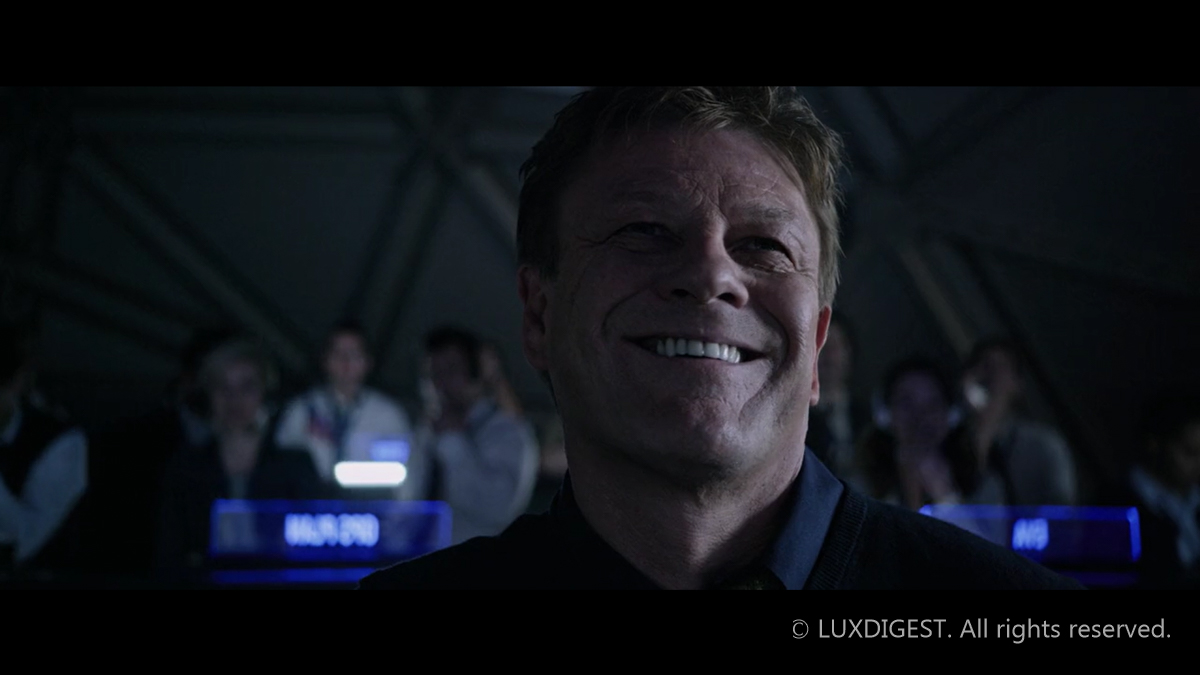
While Watney is on Mars, solving problems by growing potatoes and creating water, NASA on Earth, his fellow astronauts, and even the Chinese space agency are working to save him, each in their own way. This is the core of the film.
What is interesting is that Watney and the Earth team rarely appear on screen together. They are not shown together in the same scene for almost the entire 142 minutes.
All of these movements occur at the edges of the screen, outside of Watney’s field of vision.
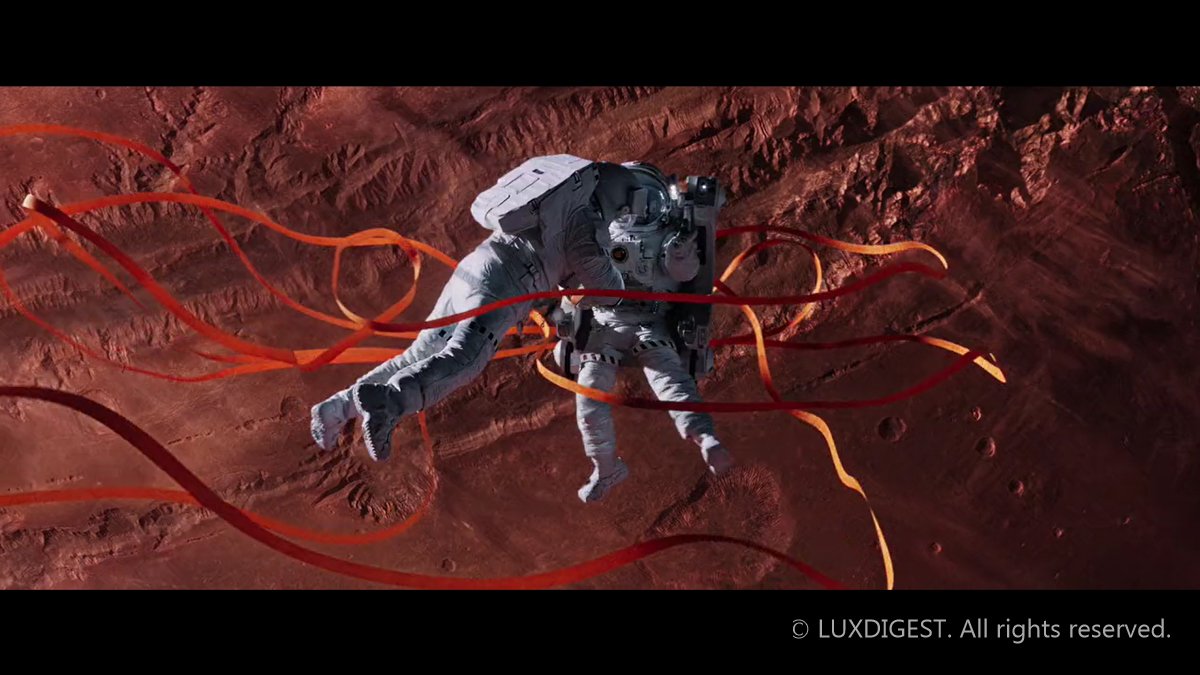
The fact that Watney and the Earth team barely interact actually makes the story even more compelling. In the final moments, Commander Lewis personally goes into space to retrieve Watney. The moment their hands touch, everything becomes clear. Everyone on the spacecraft risked their lives for the sake of someone struggling far away.
Even from just a few scenes in the movie, it is clear. NASA Director Teddy Sanders (played by Jeff Daniels ) is torn between the enormous cost of the rescue operation and the nation’s budget and political considerations. At the same time, the spaceship’s captain, Lewis (played by Jessica Chastain ), obtains the consent of all team members and decides to disobey orders by returning to Mars. Even the Chinese National Space Administration lends its rockets to the United States. All of this happens outside of Watney’s view. While he is alone on Mars, planting potatoes, several countries are working together to save him. His isolation was not actually complete.

Optimism is a choice, not a denial of reality
“The Martian” is undoubtedly a bright film. However, this brightness does not stem from avoiding emotions, but rather from demonstrating an attitude of responding to despair with science and humor. This can be seen in Watney’s self-deprecating monologues.
“Okay, this is my Mars.” “I want to go to Burger King.” These are not just jokes. They are the ways in which a person, determined to survive in the face of despair, compromises with reality. While planting potatoes…
There are almost no scenes in which Watney despairs during the 142 minutes. Instead, what he does is calculate time. It is the attitude of an engineer counting on his fingers, one by one, how long he can hold out. To me, this is optimism. It is not turning away from reality, but an attitude of responding with problem-solving instead of despair.

Science, community, and the human connection between them
In the ending, Watney stands before a group of aspiring astronauts. What he teaches the next generation is not just simple survival skills. He explains that what sustains humans in isolated environments is science, but also a sense of community – the knowledge that someone remembers you and is trying to save you.
Consider what this film repeatedly shows over its 142 minutes. A single person is solving problems alone. He plants potatoes, creates water, and struggles to communicate with Earth. But underlying every moment is the gaze of people watching from afar. Whether Watney knows it or not, we see it. We see the NASA ground team refusing to give up on him. We see the crew of the spacecraft defying orders and making the decision to return. We see the moment China lends him a rocket.
Therefore, the true message of this movie is this: you are not alone. Even when you are in the most isolated place, someone is remembering you and working to save you. Watney gives lectures to the aspiring astronauts because he wants them to remember this one thing when they go into space.
Watney’s concluding lecture is not a lengthy explanation. Instead, he tells the next generation of astronauts one thing: you must be able to solve problems on your own. And you must also know that someone is always thinking of you. Isolation and community are not contradictions; they are things that happen simultaneously.
Let’s look at the specifics. NASA Director Teddy Sanders (Jeff Daniels) is caught between the enormous costs of the rescue operation and the nation’s budget and political considerations. The spaceship’s captain, Lewis (Jessica Chastain), decides to disobey the superior officer’s orders and return to Mars with the consent of all team members. Even the Chinese space agency offers to lend its rockets to the United States. This transcends national boundaries, all to save one person, Watney.
Solving problems alone, living together
The true triumph of “The Martian” lies not in Watney’s survival on Mars, but in demonstrating that there were people who believed he could survive. Science is, of course, necessary. Humor is also important. But the most crucial thing is that someone remembers you.
The brightness of the film does not ignore reality. It shows how people respond to despair with science and humor, and how that response extends beyond a single individual, reaching someone on Earth. We see the choices made: Commander Lewis defying orders to obtain the unanimous consent of the team to return to Mars, the NASA director making a political decision that determines one person’s life, and the scenes where China lends its rockets. Without all of this, Watney would never have survived. And the film takes full responsibility for portraying this.
However, the sandstorm in the opening scene is not scientifically accurate. The Martian atmosphere is too thin for a storm strong enough to overturn a spacecraft to occur. The original author was aware of this and created it to emphasize the theme of nature versus humanity. Some critics have noted that the film focuses more on solving survival problems than on the loneliness of space. Nevertheless, it is rare to find a film that conveys the message of “you are not alone” so specifically and warmly over a 142-minute runtime.
This film is recommended for audiences interested in Mars and science, or who enjoy problem-solving. It is not suitable for audiences who want to immerse themselves in the loneliness of space or who want to deeply explore the inner conflicts of the characters. Knowing that a Martian day (sol) is 40 minutes longer than an Earth day will make Watney’s constant time calculations more understandable. Watching it alongside “Gravity” (2013) allows viewers to see how two films can portray similar space isolation scenarios in very different ways. One film focuses on a solitary struggle, while the other emphasizes collective salvation.
Frequently Asked Questions (FAQ)
Can we actually farm crops on Mars in this way?
The film, with advice from NASA, depicted science as accurately as possible. However, there are some aspects that have been slightly altered from reality, such as the sandstorm in the opening scene. The original author, Andy Weir, was aware of this and stated that it was done to emphasize the theme of “nature versus humanity.”
What is the difference from “Gravity”?
Both films are survival stories set in space, but “Gravity” focuses solely on the desperate struggle of a single individual. “The Martian” adds the element of Earth-based cooperation and camaraderie. It is interesting to see how the two films portray the same situation in such different ways.
Does Matt Damon, who almost fills the entire screen by himself, not make it boring?
As Watney records his video diary and explains the situation, his words are a mix of scientific explanations and self-deprecating humor. Furthermore, as the story progresses, the actions of the Earth team and the camaraderie among his colleagues become more apparent, allowing him to feel that he is not alone.
What are the differences from the original novel? Is it necessary to read the original novel first?
The original work depicts Watney experiencing far more hardships, and the scenes are more detailed. The film simplifies these aspects and adds more humor. Even if you only watch the film, you will completely understand and be moved by the story, so there is no need to read the original work beforehand.
What is the ending? Does he really survive and return to Earth?
Yes, the movie has a completely happy ending. I won’t reveal any spoilers, but the important thing is “how” they survive. The emotional core of the film lies in seeing how the Earth and space crew members work together during the rescue process.
